Your overflowing tomato harvest doesn’t have to go to waste—using a juicer to make tomato sauce transforms garden bounty into shelf-stable sauce faster than traditional methods. While food mills have long been the go-to tool, modern juicers automatically separate skins and seeds from flavorful flesh, creating a clean liquid base that simmers into rich sauce with minimal effort. This method works especially well with heirloom or cherry tomatoes that typically require hours of cooking when processed conventionally. By following this streamlined approach, you’ll convert fresh tomatoes into vibrant sauce ready for canning or immediate use, capturing summer’s flavor in every jar. Whether you’re processing a small batch or preserving a large harvest, this guide delivers exactly what you need to succeed.
Select the Best Juicer for Tomato Sauce Production

Your juicer choice directly impacts sauce quality and efficiency, so select wisely before processing your harvest. Horizontal single-auger models like the Omega 8004 and 8006 excel at handling tomatoes when you prepare the fruit properly—they separate skins and seeds into the pulp chute while extracting clean juice into your collection container. The resulting pulp emerges remarkably dry, consisting primarily of skins and seeds, though some small seeds may pass through.
Centrifugal juicers like Breville models also handle substantial tomato quantities efficiently. Documented results show these machines can produce approximately 24 cups of juice from a standard harvest batch, making them ideal for serious sauce production. For maximum yield, plan to run the initial pulp through the juicer a second time—this additional pass typically extracts about 35 ounces of seedless, ketchup-like product with concentrated flavor.
Avoid steam juicers for standard sauce production, as they cook tomatoes during extraction, making the softened fruit difficult to core or prepare further. Most home cooks find better results by juicing raw or pre-cooked tomatoes rather than attempting simultaneous cooking and extraction.
Prepare Tomatoes Properly Before Juicing

Skipping proper tomato preparation guarantees disappointing results and potential juicer clogs. Start by washing tomatoes thoroughly under cool running water to remove dirt, pesticides, or garden residue that could affect flavor. Inspect each tomato carefully and cut out stems, dark spots, or damaged areas that introduce off-flavors or block your juicer.
Quarter tomatoes before feeding them through the juicer—this reduces strain on the motor and allows more efficient extraction. The exact size matters less than consistency; aim for pieces of similar size to promote even processing. For thicker sauce with less seed content, take the extra step of partially de-seeding tomatoes before juicing by cutting them and removing seed cavities. This technique significantly reduces the seed load entering your juicer and produces a thicker mixture requiring less reduction time.
Pro tip: Fully ripe tomatoes yield more juice than firm, underripe specimens—wait until your harvest reaches peak ripeness before processing.
Execute the Perfect Juicing Technique
Mastering the juicing process maximizes yield while minimizing cleanup and troubleshooting. Feed prepared tomato quarters through the chute steadily, using the pusher to guide fruit toward the auger without forcing it. Monitor the pulp output to ensure skins and seeds separate properly into the collection container. The juice will collect in the separate container, appearing thinner than desired sauce consistency—this is completely normal.
Plan for double-straining the juice after extraction: some seeds inevitably pass through regardless of preparation. Pour the juice through a fine-mesh sieve first, then through cheesecloth for perfectly smooth sauce. For maximum yield, run the initial pulp through the juicer a second time—this transforms seedy, loose pulp into a ketchup-like consistency suitable for direct canning.
Warning: Pause periodically to clear the pulp chute as tomatoes contain significant pectin that can cause juicers to clog when processing large quantities without interruption.
Simmer Juice into Flavorful Sauce
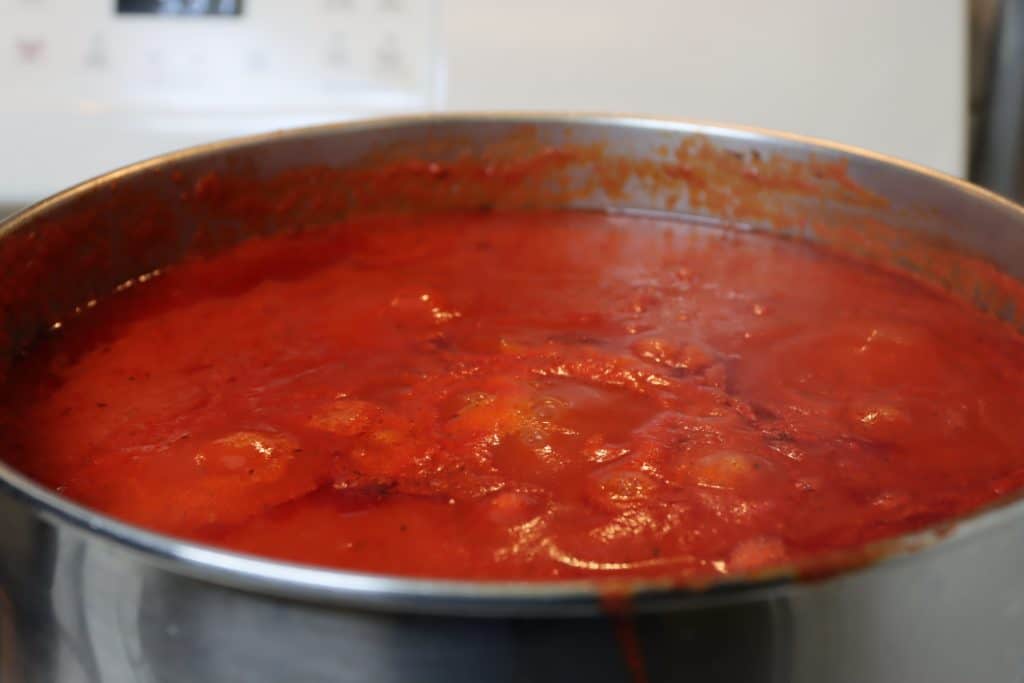
The extracted juice requires extended simmering to develop proper sauce consistency and concentrated flavor. Pour the strained juice into a large saucepan and bring to a gentle boil before reducing to a steady simmer. Expect the sauce to decrease substantially in volume—documented reductions show juice dropping from the top of the pan to within a few inches of the bottom as excess water evaporates.
Sauce consistency depends on your intended use: pizza sauce needs thicker texture than pasta sauce. Continue simmering until the sauce coats the back of a spoon—this typically takes 2-4 hours depending on your starting quantity. Save liquid from the initial juicing so you can add it back if the sauce becomes too thick during reduction.
Key insight: Extended simmering develops complex flavors through the Maillard reaction and natural sugar caramelization—don’t rush this critical step.
Follow Exact Canning Procedures for Safe Preservation
Improper canning creates serious health risks, so follow these exact steps for safe preservation. Begin by acidifying each jar before filling—add 1 tablespoon of lemon juice to pint jars or half-pints, 2 tablespoons to quarts. This non-negotiable step prevents bacterial growth regardless of your tomatoes’ natural acidity.
Fill hot sterilized jars with hot sauce, leaving exactly ½ inch of headroom. Wipe rims with a damp, clean cloth before securing lids finger-tight (never over-tighten). Process filled jars in a boiling water bath for 35 minutes for pints/half-pints, 40 minutes for quarts. Begin timing only after water returns to a rolling boil.
Critical safety note: Always inspect seals before use—discard any jars with compromised seals without tasting.
Transform Pulp into Valuable Secondary Products
Don’t discard the pulp—repurpose it into equally valuable products. Tomato pulp reprocessed through the juicer makes excellent homemade ketchup: simply add vinegar, sugar, salt, and spices to the seedless, thick consistency produced by two juicing passes. This ketchup can be safely canned using the same water bath method, yielding four half-pint jars from one processing session.
Combine pulp with bell peppers and onions in a food processor to create fresh tomato sauce perfect for meatloaf or pizza bases. The pulp retains concentrated tomato flavor that enhances recipes without requiring additional reduction. Tomato skins separated during juicing can be dehydrated and pulverized into a flavor-boosting powder for soups, stews, and sauces.
Fix Common Juicing Problems Immediately
Address these frequent issues to prevent wasted tomatoes and frustration:
- Clogging: If your juicer binds, stop immediately, clear the pulp chute, and cut tomatoes into smaller pieces for future batches
- Low yield: Underripe tomatoes produce less juice—wait for full ripeness or warm cold tomatoes to room temperature before juicing
- Seeds in sauce: Double-strain through progressively finer mesh before reduction; accept that some juicers pass small seeds and build straining into your standard process
- Thin sauce: Continue simmering until desired consistency—underripe tomatoes or excessive water addition causes this common issue
Time-saving shortcut: Save tomato water from initial juicing to adjust consistency during reduction rather than using plain water.
Store and Maintain Your Sauce for Year-Round Enjoyment
Proper storage ensures your hard work pays off all year. Properly sealed canned sauce stores in a cool, dark location for 12-18 months, bringing summer flavor to winter meals. Once opened, refrigerate and use within one week for best quality. For optimal flavor and nutrition, consume within one year of processing.
Clean your juicer immediately after use—tomato residue stains and sticks to components if allowed to dry. Disassemble and wash all parts in warm, soapy water, using a bottle brush for the pulp chute. Inspect blades and augers regularly for wear, replacing them when extraction efficiency decreases. This maintenance ensures your juicer performs optimally season after season.
Pro tip: Document your yield ratios—typical batches produce three half-pints of finished sauce from standard harvest quantities—so you can accurately plan future sauce production based on your garden output.