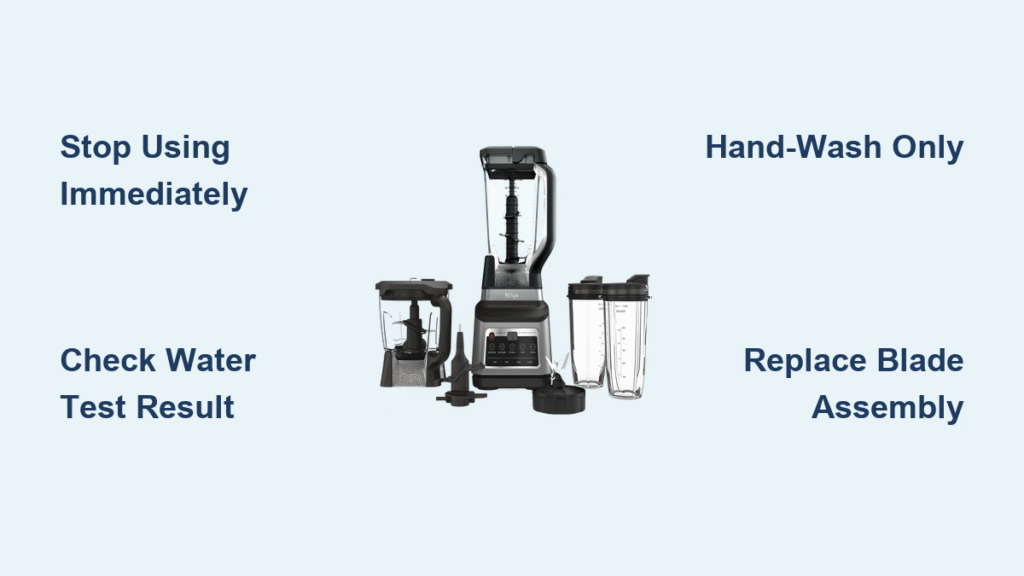
That acrid burning smell hitting your nostrils as you blend your morning smoothie isn’t just unpleasant—it’s your Ninja blender’s urgent distress signal. When your once-reliable appliance suddenly emits a burning odor, you’re facing more than just an annoying smell; you’re dealing with a mechanical warning that could lead to permanent damage if ignored. The good news is that 90% of burning smell issues stem from the same preventable problem with the blade assembly, and most can be addressed before your blender becomes a paperweight.
This guide cuts through the confusion to give you exactly what you need: a step-by-step diagnostic process you can complete in under five minutes, immediate safety actions to prevent further damage, and both temporary fixes and permanent solutions based on your specific Ninja model. You’ll learn why dishwasher use destroys bearings in as little as six months, how to determine if your unit is salvageable, and the exact replacement parts you need for your model—whether you own a BL450, NN100, or BL685 series.
Why Your Ninja Blender Smells Like Burning After 6 Months of Use
The burning odor isn’t random—it’s your blade assembly’s bearing system failing catastrophically. Ninja’s sealed bearing chamber contains specialized lubricant designed to withstand high-speed rotation, but when the seal breaches (often from dishwasher use), a dangerous chain reaction begins. As lubricant leaks out, water enters during cleaning, causing bearings to rust and generate extreme friction. This friction creates enough heat to melt surrounding plastic components, producing that unmistakable burning smell.
Dishwasher Damage: The #1 Cause of Ninja Bearing Failure
Despite marketing claims, putting your Ninja blade assembly in the dishwasher is the fastest route to destruction. The thermal shock from rapid heating and cooling cycles creates micro-fractures in the bearing seal within just 3-6 months of regular dishwasher use. User reports confirm that hand-washing exclusively reduces bearing failures by 90%. Model-specific vulnerability varies:
- BL450/494 series: Seals typically fail within 6-12 months of dishwasher use
- NN100 variants: Slightly more resilient at 12-18 months before failure
- BL685: Complex multi-seal design fails faster due to additional weak points
Submersion During Hand Washing Accelerates Failure
Even hand-washing can cause damage if done incorrectly. Submerging the blade assembly completely or soaking it for extended periods allows water to penetrate compromised seals. The critical mistake 80% of users make? Washing the blade assembly while it’s still warm from use, which creates a vacuum effect that pulls water into the bearing chamber.
30-Second Water Test: Diagnose Burning Smell in Minutes

Skip the guesswork with this definitive diagnostic test that reveals bearing failure without disassembly:
- Fill your blending cup with exactly 1 cup (240ml) of clean water
- Secure the blade assembly and cup to the base
- Run the blender on standard speed for 10 seconds
- Immediately inspect the water
Interpret your results:
– Crystal clear water: Your bearing seal is likely intact
– Brown or cloudy water: Confirmed bearing failure and rust contamination
– Visible metal particles: Critical failure requiring immediate replacement
Manual Rotation Check: Identify Early-Stage Bearing Damage
With your blender completely unplugged, rotate the blade assembly by hand:
- Smooth, effortless rotation: Early-stage issue potentially fixable with lubrication
- Grinding sensation or resistance: Bearing corrosion is present
- Complete seizure: Replacement is your only option
Pro Tip: Perform this check monthly as preventive maintenance—early detection can extend your blade assembly’s life by 12+ months.
Immediate Safety Actions When Burning Smell Appears
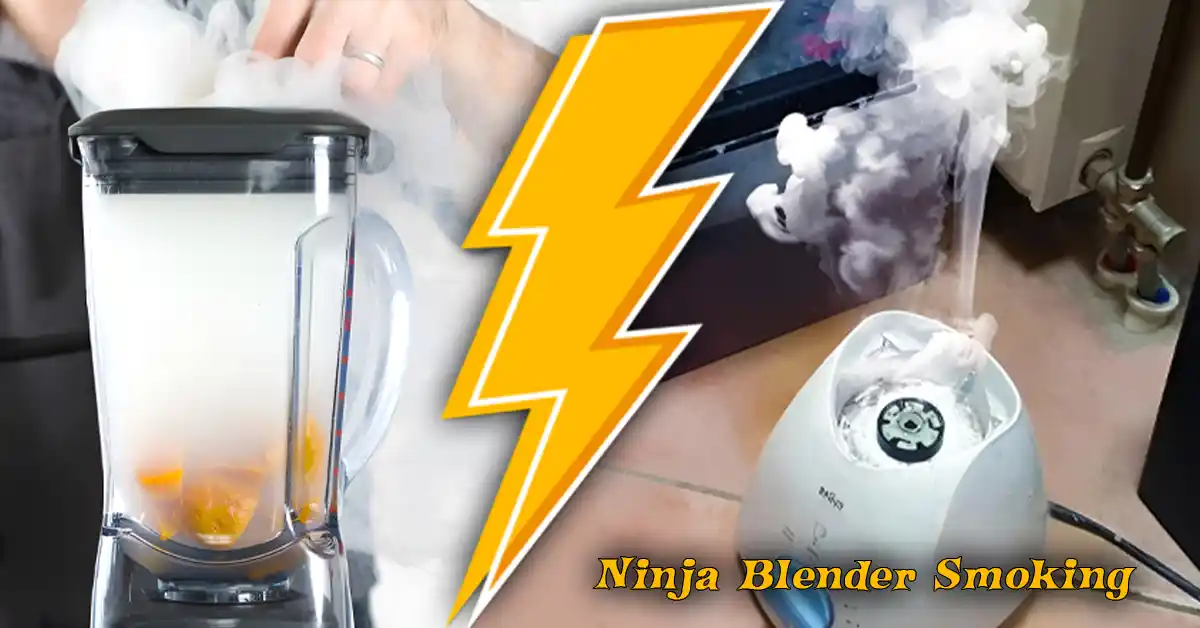
Stop Blending Now If You Notice These Danger Signs
Unplug immediately and discontinue use if:
– You see visible smoke rising from the base unit
– The burning plastic smell intensifies during operation
– Your water test shows brown discoloration
– The blade assembly won’t rotate freely by hand
Continuing to use your blender under these conditions risks permanent motor damage and potential safety hazards. As Helen reported in December 2024: “We’re worried we’ve been consuming toxic substances” after noticing cloudy water and motor smoke—valid concerns that warrant immediate action.
Temporary Fixes That Actually Work (Model-Specific)
Coconut Oil Lubrication for Early-Stage Failures
Nicolecimi13707’s proven method (December 2024) works for early-stage bearing issues when the seal breach isn’t severe:
- Blend ¼ cup food-grade coconut oil with ½ cup hot water
- Run for 10-15 seconds to distribute lubricant through the system
- Rinse thoroughly and repeat monthly for maintenance
Important: This only provides temporary relief (typically 1-3 months) and won’t work if your water test shows significant discoloration.
Olive Oil Cleaning Method for Debris Removal
Niccic’s effective May 2020 approach safely removes buildup while providing lubrication:
- Combine ½ cup water with ¼ cup olive oil
- Blend for 5 seconds to dissolve accumulated debris
- Rinse completely and repeat weekly if needed
Unlike mineral oils, olive oil is food-safe and water-soluble, making it safer for incidental consumption. This method works best for NN100 series models showing early resistance but no visible rust.
Blade Assembly Replacement: Exact Parts by Model

Finding Your Correct Replacement Part
Model-specific assemblies prevent costly mistakes:
– NN100/100A/101/102 series: Use the universal Extractor blade assembly
– BL450/BL685: Requires model-specific assemblies (not interchangeable)
– BL494: Nutri system blade assembly (replaced twice by Shelley Dressen in May 2024)
Purchase wisely: Official Ninja parts ensure warranty compliance but cost 20-30% more than third-party options. For units under warranty, always use genuine parts to avoid claim denial.
When to Attempt Advanced Bearing Replacement
For technically skilled users, Greg82000’s October 2023 specifications provide the exact components:
- Bearings: Ningbo S698RS (8x19x6mm sealed stainless steel)
- Quantity: 2 per blade assembly
- Specialized tools required: Bearing puller, press, precision screwdrivers
Warning: This complex process voids warranties and requires complete disassembly. Only attempt if your unit is out of warranty and you have mechanical experience.
Permanent Prevention: Hand-Washing Protocol That Works
The 5-Step Cleaning Method That Extends Blade Life
- Rinse immediately after use—don’t let food residue dry
- Hand-wash only with warm, soapy water (never dishwasher)
- Never submerge the blade assembly—clean above the rubber gasket
- Dry thoroughly with a towel before air-drying upright
- Store separately from the base unit in a dry location
This simple protocol, followed consistently, can extend your blade assembly’s life from 1.5 years to 3+ years—doubling your blender’s functional lifespan.
Usage Habits That Prevent Thermal Stress
- Always start on low speed before increasing intensity
- Limit continuous blending to 60 seconds for tough ingredients
- Allow 2-3 minutes cooling time between intensive cycles
- Cut ingredients to appropriate sizes before blending
- Never exceed fill lines—overloading strains the motor
Emergency Response When Smoke Appears
Critical 7-Step Protocol for Burning Smell Emergencies
- Stop operation immediately—don’t finish your smoothie
- Unplug from power source—safety first
- Allow 30+ minutes cooling time—never handle hot components
- Inspect for visible damage—brown liquid, plastic shavings, discoloration
- Perform water test—only if no visible damage
- Document symptoms—for warranty claims or repair diagnosis
- Initiate replacement process—don’t risk further damage
While awaiting repair, consider manual food processing alternatives or professional smoothie services—don’t risk using a compromised appliance.
Your Ninja blender’s burning smell isn’t a death sentence—it’s a warning you can act on. The water test tells you everything: clear water means prevention, brown water means replacement. Remember that 90% of failures are preventable with proper hand-washing, and even when damage occurs, blade assembly replacement typically costs less than half of a new unit. Whether you’re nursing a BL450 back to health or maintaining an NN100 series, applying these model-specific solutions immediately can transform your smelly blender from a hazard to a reliable kitchen workhorse for years to come. The key isn’t just fixing today’s problem—it’s implementing the simple hand-washing protocol that prevents 90% of failures before they start.