Your morning smoothie routine could turn into an emergency room visit in seconds. Thousands of Ninja blender users have suffered severe lacerations when sharp blade assemblies unexpectedly detached during operation, causing injuries that required stitches, surgery, and left permanent scars. These aren’t isolated incidents—they represent a widespread safety crisis affecting over a million households with recalled models still sitting on kitchen counters.
One viral TikTok video documented a young man’s hospital visit after a blade assembly dropped and sliced through his arm, prompting thousands of similar stories from shocked viewers. Documented cases include everything from 9-stitch forearm gashes to 5-hour hand surgeries that resulted in permanent functional impairment. If you own a Ninja blender purchased between 2012-2015, you need to know exactly what makes these appliances dangerously unpredictable.
Why Ninja Blender Blades Suddenly Detach During Operation
Deep Cuts Requiring Emergency Surgery
The stacked blade assembly’s design flaw creates a perfect storm for catastrophic injuries. When the locking mechanism fails, razor-sharp blades detach and spin freely, transforming your kitchen into a danger zone. Documented cases confirm the severity:
- A young man required 9 stitches for a forearm laceration during initial setup when the blade assembly dropped unexpectedly
- A music teacher underwent 5-hour surgery that left permanent functional impairment, ending her ability to play instruments professionally
- Multiple users report 9 internal stitches plus 13 external stitches from identical injury mechanisms
- One stepfather suffered complete tendon damage requiring extensive rehabilitation after a blade detachment incident
These aren’t minor kitchen mishaps—they’re life-altering injuries caused by a fundamental design flaw in the blade locking mechanism.
Cleaning and Storage Hazards You’re Probably Ignoring
The danger doesn’t end when your blender stops running. Users report devastating injuries during routine maintenance that most people consider completely safe:
- Palm lacerations: 7 stitches from towel-drying sharp blades without proper protection
- Foot injuries: Deep cuts from stepping on unsecured blade assemblies stored on countertops
- Setup incidents: Multiple users sliced while removing packaging due to exposed blades that drop out unexpectedly
Unlike traditional blenders with permanently anchored blades, Ninja’s removable assembly creates ongoing risk even when the appliance isn’t running. Most victims report these injuries happen during moments they felt completely safe—precisely why the danger is so insidious.
Hot Liquid Blending That Turns Deadly in Seconds

Scalding Incidents from Pressure Build-Up
A New Jersey woman suffered severe burns when her Ninja blender exploded, shooting hot contents across her kitchen. The pressure build-up in Nutri Ninja cups creates a volatile situation when blending hot liquids, despite recipe books featuring hot soup and coffee recipes that contradict safety warnings.
The manufacturer’s contradictory guidance has put countless users at risk—blending hot liquids in sealed containers creates dangerous pressure that can force the blade assembly to detach violently. This design flaw turns your morning coffee smoothie into a potential scalding hazard.
Compound Injuries from Explosive Failures
Burn injuries become significantly worse when blades detach during operation:
- Forceful ejection: Hot contents projected across kitchen surfaces at high velocity
- Broken plastic shards: Sharp debris adds laceration risk to thermal injuries
- Pressure explosions: Blender base separation creates secondary projectiles that extend the danger zone
Unlike standard blenders with pressure relief mechanisms, recalled Ninja models lack adequate safety features to prevent these explosive failures when users follow recipe instructions featuring hot liquids.
Recalled Models Still Endangering Millions of Households
2015 CPSC Recall Details You Must Check Right Now
Recall Number: 16-034
Units Affected: 1.1 million US, 99,000 Canada
Injuries Reported: 53 lacerations documented at time of recall
Despite this massive recall, millions of dangerous units remain in active use because the manufacturer only provided revised instructions rather than requiring product return or replacement. Many users never received proper notification about the risks.
Dangerous Models Currently in Your Kitchen

BL660 Series (Gray/Black 72oz pitchers):
– BL660, BL660B, BL660C, BL660QCN, BL660QPL, BL660W, BL660WM
BL663 Series:
– BL663, BL663CO
BL665 Series:
– BL665QBK, BL665QCN, BL665QWH
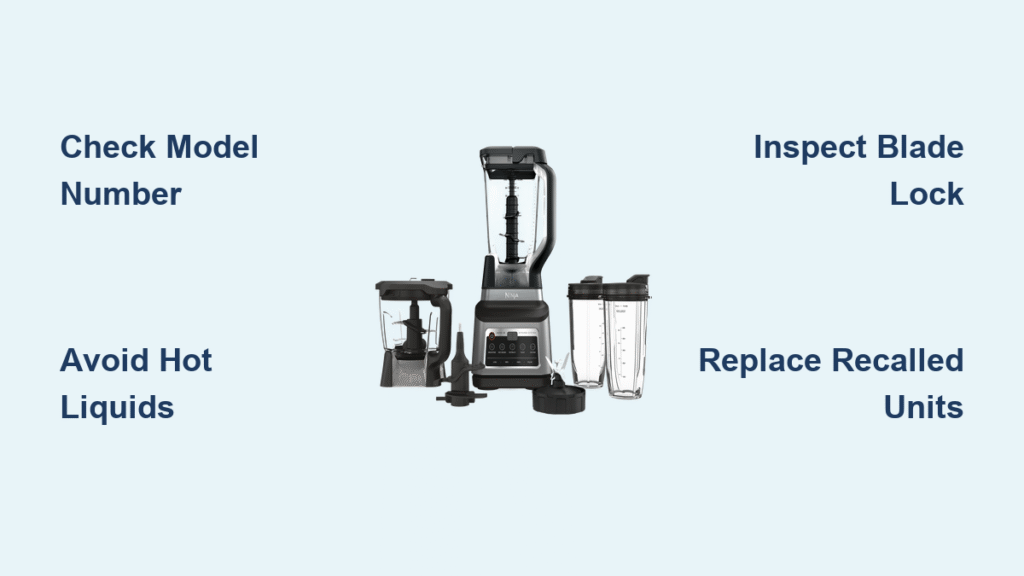
Critical identification tip: If your blender has a removable gray/black locking lid with stacked blade assembly purchased between 2012-2015, check the model number immediately. These units sold at major retailers including Amazon, Walmart, Target, and Costco—meaning they’re still active in millions of homes.
Critical Design Flaws That Make These Blenders Dangerous
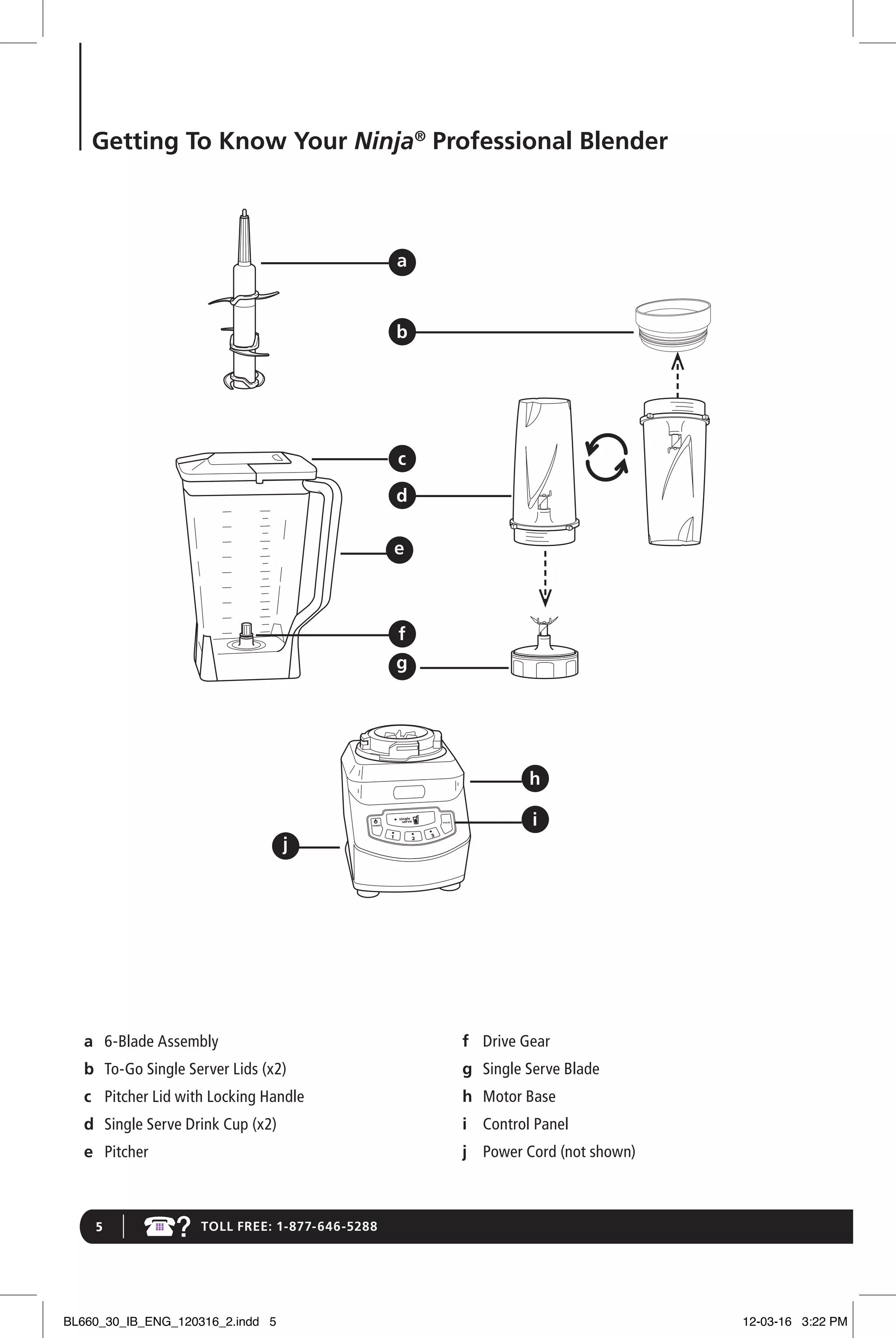
Blade Assembly Defects You Can’t Fix Yourself
The Achilles heel of these Ninja blenders lies in their blade locking mechanism. Unlike safely anchored designs, these blades sit in a removable assembly that can detach mid-operation. The “Total Crushing Technology” that makes blades exceptionally sharp also makes them exceptionally dangerous when control is lost—spinning at 1,000-1,200 watts of power.
This fundamental design flaw cannot be repaired or modified by users. No amount of careful handling completely eliminates the risk when the locking mechanism itself is defective. The stacked blade assembly’s multiple sharp edges create additional cutting surfaces when detachment occurs.
Packaging Hazards That Cause Immediate Injury
Users report cutting themselves during unpacking because blade assemblies sit exposed in boxes. The unsecured components drop out unexpectedly, creating immediate injury risk before first use. Unlike properly designed appliances, these blenders lack protective blade covers or secure packaging that would prevent contact with sharp edges during setup.
Immediate Safety Protocols That Could Save Your Fingers
Before Each Use: Mandatory Checks
- Inspect blade assembly for proper seating—look for any visible wobble
- Check locking mechanism clicks securely into place with audible confirmation
- Never blend hot liquids in sealed containers—this violates critical safety parameters
- Use protective gloves when handling blades during cleaning or setup
During Operation: Life-Saving Distance Rules
- Keep hands away from lid and pitcher at all times during operation
- Stand at arm’s length during blending cycles to avoid injury radius
- Stop immediately if unusual sounds, vibrations, or wobbling occur
- Never remove lid while blades are spinning or could still be moving
Legal Recourse for Documented Ninja Blender Injuries
Current Lawsuits Seeking Justice
Multiple law firms represent injured users nationwide:
– Bernheim Kelley (Fort Lauderdale) handling national cases
– Johnson//Becker attorneys focusing on severe laceration cases
– KP LAW representing clients with permanent functional impairment
– Neumann Law Group pursuing class action for undisclosed risks
Evidence You Must Preserve Immediately
If injured:
1. Photograph everything—injuries, blender, scene, and packaging
2. Preserve evidence—do not throw away blender, packaging, or clothing
3. Medical documentation—get detailed records of all treatments
4. Incident timeline—write down exactly what happened while fresh
5. Contact product liability specialist—statute of limitations applies
Prevention Strategies That Actually Work
Safe Alternatives and Critical Practices
- Replace recalled models immediately—don’t risk “one more use”
- Choose blenders with permanently anchored blades that cannot detach
- Read all safety warnings thoroughly before first operation
- Share awareness with family members who might use the appliance
Red Flag Warning Signs You Must Take Seriously
Watch for these danger indicators:
– Loose blade assembly (wobbles when locked in place)
– Cracks in pitcher or visible damage to locking mechanism
– Unusual vibrations during operation signaling instability
– Lid that doesn’t seal properly creating detachment risk
The blade assembly that makes your Ninja blender powerful can also make it deadly. These documented injuries prove that product design flaws create real dangers in everyday kitchens. Take immediate action to protect yourself and your family by checking your model number and following strict safety protocols. Your morning smoothie isn’t worth permanent scars or surgical recovery—replace recalled models today before an accident happens in your kitchen.