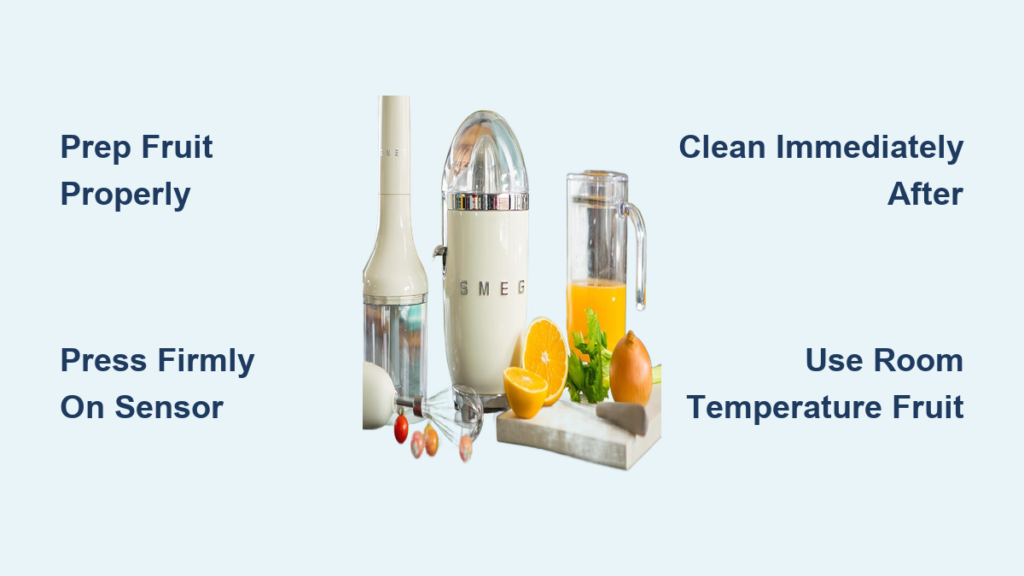
There’s nothing quite like the taste of fresh-squeezed orange juice on a Sunday morning, but if your Smeg CJF01 juicer isn’t working properly, you’re missing out on both flavor and convenience. Many users struggle with inconsistent juice extraction, mysterious leaks, or simply don’t know how to maximize their appliance’s potential. The good news is that learning how to use Smeg juicer properly transforms your morning routine from frustrating to flawless—delivering maximum juice yield while protecting your investment for years to come.
Unlike basic manual juicers or cheaper electric models, your Smeg CJF01 features an intelligent on-off sensor system that automatically activates when you press fruit against the reamer and stops when you release pressure. This sophisticated 70W motor system combines Italian design elegance with serious functionality, but only if you understand its unique operation requirements. With proper technique and maintenance, your Smeg juicer will deliver consistently excellent results morning after morning while becoming a beautiful centerpiece on your countertop rather than something you hide away in a cabinet.
Prepare Your Smeg CJF01 Before First Use
Skip this critical preparation step and you’ll compromise both performance and longevity of your appliance. Begin by removing all packaging materials, protective films, and promotional stickers from the juicer body and components—pay special attention to the sensor area where residue could interfere with operation. Locate all detachable pieces: stainless steel reamer, strainer, juice collector, and protective cover, ensuring nothing is missing from your unboxing experience.
Wash every removable component thoroughly with warm water and mild dish soap before assembly. The stainless steel reamer and strainer benefit from immediate washing since citrus residues can dry and become stubborn to remove later. Use a soft brush to gently clean the textured surfaces of the reamer where pulp might accumulate. Rinse each piece completely to eliminate any soap residue or manufacturing traces that could affect juice flavor. This initial cleaning isn’t just about hygiene—it allows you to inspect each component for shipping damage and familiarize yourself with how the pieces fit together.
Critical inspection points before first use:
– Check that the power cord shows no signs of damage or fraying
– Verify the rubber feet are securely attached to the base
– Confirm the on-off sensor area is clean and free from debris
– Test that the reamer rotates freely when manually turned
Place the base on a stable, flat surface near a power outlet with adequate ventilation around the motor housing. Never operate your Smeg juicer on uneven surfaces or near water sources. Your appliance is now ready for proper assembly and its first juicing session.
Assemble Your Smeg Juicer Components Correctly

Incorrect assembly is the #1 cause of poor performance and premature wear in Smeg citrus juicers. Start by positioning the base unit firmly on your chosen surface—the rubber feet provide stability, so ensure they’re not obstructed by towels or uneven surfaces. Place the juice collector onto the base, aligning it with the designated area until you feel it settle into position. The collector must sit level to prevent tilting during operation, which causes leaks and reduces juice extraction efficiency.
Insert the stainless steel strainer into the juice collector, matching any positioning tabs or notches designed to keep it stable during the vigorous juicing motion. The strainer filters seeds and larger pulp particles while allowing your desired level of pulp to pass through—proper alignment ensures optimal juice flow. Press the stainless steel reamer firmly onto the central drive shaft, confirming it rotates freely without wobble. A properly attached reamer spins true, extracting juice efficiently from every angle of the fruit surface.
Position the protective cover over the strainer and reamer assembly, ensuring it clicks into place if your model features this mechanism. Before plugging in, double-check that all components are properly seated and aligned—this quick verification prevents mid-juicing interruptions and protects the motor from unnecessary strain. Pro tip: Assemble your juicer in the same order every time to develop muscle memory and avoid missing critical steps.
Operate Your Smeg Juicer with Perfect Technique
Mastering the on-off sensor system separates casual users from true Smeg juicer experts. Place your glass or container directly beneath the non-drip spout, positioning it to catch every drop of fresh juice. Prepare citrus fruits by cutting them in half across the equator (perpendicular to the stem end)—this creates a flat surface that contacts the reamer more completely than lengthwise cuts. Larger fruits like oranges and grapefruits work best halved, while smaller lemons and limes can be processed whole or halved depending on size.
Firmly press the cut side of the fruit against the stainless steel reamer, applying steady downward pressure. The integrated sensor immediately detects this pressure and activates the 70W motor—no switches required. Rotate the fruit slowly against the reamer while maintaining consistent pressure, allowing the textured surface to extract juice from every section of the flesh. Continue until the fruit rind shows visible pallor and the fruit feels significantly lighter in your hand—these signs indicate most juice has been extracted.
Common mistakes that reduce yield:
– Using refrigerated fruit instead of room temperature
– Pressing too lightly, failing to activate the sensor consistently
– Not rotating the fruit, leaving juice trapped in one area
– Removing fruit too soon before complete extraction
For continuous juicing of multiple fruits, maintain a steady rhythm that makes quick work of larger batches. This simple technique delivers maximum yield with minimal effort—typically 3-5 minutes for a full pitcher of juice.
Clean Your Smeg Juicer Immediately After Use

Post-juicing cleaning takes just 5 minutes but prevents hours of scrubbing later when dried citrus residue becomes stubborn. Unplug the unit and allow the motor to cool if you’ve been juicing continuously. Disassemble by removing the cover, reamer, strainer, and juice collector from the base in that order. Rinse each component immediately with warm water to prevent juice residue from drying—delaying this step is the #1 cause of difficult cleaning sessions.
Use mild dish soap and a soft brush to clean the stainless steel reamer and strainer, paying particular attention to the mesh areas where pulp accumulates. The non-drip spout wipes clean easily with a damp cloth, removing any splatter. For deeper cleaning, place dishwasher-safe components on the upper rack of your dishwasher—never use the lower rack where heating elements might damage parts.
Critical cleaning warnings:
– Never immerse the base unit in water
– Avoid abrasive cleaners that could scratch surfaces
– Don’t leave components soaking overnight
– Always dry thoroughly before storage
Proper cleaning after every use extends your Smeg juicer’s lifespan by preventing corrosion and maintaining optimal performance. Dry all components completely before reassembly to prevent moisture damage to electrical components.
Maximize Juice Extraction with Pro Techniques
Room temperature fruits yield 20-30% more juice than refrigerated ones—remove citrus from the refrigerator 15-30 minutes before juicing for noticeably better results. Before cutting, roll each fruit firmly on your countertop under your palm with moderate pressure. This simple action breaks down the internal pulp structure and releases juice that would otherwise remain trapped.
Select fruits that feel heavy for their size, as this indicates higher juice content within the pulp chambers. When cutting, make your incision perpendicular to the stem end rather than lengthwise—this creates a flat surface that contacts the reamer more completely during juicing. Apply firm, consistent pressure against the reamer while rotating the fruit slowly—the 70W motor handles this pressure easily without stalling.
Visual extraction cues:
– Fruit rind appears pale and translucent
– Fruit feels substantially lighter in your hand
– Juice flow slows to a trickle
– Pulp appears dry and fibrous
For lemons and limes, which naturally contain less juice, the room-temperature preparation and thorough rolling make a particularly noticeable difference in your final yield—often doubling the amount you extract.
Troubleshoot Common Smeg Juicer Problems
When your motor fails to start despite proper assembly, first verify the unit is plugged into a functioning power outlet—try a different outlet to rule out electrical issues. Check that all components are correctly assembled, as the on-off sensor requires proper installation to detect pressure accurately. Inspect the sensor area for pulp buildup that might interfere with its sensitivity, cleaning gently with a dry cloth if necessary.
Reduced juice output typically stems from one of several common causes:
– Fruits that are too cold (always use room temperature)
– Pulp buildup on the reamer or strainer (clean thoroughly)
– Worn reamer surface (contact Smeg for replacement)
– Improper fruit cutting technique (cut perpendicular to stem)
Leakage from the non-drip spout indicates improper assembly—ensure the juice collector is properly seated and not overfilled during use. Clean the spout area meticulously to remove any residue that might compromise the seal. Addressing these issues promptly prevents messes and maintains the reliable performance your Smeg juicer is designed to deliver.
Maintain Your Smeg Juicer for Long-Term Reliability
Store your Smeg juicer with all components completely clean and dry to prevent mold and corrosion. Place the cover over the appliance to protect it from dust when not in use for extended periods. Store in a cool, dry location away from direct sunlight and extreme temperatures that could degrade materials over time.
The Smeg CJF01 is built to last with stainless steel components and anti-corrosive materials, but regular maintenance extends its service life significantly. Every 3-6 months, perform a thorough inspection of all components for signs of wear, especially the reamer’s textured surface where dulling reduces extraction efficiency. Contact Smeg customer support for replacement parts when needed—never attempt to modify components yourself.
Final pro tip: Keep your juicer assembled and on your countertop rather than stored away—this visual reminder encourages regular use and makes morning juicing routines effortless. With proper care, your Smeg citrus juicer will deliver consistently excellent results for 5-10 years or more, becoming a cherished kitchen companion that elevates your daily routine with every squeeze.