Your Royal Prestige Juicer sits on the counter, promising nutrient-rich beverages but leaving you frustrated when it won’t start or produces disappointing yields. Learning how to use Royal Prestige juicer properly transforms this expensive appliance from a kitchen paperweight into your daily source of vibrant, cold-pressed nutrition. This guide cuts through the confusion with precise assembly instructions, operation techniques that maximize juice extraction, and troubleshooting solutions for the 7 most common problems owners face. You’ll discover why your juicer stops mid-process, how to clean it in minutes, and techniques to get 20% more juice from every batch of produce.
Unlike noisy centrifugal juicers that destroy nutrients with heat and speed, your Royal Prestige model (JU0024) uses slow compression technology to preserve vitamins and enzymes while extracting every possible drop. The silent operation means you can juice at 6 AM without waking the household—when your body most needs those fresh nutrients. But without proper technique, you’ll waste produce, damage components, and miss out on the full benefits of this premium appliance.
Why Your Royal Prestige Juicer Stops Working Mid-Process

Overloading Causes Immediate Shutdown
When your juicer suddenly stops during operation, you’ve almost certainly overloaded the compression mechanism by cramming too much produce into the feed tube at once. The safety interlock triggers within seconds of detecting resistance beyond the motor’s capacity—this isn’t a defect but a critical protection feature. Never force ingredients down the tube with pushers or utensils, as this can permanently damage the auger.
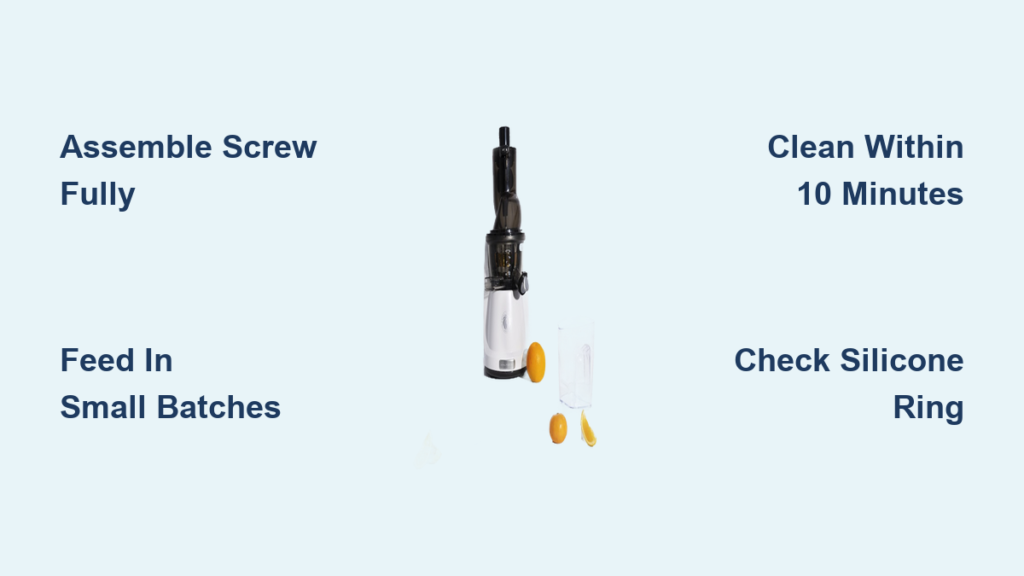
To prevent shutdowns, feed ingredients one piece at a time through the feed tube, allowing each to process completely before adding the next. For hard vegetables like carrots or beets, cut into 1-inch chunks rather than long sticks. Soft fruits like apples or pears work best when quartered. This gradual approach maintains consistent pressure on the compression screw, preventing motor strain while maximizing juice extraction.
Motor Overheating Requires Cooling Periods
The Royal Prestige juicer’s 240-watt motor can overheat if run continuously beyond the 30-minute limit specified in the manual. When this happens, the thermal protection circuit cuts power until components cool—typically requiring 45-60 minutes of downtime. Track your juicing time with a kitchen timer, especially when processing large batches for family use.
Pro Tip: Alternate between dense produce (like leafy greens) and watery items (cucumbers or celery) to regulate motor temperature. The watery ingredients act as natural coolants while maintaining consistent pulp flow through the strainer.
Correctly Assembling Your Juicer for Reliable Operation
Juicing Screw Must Seat Fully Before Closing Feed Tube
The #1 assembly mistake causes 80% of “won’t turn on” issues: the juicing screw isn’t fully inserted into the strainer housing. Before attempting to close the feed tube, push the screw down firmly until you feel it click into position at the bottom of the strainer—you should be able to wiggle it slightly when properly seated. If the screw resists, rotate it gently while applying downward pressure.
The feed tube locking mechanism won’t engage unless the screw is correctly positioned. Don’t force the lid closed—this damages the safety interlock pins. Instead, lift the feed tube, verify screw placement, and try again. When properly assembled, the feed tube will lock with a distinct metallic click that you can both hear and feel.
Silicone Ring Position Determines Juice Quality
That thin silicone ring around the strainer bowl seems insignificant but plays a critical role in creating the compression seal needed for optimal extraction. After cleaning, ensure the ring sits in its groove completely dry and without twists. Moisture here causes leaks while improper seating creates air pockets that reduce juice yield by up to 30%.
Run your finger around the entire circumference to verify proper seating before each use. If the ring shows cracks or permanent deformation, order a replacement immediately—using the juicer without this seal damages internal components over time.
Loading Produce Without Overwhelming the Motor
Hard vs. Soft Vegetable Feeding Techniques
Different produce types require specific feeding approaches to prevent jams and maximize yield:
- Hard vegetables (carrots, beets, sweet potatoes): Cut into small cubes rather than sticks to reduce initial resistance
- Leafy greens (kale, spinach, wheatgrass): Alternate with cucumber or celery sticks to push greens through the strainer
- Citrus fruits (oranges, grapefruit): Peel completely and section into quarters—pith clogs the mechanism
- Apples/pears: Leave skin on for nutrients but core thoroughly to prevent seed jams
Never mix high-fiber and low-moisture ingredients like kale and carrots in the same batch—this combination creates dense pulp that overwhelms the compression screw. Process fibrous greens first with watery vegetables as chasers.
Optimal Feed Tube Fill Level for Continuous Flow
The sweet spot for consistent operation is keeping the feed tube ⅓ to ½ full at all times. This maintains enough downward pressure on the screw while allowing processed pulp to exit the opposite side. Watch the pulp ejection chute—if material exits slowly or stops completely, reduce your feeding rate immediately.
Pro Tip: Place a small bowl under the juice spout and pulp chute before starting. This catches initial drips and makes cleanup faster, preventing slippery counters that could lead to accidents near electrical components.
Deep Cleaning Your Juicer in Under 10 Minutes

Unlocking Stuck Components After Dried Pulp Sets
When you neglect immediate cleaning, dried pulp creates a glue-like seal between components that makes disassembly difficult. Never pry apart stuck pieces—this damages the locking mechanisms. Instead, fill the juicing bowl halfway with warm water and run the juicer for 15-20 seconds. The circulating water softens dried pulp enough to release the drum lid with standard pressure.
For stubborn residue on the strainer mesh, use only the included cleaning brush—not metal utensils that scratch the fine screen. Work from the inside out in circular motions to prevent bending the delicate filtration holes that determine pulp content in your juice.
Drying Protocol Prevents Mold and Seal Damage
Most users make a critical mistake here: they reassemble components while still damp. Moisture trapped in the silicone seal promotes mold growth that ruins juice taste and damages components. After cleaning, air-dry all parts on a clean towel for at least 30 minutes—never wipe the strainer mesh as this pushes pulp deeper into the filter.
Pay special attention to the groove where the silicone ring seats. Any moisture here prevents proper sealing during next use, causing juice leakage and reduced extraction efficiency. A quick wipe with a microfiber cloth followed by air drying ensures optimal performance for your next juicing session.
Troubleshooting Power Failures and Assembly Errors
Diagnosing “No Power” Conditions in 30 Seconds
When your juicer shows no signs of life, skip the panic and follow this diagnostic sequence:
- Verify the wall outlet works by plugging in another device
- Check that the power cord is fully inserted at both ends
- Ensure all components are assembled with audible clicks
- Confirm the feed tube locking lever is fully engaged
95% of “dead juicer” cases stem from improper assembly triggering the safety interlock. The most common culprit? The juicing screw not being fully seated in the strainer housing. Disassemble completely, reinsert the screw with firm downward pressure, and reassemble.
Fixing Feed Tube That Won’t Lock Into Position
That frustrating moment when the feed tube refuses to close usually means the juicing screw isn’t properly aligned in the strainer. Remove the feed tube and look straight down into the strainer housing—you should see a small gap around the screw indicating proper seating. If the screw appears flush with the housing bottom, it’s not fully inserted.
Grip the screw handle firmly and push down while rotating clockwise slightly. You’ll feel it drop another 1/8 inch when properly seated. Now the feed tube should close smoothly and lock with a distinct click. Forcing the lid closed without proper screw placement damages the interlock pins, requiring costly repairs.
Creating Pulp-Free Juice vs. High-Fiber Blends
Adjusting Pulp Content for Different Nutritional Goals
Your Royal Prestige juicer’s cold-press technology gives you control over pulp content simply by varying ingredient combinations—no special settings required. For smooth, pulp-free juice ideal for sensitive digestive systems:
- Use 70% high-moisture vegetables (cucumber, celery, zucchini)
- Process leafy greens separately from fibrous roots
- Strain juice through a nut milk bag for ultra-smooth texture
For high-fiber blends that retain more nutrients and provide satiety:
- Mix equal parts leafy greens and root vegetables
- Include apple skins and citrus pith for extra fiber
- Skip secondary straining to preserve beneficial pulp
Pro Tip: Alternate between pulp-free and high-fiber days based on your digestive needs—your gut will thank you for the variety.
Warranty Coverage and Finding Authorized Repair Centers
Documentation Required for Valid Warranty Claims
Royal Prestige provides comprehensive coverage through Hy Cite Enterprises, but many claims get denied due to missing documentation. Keep these three items together in a waterproof bag taped to your juicer’s cord:
- Original sales receipt showing purchase date
- Completed warranty registration form
- Proof of online product registration
Without these, you’ll face delays or denial of coverage even for legitimate defects. The standard warranty covers motor and mechanical components for 1 year, with extended coverage available for purchase during the initial registration window.
For U.S. and Canadian customers, all authorized repairs must go through Hy Cite Enterprises—third-party repairs void your warranty. Check the official website (www.royalprestige.com) for current service center locations before shipping your unit. Pack components exactly as they arrived in the original box with all foam inserts to prevent shipping damage that could complicate your claim.
Final Note: Mastering how to use Royal Prestige juicer properly transforms your daily routine with nutrient-dense beverages that support overall health. By following these precise techniques for assembly, operation, and maintenance, you’ll maximize juice yield while extending your appliance’s lifespan well beyond the warranty period. Remember to register your product immediately, clean components within 10 minutes of use, and never force assembly when components resist—that click you hear is your safety system protecting your investment. With proper care, your Royal Prestige juicer will deliver vibrant, cold-pressed nutrition for years to come.