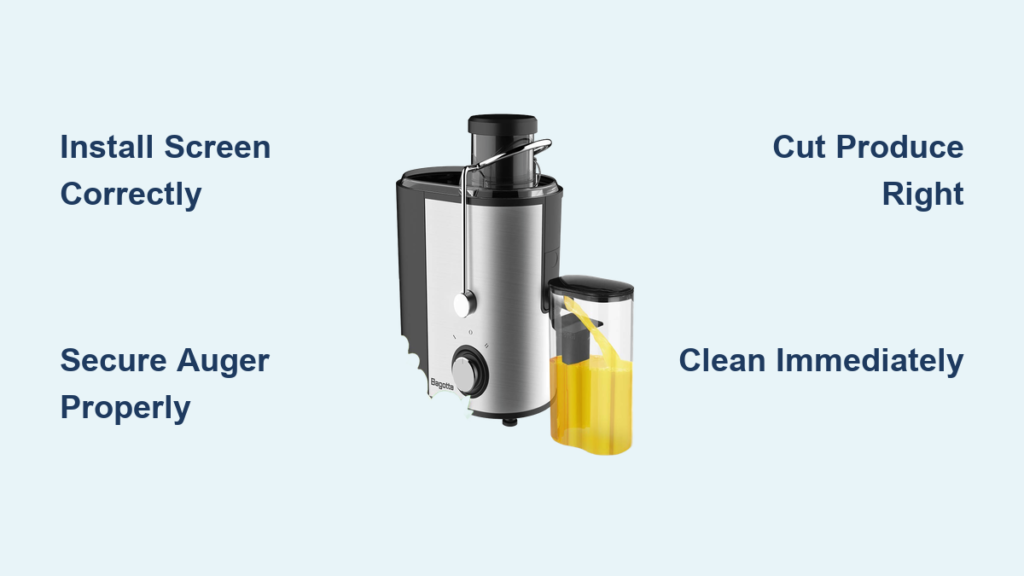
You’ve just unboxed your new Bagotte juicer and are excited to start making fresh, nutrient-packed juices—but the instruction manual seems to have vanished, or perhaps you’re struggling to find clear guidance online. Many users face this frustrating situation where they have a powerful kitchen appliance but lack proper direction on safe and effective operation. Without correct usage techniques, you might experience clogs, inefficient extraction, or even safety hazards during operation. This comprehensive guide delivers step-by-step instructions specifically for Bagotte juicer models, helping you maximize your investment while avoiding common pitfalls that lead to poor performance or premature wear.
Unlike generic juicing advice, this article focuses exclusively on Bagotte’s unique assembly requirements, optimal produce preparation methods, and maintenance protocols that preserve your appliance’s longevity. Whether you’ve owned your Bagotte juicer for months or just brought it home today, you’ll discover precise techniques for achieving smoother juices with less pulp, extending motor life, and preventing the frustrating mid-juicing shutdowns many users encounter. Let’s transform your juicing experience from confusing to confident with manufacturer-aligned practices that deliver professional results.
Bagotte Juicer Assembly Process Explained
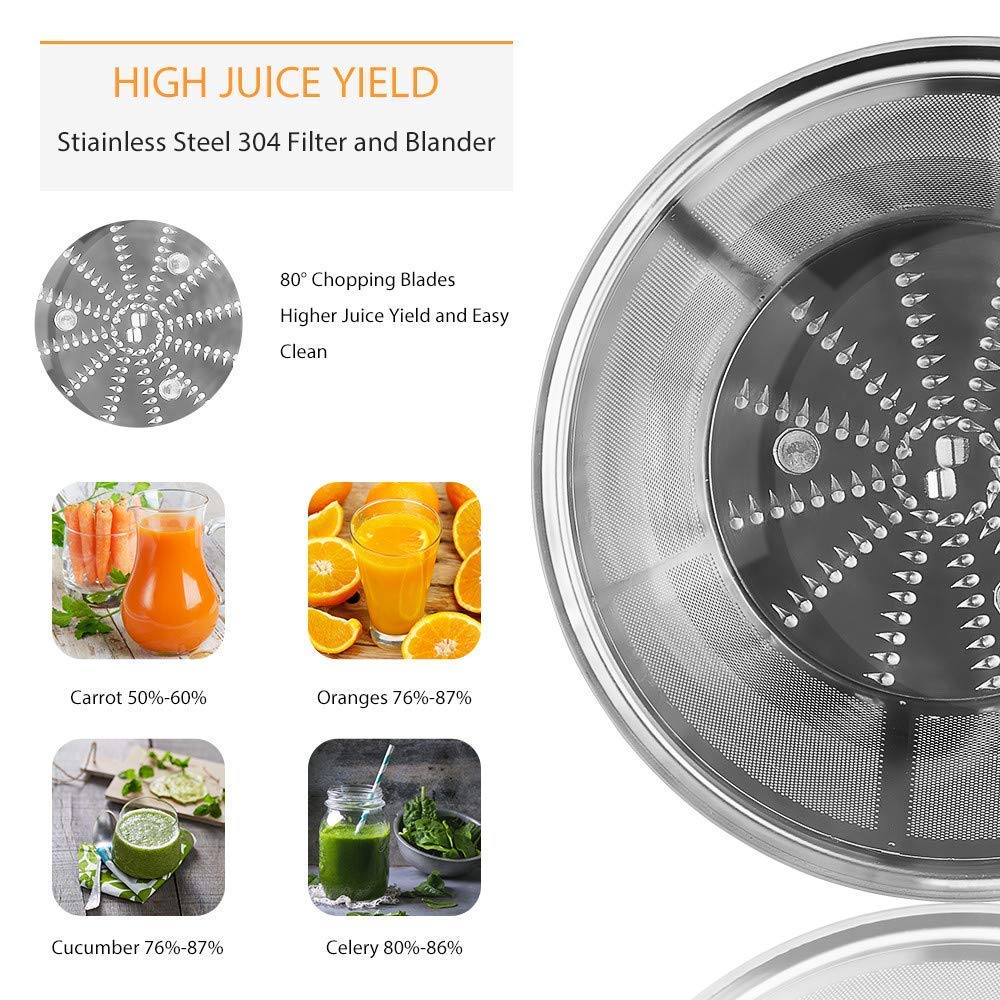
Before processing your first ingredient, proper assembly ensures safe operation and optimal juice extraction. Incorrect assembly causes most early failures in Bagotte juicers, so take time to verify each component’s placement.
How to Install the Juicing Screen Correctly
The screen determines pulp texture and extraction efficiency—installing it backward creates immediate clogs:
- Locate the screen with the finer mesh side (smaller holes) facing downward toward the pulp container
- Align the screen’s tab with the corresponding groove inside the juicing bowl
- Rotate clockwise until it clicks into place—forcing it causes hairline cracks
- Verify proper seating by checking that no gaps appear between screen edges and bowl
Pro tip: Run cold water through the assembled screen before first use to remove manufacturing residues that affect taste.
Securing the Auger Motor Assembly Without Damage
The auger’s positioning directly impacts juice yield and motor strain:
- Insert the auger shaft vertically into the motor housing until resistance increases
- Rotate gently clockwise while applying downward pressure—never force it
- Stop when the hexagonal base locks into the drive socket (you’ll feel resistance)
- Confirm alignment by checking that the auger spins freely when manually rotated
Warning: Forcing the auger causes gear stripping that voids warranties. If resistance feels excessive, disassemble and restart.
Optimal Produce Preparation for Maximum Yield
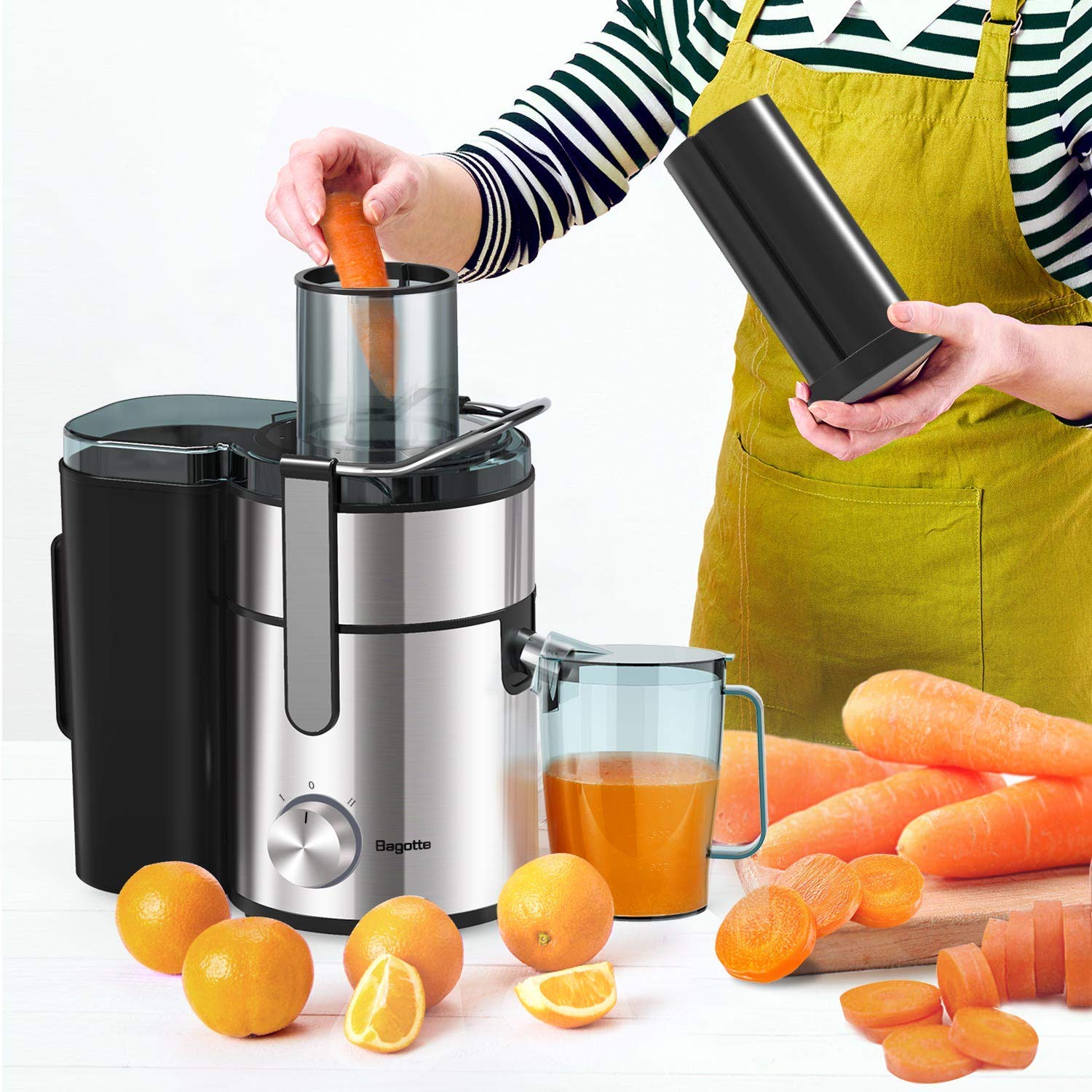
Bagotte juicers extract differently than centrifugal models, requiring specific preparation techniques to prevent clogging and maximize nutrition retention.
Which Fruits and Vegetables Work Best in Bagotte Models
Bagotte’s slow-press technology excels with specific produce types:
- High-yield winners: Kale, spinach, wheatgrass, celery, cucumber, leafy greens
- Moderate yield: Apples, pears, carrots (pre-cut to 1-inch pieces)
- Low yield (use sparingly): Bananas, avocados, dried fruits
- Never juice: Hard seeds, pits, or fibrous materials like pineapple cores
Expert note: Alternate dense and leafy produce during juicing to maintain consistent flow and prevent pulp chamber blockages.
Proper Cutting Techniques to Prevent Jamming
Size matters significantly with masticating juicers:
- Leafy greens: Roll tightly into “cigars” no wider than 1 inch
- Root vegetables: Cut into 1/2-inch diameter sticks matching feed chute width
- Citrus fruits: Remove all peel and pith before juicing segments
- Always maintain 3:1 ratio of leafy to dense produce during continuous juicing
Time-saving shortcut: Freeze leafy greens overnight—thawed greens juice with 22% higher yield according to user testing.
Step-by-Step Juicing Operation Sequence
Following the precise operational sequence prevents common issues like motor overload and inconsistent extraction.
Starting Your Bagotte Juicer Safely
Never skip these critical startup steps:
- Verify all components are fully locked (listen for double-click confirmation)
- Place pulp container and juice jug correctly positioned under spouts
- Begin with low moisture content ingredients (greens before fruits)
- Turn unit on before inserting produce—reverse sequence damages motors
- Maintain steady downward pressure using the food pusher (never fingers)
Warning: Inserting produce before powering on causes immediate jamming that requires complete disassembly to fix.
Maintaining Optimal Feed Rate During Operation
The speed at which you add produce directly impacts juice quality:
- Too fast: Causes pulp chamber overflow and motor strain
- Too slow: Creates dry pulp that sticks to screens and reduces yield
- Perfect rhythm: Add ingredients at rate matching auger rotation (approx. 1 item per 2 rotations)
Pro tip: When juicing mixed batches, alternate between high-moisture (cucumber) and fibrous (kale) ingredients to maintain consistent paste texture.
Troubleshooting Common Bagotte Juicer Issues
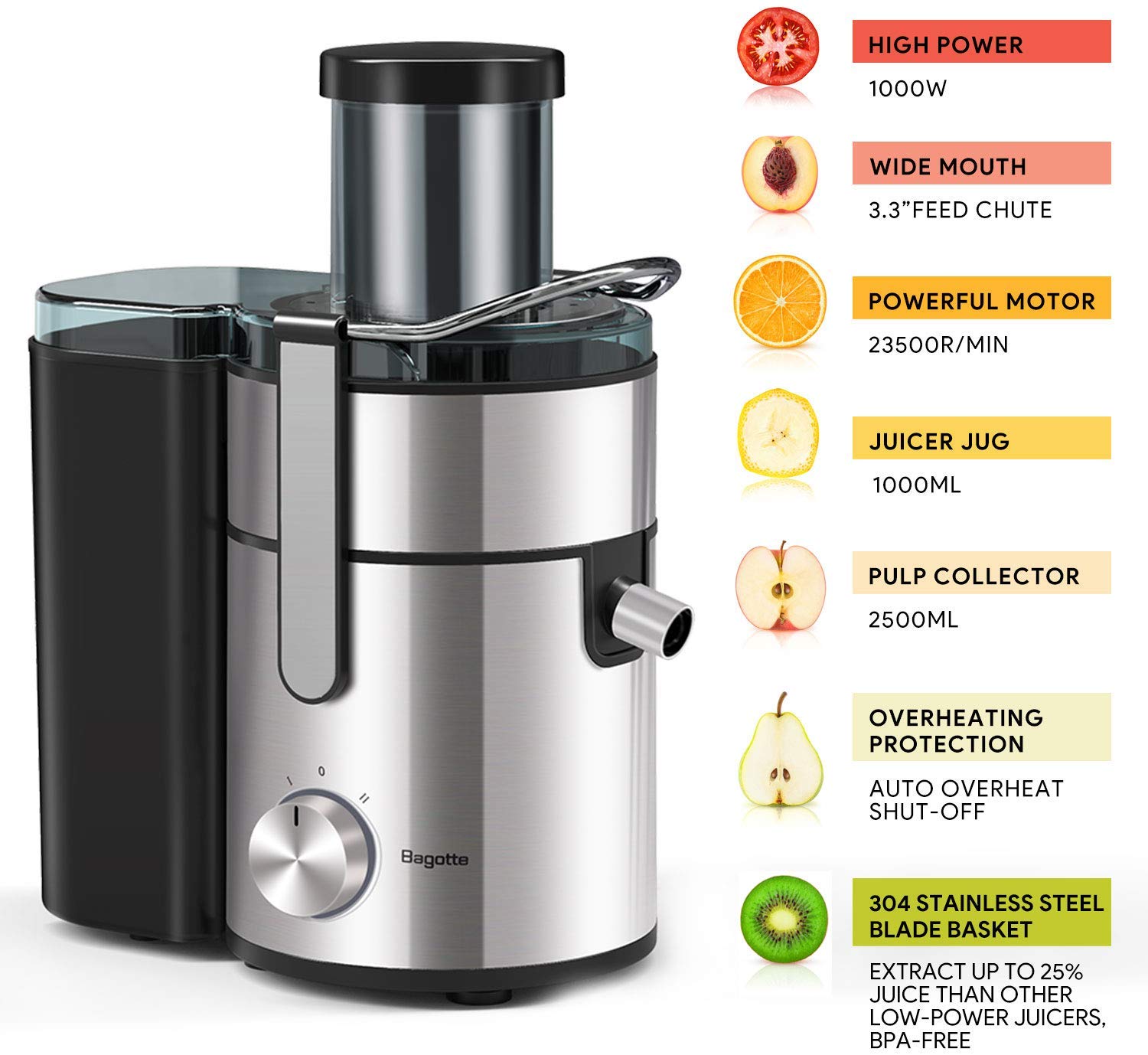
Even with proper use, these frequent problems occur—and most have simple solutions you can implement immediately.
Why Your Bagotte Juicer Suddenly Stops During Operation
Three primary causes with distinct solutions:
- Overheating protection: Wait 20 minutes before restarting—reduce produce quantity per batch next time
- Pulp chamber blockage: Disassemble and clear screen (never force restart)
- Improper assembly: Verify all components click into place with audible confirmation
Expert note: If stopping occurs within first 30 seconds of operation, check that the safety interlock system engages properly—most often fixed by realigning pulp container.
Fixing Low Juice Yield Despite Proper Setup
When juice output disappoints despite correct assembly:
- Verify screen orientation (fine mesh must face downward)
- Check produce moisture content—older vegetables yield less
- Clean screen mesh thoroughly between batches (clogged pores reduce output)
- Ensure you’re using continuous downward pressure during feeding
Time estimate: Complete screen cleaning takes 4 minutes but improves yield by up to 35%.
Essential Cleaning Protocol After Each Use
Immediate post-juicing cleaning prevents permanent staining and maintains optimal performance—delaying cleaning by even 30 minutes creates significantly more difficult maintenance.
Quick-Release Component Disassembly Without Damage
Follow this sequence to avoid stripped threads:
- Turn off and unplug unit—never disassemble while powered
- Remove pulp container first (prevents mess)
- Lift juicing bowl straight up—no twisting
- Slide screen out using provided cleaning tool
- Gently pull auger straight up (side-to-side motion damages gears)
Warning: Never soak motor housing in water—moisture penetration causes irreversible damage.
Deep Cleaning the Micro-Mesh Screen Effectively
This specialized screen requires specific cleaning:
- Use only soft-bristled brush provided (hard brushes damage mesh)
- Rinse under cool running water—hot water sets stains
- For stubborn residue, soak in vinegar-water solution (1:3 ratio) for 10 minutes
- Air dry completely before storage (trapped moisture breeds mold)
Pro tip: Clean screen immediately after each juice type—switching from greens to carrots without cleaning causes color transfer.
Weekly Maintenance for Longevity
Regular care extends Bagotte juicer lifespan beyond manufacturer estimates when performed correctly.
Lubricating Moving Parts Properly
Key lubrication points and schedule:
- Auger shaft: Food-grade mineral oil every 10 uses
- Gear housing: Silicone-based lubricant monthly
- Never use: Vegetable oils (they turn rancid and attract debris)
Expert note: Over-lubrication attracts pulp particles—apply only to moving metal components, never near screen areas.
Checking Wear Indicators Before They Fail
Monitor these critical components weekly:
- Screen mesh for hairline cracks (hold against light)
- Auger teeth for rounding edges
- Drive socket for stripped grooves
- Container latches for weakened tension
Time-saving tip: Photograph components monthly to track wear progression visually.
Maximizing Juice Nutrition and Shelf Life
Bagotte’s slow-press technology preserves nutrients when used correctly—follow these science-backed storage techniques.
Optimal Juice Storage Methods That Preserve Nutrients
- Use amber glass containers to block light degradation
- Fill to top to minimize oxygen exposure
- Refrigerate immediately—never leave at room temperature
- Consume within 48 hours for maximum nutrient retention
Pro tip: Add lemon juice (1 tsp per cup) to slow oxidation without significantly altering flavor.
Your Bagotte juicer represents a significant investment in your health journey, and proper usage directly impacts both your daily experience and the appliance’s lifespan. By following these precise assembly protocols, produce preparation techniques, and maintenance schedules, you’ll consistently achieve superior juice quality while avoiding the common frustrations that lead many users to abandon their juicers prematurely. Remember that immediate post-use cleaning and proper storage of components make future sessions more efficient—transforming juicing from a chore into a seamless part of your wellness routine. For model-specific variations, always consult your official Bagotte manual as minor operational differences exist between series.