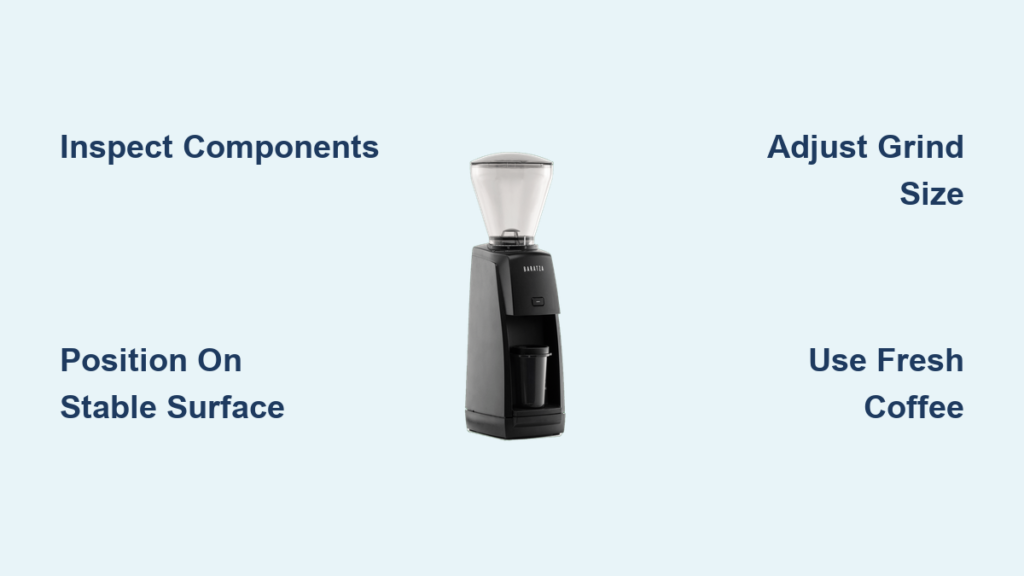
Nothing ruins the excitement of a new coffee grinder faster than struggling with setup issues that prevent you from brewing your first perfect cup. When you unbox your Baratza Encore ESP, proper initial configuration determines whether you’ll enjoy consistent, flavorful coffee extraction or face frustrating inconsistencies right from the start. This guide delivers the exact steps needed to set up your Encore grinder correctly—no guesswork, no missing information, just actionable instructions that transform your new equipment into a reliable brewing partner. You’ll learn how to avoid common setup mistakes that lead to uneven grinding, strange noises, or damaged components, ensuring your grinder operates safely and delivers professional-quality results from day one.
The setup process begins the moment you remove your Encore from its packaging—not when you plug it in for the first time. Many coffee enthusiasts skip critical preparation steps only to encounter problems later that could have been prevented with just five minutes of careful attention. Proper location selection, component inspection, and understanding the adjustment system create the foundation for consistent performance. Without these fundamentals, even small errors compound into major issues affecting extraction quality and equipment longevity.
This guide walks you through every essential setup phase using only manufacturer-recommended procedures. You’ll discover why coffee freshness matters more than most realize during calibration, how to make precise grind adjustments that actually improve your coffee, and what to do when common setup issues arise. Whether you’re new to specialty coffee or upgrading from an entry-level grinder, these steps ensure your Encore delivers its full potential.
Inspect Your Encore Before First Use
Before assembling any components, conduct a thorough inspection of your Baratza Encore ESP to verify it arrived undamaged and complete. This critical step protects your investment and ensures warranty coverage remains valid should any shipping damage exist.
Start by carefully removing all protective packaging materials while preserving the original box and foam inserts. The manufacturer explicitly requires original packaging for any future warranty claims or repairs, so store these materials together in a dry location. Never discard shipping materials immediately after unboxing—doing so creates significant complications if issues arise later.
Examine every visible component for damage, paying special attention to the burr chamber, hopper, and grounds bin. Check for cracks, dents, or misaligned parts that could affect grinding performance. Rotate the hopper to verify smooth movement and inspect the adjustment ring for proper alignment. If you notice any damage during this inspection, contact the retailer or manufacturer immediately with photographic documentation—do not attempt to operate a potentially damaged unit.
Verify that all essential components are present before proceeding. While the exact accessory inventory wasn’t detailed in manufacturer documentation, typical Encore packages include the grinder body, hopper, grounds bin, cleaning brush, and adjustment tool. Missing parts will prevent proper operation, so confirm completeness before assembly begins.
Position Your Grinder for Optimal Performance
Where you place your Encore grinder directly impacts grinding consistency and equipment longevity—more significantly than most users realize. The manufacturer specifies precise placement requirements that affect everything from particle distribution to noise levels during operation.
Place your Encore on a stable, level surface that can handle the machine’s weight (approximately 7.7 lbs) and absorb operational vibrations. Granite countertops, solid wood tables, or dedicated appliance stands work well, provided they don’t wobble when touched. An unstable surface causes the grinder to vibrate excessively during operation, producing inconsistent particle sizes and accelerating component wear.
Ensure adequate clearance around the unit—minimum 6 inches on all sides—to accommodate the hopper’s height (approximately 10.5 inches when filled) and allow easy access to the grounds bin. Position the grinder within comfortable reach of your brewing station to minimize bean transfer distance and reduce spill risks. Avoid locations near heat sources, direct sunlight, or high-moisture areas like dishwashers or sinks, as temperature fluctuations and humidity affect both grinder performance and coffee bean quality.
Consider your workflow when positioning the grinder. If pulling espresso shots, place the grounds bin at a height that allows direct transfer to your portafilter without lifting or straining. For pour-over or French press brewing, ensure enough vertical clearance for your brewing vessel beneath the chute. Proper positioning saves time during daily use and prevents accidental spills that waste precious coffee.
Assemble Components Using Visual Guide
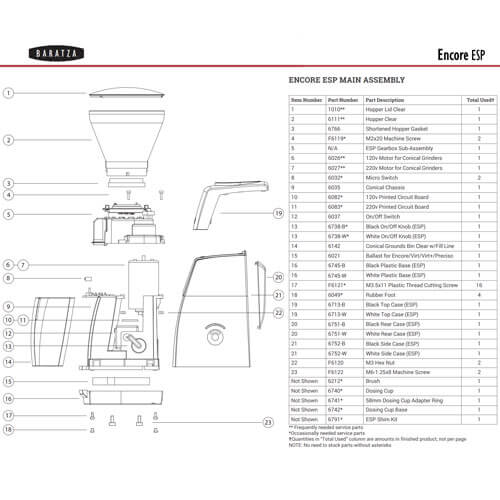
The Encore ESP setup process relies heavily on the visual assembly diagram included with your product documentation, as detailed text instructions weren’t provided in manufacturer materials. This diagram shows the precise alignment and connection points for each component, preventing common assembly errors that affect grinding quality.
Begin by positioning the grounds bin directly beneath the grinding chamber, ensuring it seats completely without gaps or wobble. The bin should slide smoothly into place with a slight click indicating proper alignment. Next, attach the hopper to the top of the unit, rotating it until it locks securely into position. The hopper should rotate freely without resistance when properly installed.
Before powering on, double-check that all components are fully seated and secure. Gently tug on the hopper and grounds bin to verify they won’t dislodge during operation. Ensure no packaging materials remain inside the hopper or grinding chamber—foreign objects cause immediate damage to the burrs. The visual guide highlights critical alignment markers that indicate proper assembly; consult this diagram if components feel loose or misaligned.
Adjust Grind Size for Your Brewing Method
Mastering the Encore’s grind adjustment system separates satisfactory coffee from exceptional results. The hopper lid rotation mechanism provides precise control over particle size, but requires understanding directional conventions and proper adjustment timing.
For finer espresso grinding, rotate the hopper lid clockwise in small increments. Each quarter-turn reduces particle size, increasing extraction yield. For coarser French press or cold brew settings, rotate counterclockwise to create larger particles that extract more slowly. The manufacturer emphasizes one crucial rule: always pull at least one espresso shot before making adjustments. This baseline extraction reveals how your current settings perform with your specific beans, preventing unnecessary changes based on assumptions rather than actual results.
Make adjustments incrementally—one-eighth to one-quarter turn at a time—and pull another shot to evaluate changes. Significant extraction shifts occur with minor adjustments, so patience prevents overshooting your ideal setting. Track your adjustments in a brewing journal noting rotation direction, amount, and resulting taste characteristics. This systematic approach builds intuition for how your Encore responds to different beans and brewing conditions.
Source Fresh Coffee for Accurate Calibration

Your ability to properly set up the Encore grinder depends entirely on coffee freshness—a factor many beginners overlook. The manufacturer explicitly states that stale or aged coffee produces misleading results during calibration, making accurate setup impossible regardless of grinder quality.
Never attempt to dial in your espresso settings with coffee older than one month from the roast date. Check your bag for a visible roast date before beginning setup—if none exists or the date exceeds 30 days, obtain fresh beans immediately. Stale coffee lacks the proper gas content and chemical composition for balanced extraction, causing inconsistent flow rates and misleading flavor profiles that confuse the dialing-in process.
For reliable calibration, the manufacturer recommends Mistobox, a service providing direct coffee shipping with customizable delivery frequencies. This ensures consistent access to properly dated, recently roasted beans essential for accurate setup. Using fresh coffee establishes reliable reference points for your grind settings, transforming the dialing-in process from frustrating guesswork into a systematic refinement method.
Troubleshoot Common Setup Problems
Even with careful setup, new Encore owners sometimes encounter issues that prevent proper operation. Understanding these common problems and their solutions helps you resolve issues without unnecessary service calls or frustration.
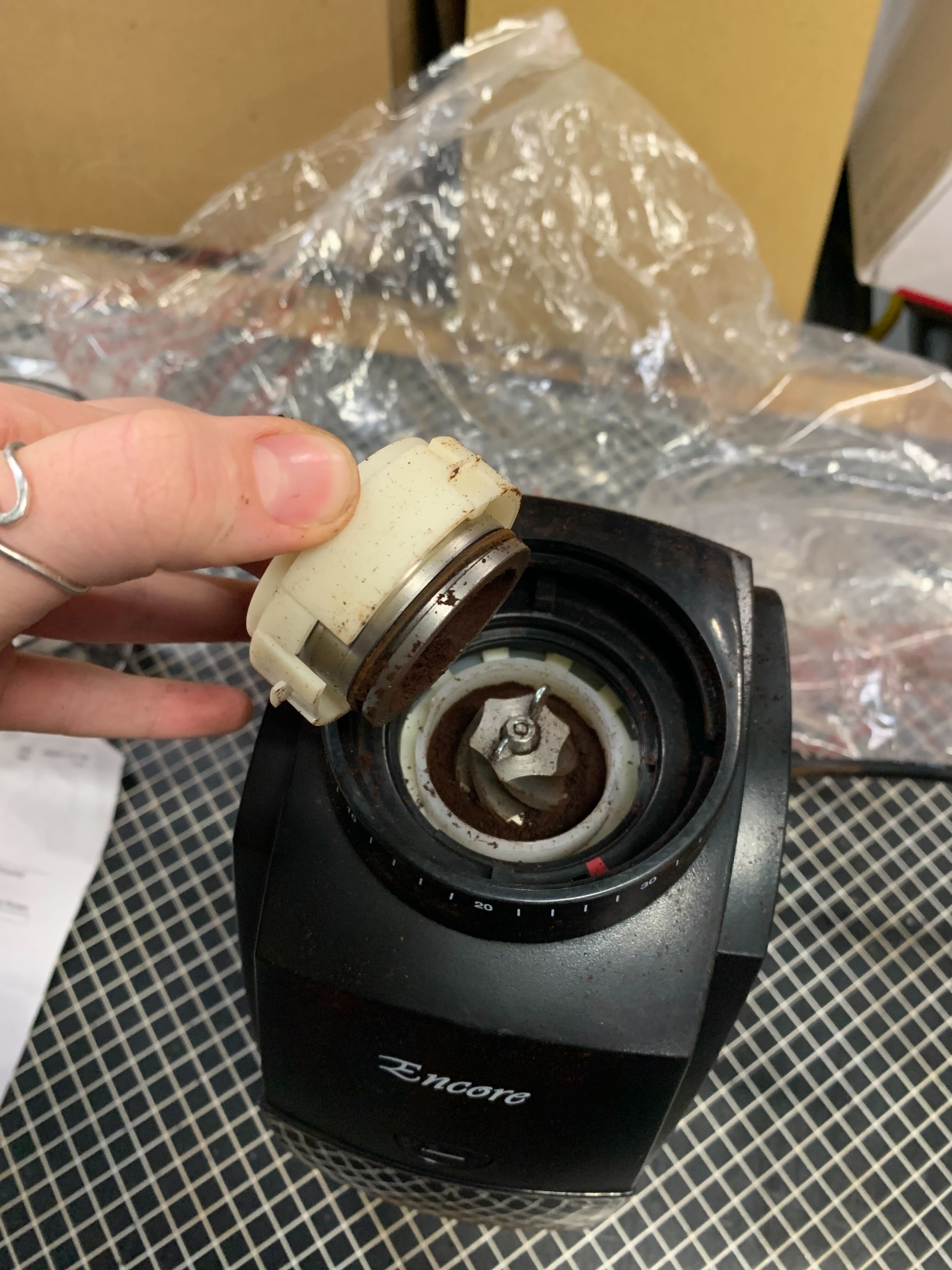
If your grinder produces inconsistent particle sizes (some powder mixed with larger chunks), inspect the burrs for damage or debris. Foreign objects, damaged burr teeth, or accumulated coffee residue cause uneven grinding. Power off and unplug the unit before removing the hopper to examine the burr surface—clean carefully with the included brush if residue is present.
Excessive noise during operation typically indicates improper placement on an unstable surface, loose internal components, or foreign objects in the grinding pathway. First verify your location provides stable support, then power off the unit to check for loose parts or obstructions. Never operate the grinder with unusual noises as this may cause permanent damage.
Grinds not falling properly into the grounds bin usually means misalignment, obstruction, or static buildup. Ensure the bin seats completely and check for visible blockages in the chute. In dry environments, static prevents particle flow—tapping the bin gently or using an anti-static device resolves this common issue.
Maintain Your Encore for Long-Term Performance
While detailed maintenance procedures weren’t provided in manufacturer documentation, basic care principles protect your investment and maintain grinding consistency. Regular cleaning prevents flavor contamination from stale coffee oils that accumulate on grinding surfaces.
Periodically remove retained coffee particles using the included brush, focusing on the burr area and chute pathways. For deeper cleaning, the manufacturer likely recommends burr removal and thorough brushing every few weeks of regular home use. Consult the official product page for complete maintenance instructions specific to your model.
Before storing your Encore for extended periods, run a small amount of fresh coffee through the grinder to clear residual oils and particles. Store with the hopper empty to prevent bean staleness and potential pest attraction. When returning to use after storage, run another purge batch to ensure clean, fresh grinding performance.
Your Encore grinder delivers exceptional results across all brewing methods when set up correctly. By following these precise setup steps—thorough inspection, proper placement, careful assembly, methodical adjustment, and fresh coffee calibration—you’ll transform your new equipment into a reliable brewing partner that enhances every cup. The initial time investment pays immediate dividends in consistent extraction and superior flavor, turning coffee preparation from a chore into a daily pleasure.