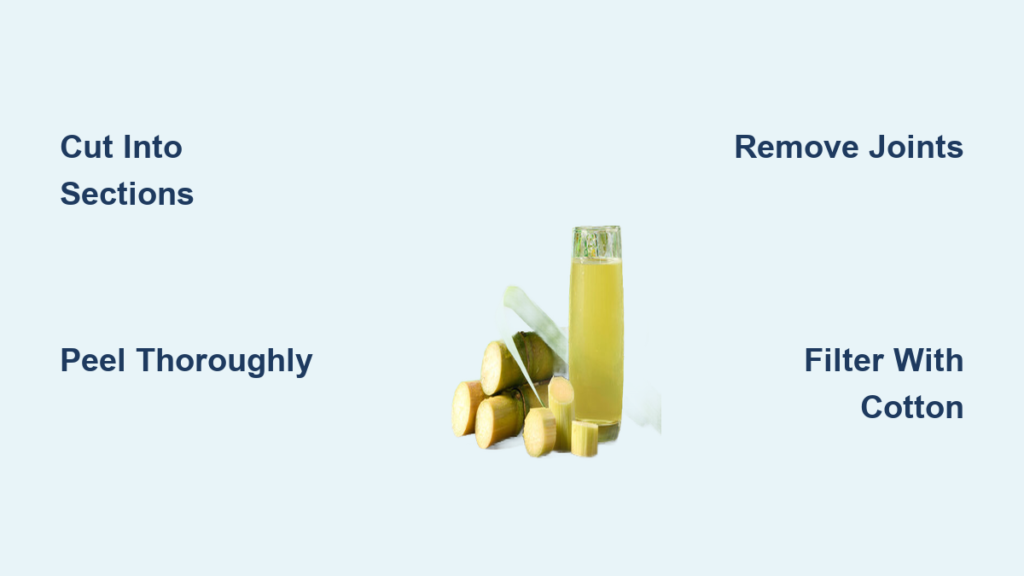
There’s nothing quite like the taste of fresh sugarcane juice—naturally sweet, refreshing, and packed with nutrients. But if you’ve ever tried making sugarcane juice in a juicer without proper preparation, you likely ended up with a clogged machine, wasted cane, and frustration. The good news is that with the right techniques, your Breville Fountain Elite or similar high-powered juicer can successfully extract juice from homegrown sugarcane, yielding a full pitcher from a single ten-foot stalk. Unlike commercial roller crushers that cost thousands of dollars, home juicers require meticulous preparation to handle sugarcane’s extreme toughness and fibrous structure.
Many home gardeners fail at making sugarcane juice because they treat it like ordinary vegetables. Standard juicers aren’t designed for sugarcane’s dense fibers and woody joints, which can damage your machine and ruin your yield. Documented failures with popular juicers like the Omega VERT and Green Star prove this point—attempting to juice unprepared cane leads to broken equipment and disappointment. But with the proper preparation sequence, you can transform your homegrown sugarcane into a delicious beverage while protecting your juicer investment.
Choose Peak-Ripeness Cane for Maximum Sweetness
Skip immature stalks that won’t yield satisfying juice—your sugarcane needs exactly one year of growth to develop optimal sugar concentration. Younger cane lacks sufficient sweetness, while over-mature stalks become too fibrous for home juicing. Focus on selecting stalks where the lower sections appear more developed than the upper growth, as these contain the highest sugar content and will produce the sweetest juice.
Pro tip: Purple sugarcane varieties consistently deliver excellent juicing results with ideal softness and flavor, though green-yellow varieties work well too when properly prepared. When examining your stalks, look for slight color variations in the lower sections—this often indicates accumulated sugars ready for extraction. If you’re growing in containers, ensure your stalk reached full height (typically 8-10 feet) before harvesting for juicing.
Cut Stalks into 3-4 Foot Sections for Safe Handling
Don’t try to feed a ten-foot stalk directly into your juicer—that’s a sure path to clogs and equipment damage. Immediately after harvesting, cut your sugarcane into manageable 3-4 foot sections using a sharp machete or heavy-duty pruning saw. This length allows you to work safely on your cutting board while providing pieces that fit through standard juicer feed tubes.
Critical safety note: Always cut away from your body with a stable stance—sugarcane is deceptively heavy and can slip during cutting. Keep these sections organized as you work, processing one at a time while others remain stable on your surface. This initial cutting also lets you inspect each segment for damage or disease before committing to the more labor-intensive preparation steps.
Scrub and Peel Stalks to Remove Contaminants
Before peeling, thoroughly clean each section under running water using a stiff vegetable brush. Pay special attention to the grooves between segments where dirt, insects, and sooty mold accumulate in humid growing conditions. This cleaning step is non-negotiable—unwashed cane introduces contaminants that spoil your juice’s flavor and safety.
Once clean, grab a large, sharp, thin-bladed knife (a chef’s knife works well) and carefully peel each section. Work slowly to remove just the tough outer skin while preserving the sweet inner pith that contains the juice. The peeled interior should appear moist and pale—this is your target material for juicing. Discard peelings immediately as they contain minimal sugar but significant fiber that would clog your machine.
Eliminate Hard Joints That Damage Juicers

This is the most crucial step many beginners skip: removing the woody joints between cane segments. These dense, circular nodes contain almost no juice but can severely damage your juicer’s internal components. Using your sharp knife, identify the slight constrictions where segments connect and cut cleanly through these points.
Common mistake: Leaving even small joint fragments in your cane will cause immediate strain on your juicer motor. The soft internodal sections between joints contain all the valuable juice—joints are essentially waste material for home juicing. Discard these joints or compost them, as they contribute nothing to your juice yield but everything to potential equipment damage.
Slice Peeled Cane into Feedable Strips
After joint removal, cut your peeled sections lengthwise into 1-inch wide strips. This creates narrow pieces that feed smoothly through your juicer without requiring excessive force. Standard feed tubes on machines like the Breville Fountain Elite handle these dimensions perfectly when the cane is properly prepared.
Time estimate: This final preparation step takes about 5 minutes per 3-4 foot section. Your finished strips should be pale, moist, and completely free of skin or joints—this is what your juicer needs to extract maximum juice without strain. Properly prepared cane will feed through with minimal resistance, while inadequately prepared pieces will jam immediately.
Feed Prepared Cane Through Your Juicer Correctly
With your juicer assembled per manufacturer instructions, begin feeding strips through the feed tube using the pusher. Maintain steady, moderate pressure—don’t force pieces through, as this strains the motor. Expect some initial resistance as the juicer processes the fibrous material, but properly prepared cane should move through without jamming.
Warning: If your juicer makes unusual noises or stops moving, immediately power it off—this indicates unprepared cane (likely containing joints or skin) is damaging your machine. Stop the process, disassemble the juicer, and inspect your remaining cane sections before continuing. The documented success with a Breville Fountain Elite produced a full pitcher of juice from a single ten-foot stalk, but only after complete preparation.
Double-Filter Juice Through Cotton Fabric

Never skip this step: standard mesh strainers can’t capture the fine fibers created by grinding juicers. Pour your freshly extracted juice through a clean white cotton t-shirt stretched over a pitcher—this removes indigestible fibers that cause stomach discomfort. The t-shirt will trap significant stringy residue that would otherwise end up in your glass.
Pro tip: For extra clarity (especially if making syrup), follow with a secondary filter through a coffee filter. The juice passes slowly through the t-shirt, but this 5-minute wait prevents digestive issues. Refrigerate filtered juice overnight and you’ll see any remaining particles settle to the bottom, confirming effective filtration.
Store Juice Properly to Maintain Freshness
Fresh sugarcane juice begins fermenting within hours due to its high sugar content. Store filtered juice in airtight glass containers in the refrigerator and consume within 48 hours for best quality. The natural sugars will start converting quickly, so label containers with extraction dates.
Time-sensitive tip: If making syrup or sugar, process juice immediately after extraction—don’t store it first. The filtering requirements remain the same regardless of your end product, but immediate processing preserves maximum flavor and sugar content for concentration.
Fix These Common Sugarcane Juicing Failures
When your juicer produces minimal output, the problem is almost always inadequate preparation, not equipment failure. If you’re getting little juice, check for these issues:
– Joints still in cane: Causes immediate motor strain and minimal yield
– Incomplete peeling: Skin blocks juice extraction and damages juicer
– Insufficient cleaning: Dirt and mold contaminate flavor and safety
– Overly thick strips: Won’t feed properly through the tube
If your juice causes stomach discomfort, you’ve skipped proper filtration—grinding juicers produce fine fibers standard strainers can’t catch. Always use the t-shirt method. Documented failures with other juicers prove that preparation matters more than equipment—properly prepped cane works in quality home juicers, while unprepared cane breaks even expensive models.
Final Note: Making sugarcane juice in a juicer demands respect for the material’s unique challenges, but the reward is worth the effort. By selecting mature cane, removing every joint, peeling thoroughly, and filtering properly, you’ll transform homegrown stalks into refreshing, naturally sweet juice. Remember that preparation determines success—spend extra time prepping your cane rather than repairing your juicer. With this method, you’ll enjoy fresh sugarcane juice that captures summer’s sweetness all year round, all from your own garden.