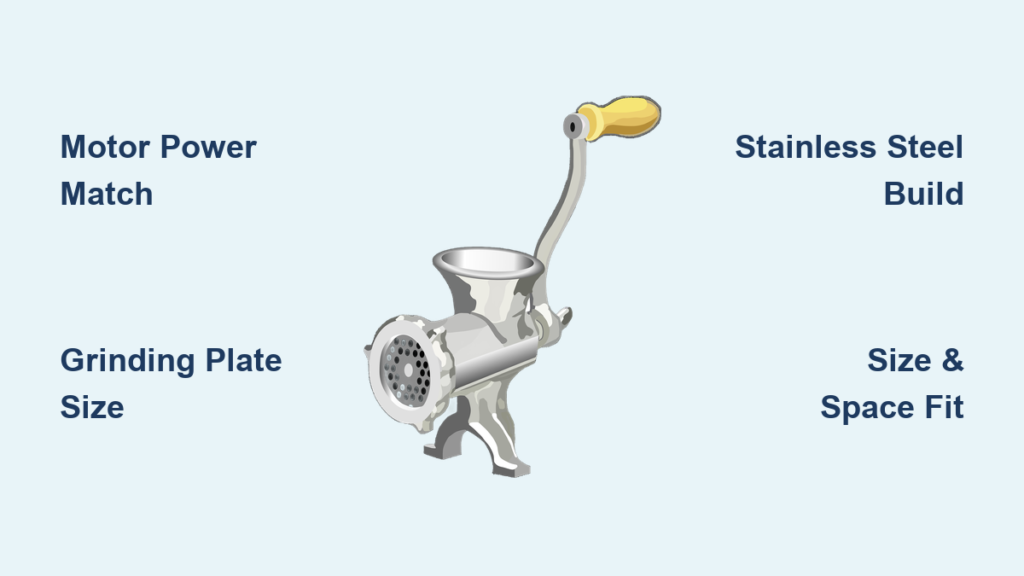
Finding the right meat grinder transforms your kitchen into a custom meat processing center, letting you create fresh ground beef with superior flavor and texture compared to store-bought alternatives. Whether you’re a weekend hunter processing your latest deer harvest, a meal-prep enthusiast grinding weekly batches, or simply tired of mystery meat from the supermarket, selecting the proper equipment makes all the difference between a satisfying culinary experience and frustrating kitchen battles. With options spanning from compact manual models under $50 to professional units exceeding $1000, knowing how to choose a meat grinder ensures you invest in equipment that matches your actual needs rather than marketing hype.
The difference between a quality grinder and a disappointing purchase often comes down to understanding specific technical factors that impact performance. Motor power, construction materials, grinding plate options, and capacity requirements all directly affect whether your unit will deliver consistent results or leave you wrestling with jammed mechanisms and overheating motors. This guide provides the insider knowledge you need to evaluate meat grinders like a professional, so you can confidently select the perfect model for your cooking habits, processing volumes, and budget constraints.
Match Motor Power to Your Specific Meat Processing Volume
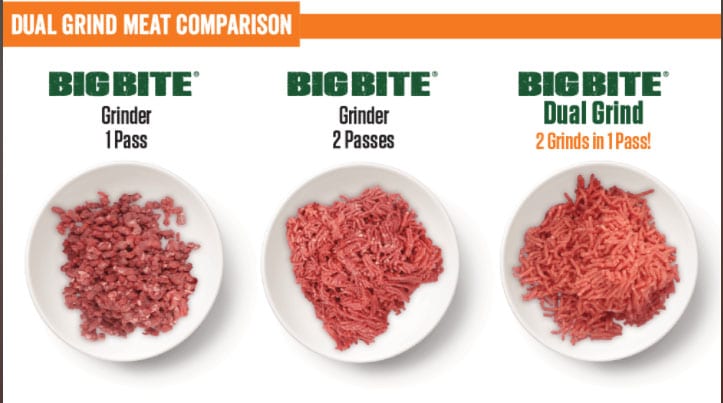
Choosing the right motor power prevents the most common meat grinder disappointment: buying equipment that can’t handle your actual processing needs. Understanding the relationship between wattage ratings and real-world performance helps you select a unit that powers through your typical workload without constant stalling or overheating.
Determine Your Required Wattage Based on Intended Use
Light home cooks who grind meat occasionally for weekly meal preparation need only modest power. A 500-800 watt electric grinder handles 2-4 pounds of boneless chicken, beef, or pork per minute without issue—perfect for preparing burgers, meatballs, or taco night. These units typically cost $80-$150 and represent the sweet spot for most casual users.
Hunters and serious processors require substantially more power. Game meat contains more connective tissue than domestic meat, demanding motors in the 1000-1500 watt range (or 1/2 to 1 horsepower) to process 5-8 pounds per minute without stalling. Units in this category ($150-$300) feature all-metal gears and thermal protection that withstand extended processing sessions when you’re working through multiple animals.
Watch for misleading “peak horsepower” claims that exaggerate actual performance. Quality manufacturers specify continuous duty ratings that indicate sustainable power during extended use. For any application beyond occasional light grinding, prioritize continuous duty specifications to avoid motor burnout during critical processing sessions.
Avoid These Common Power-Related Mistakes
Many first-time buyers make these critical errors when assessing motor power:
- Ignoring thermal protection features: Units without automatic reset thermal switches risk permanent motor damage when overloaded
- Underestimating game meat toughness: Deer and elk require 30-50% more power than domestic meat due to higher connective tissue content
- Overlooking electrical requirements: High-wattage units (1200W+) often need dedicated 15-amp circuits to prevent tripped breakers
Select Grinding Plates That Match Your Recipe Requirements
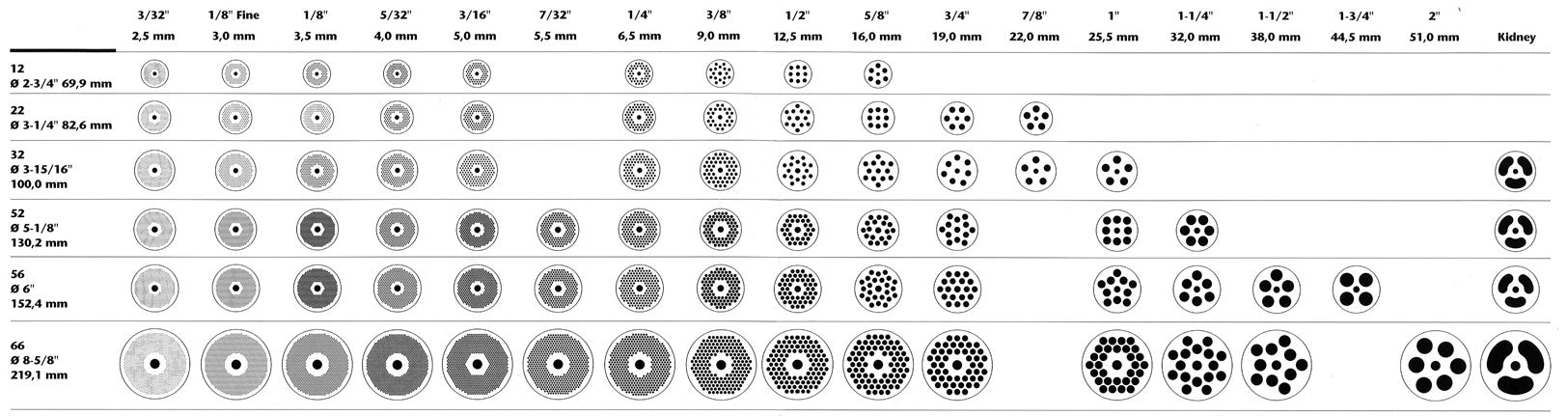
The grinding plate determines your final texture and represents one of the most overlooked yet critical selection factors when you learn how to choose a meat grinder. Different hole sizes create distinct textures essential for specific culinary applications, turning a single machine into a versatile kitchen tool.
Fine vs. Medium vs. Coarse: Matching Plate to Purpose
Fine plates (3mm holes) produce supermarket-style ground beef ideal for:
– Burger patties that hold together on the grill
– Meatloaf with consistent texture throughout
– Emulsified products like hot dogs where uniformity matters
Medium plates (6mm holes) create the preferred texture for:
– Homemade sausages with visible fat marbling
– Taco meat that holds seasoning well
– Chili where some texture variation enhances flavor
Coarse plates (8mm+ holes) work best for:
– Stew meat that maintains distinct chunks
– Shredded meat applications like pulled pork
– Recipes where substantial texture contributes to the final dish
Verify Plate Availability Before Purchasing
Quality grinders include at least three plates (fine, medium, coarse), but budget models may offer only one or two options. Check that replacement plates are readily available from the manufacturer—plates eventually dull with use and require periodic replacement to maintain optimal grinding quality. Serious users should consider purchasing an extra coarse plate as a backup before tackling large processing jobs.
Prioritize Stainless Steel Components for Long-Term Value
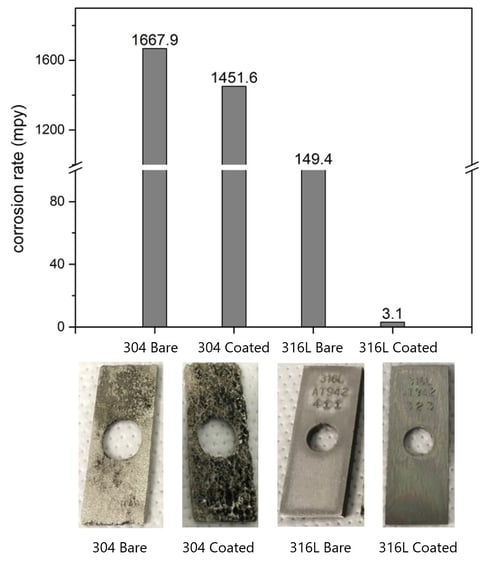
The materials used in meat grinder construction directly impact durability, food safety, and maintenance requirements—factors that separate reliable workhorses from disposable appliances that fail after minimal use.
Stainless Steel vs. Aluminum vs. Plastic: The Reality Check
Stainless steel components (especially for blades and plates) represent the premium choice because they:
– Resist corrosion from meat moisture and cleaning
– Maintain sharp edges significantly longer than softer metals
– Present no food safety concerns with proper maintenance
– Justify higher upfront costs through exceptional longevity
Aluminum construction appears in many mid-range units, offering reasonable durability at lower cost. However, aluminum:
– Reacts with acidic foods during processing
– Requires thorough drying after cleaning to prevent oxidation
– Often combines with stainless steel grinding components in quality models
Plastic components should raise red flags for serious users. While modern food-safe plastics are acceptable for occasional use, plastic:
– Warps under heat from extended operation
– Scratches more easily than metal alternatives
– Generally offers shorter operational lifespans
Size Your Grinder to Your Kitchen Space and Storage Capacity
Physical dimensions directly impact where and how you can use your meat grinder, with implications for countertop space requirements and storage solutions—critical considerations often overlooked when learning how to choose a meat grinder.
Compact vs. Full-Size: Finding Your Sweet Spot
Compact electric grinders (12-16″ L x 6-10″ W x 10-14″ H, 8-15 lbs):
– Fit standard countertop spaces without permanent dedication
– Store easily in cabinets between uses
– Ideal for apartments, small kitchens, or occasional users
– Typically feature 500-800 watt motors suitable for light use
Full-size home grinders (18-24″ L, 20-35 lbs):
– Require dedicated countertop space due to weight and size
– Feature more powerful motors (800-1200+ watts) and larger hoppers
– Better suited for hunters or frequent users processing larger batches
– Often include comprehensive accessory packages
Pro Tip: Measure your available countertop space before purchasing. Many users discover too late that their new grinder won’t fit in their kitchen workflow, leading to frustration and underutilization.
Evaluate Essential Attachments Based on Your Culinary Goals
Beyond basic grinding functionality, attachments transform your meat grinder into a versatile food preparation station. Selecting the right accessories ensures your investment supports current needs while accommodating future culinary exploration.
Must-Have Attachments for Serious Home Processors
Sausage stuffing kits (included with most quality units):
– Feature multiple tube sizes for different sausage types
– Enable filling natural or synthetic casings with seasoned meat
– Essential for making breakfast links, bratwurst, or Italian sausage
Kubbe attachments (specialized but valuable for enthusiasts):
– Create traditional Middle Eastern stuffed dumplings
– Shape ground meat and grain mixture around fillings
– Worth the investment if you regularly prepare these dishes
Jerky attachments (game processors should prioritize):
– Produce uniform strips ideal for drying
– Streamline preparation compared to manual cutting
– Transform fresh meat into superior homemade jerky
Set a Budget That Matches Your Actual Usage Frequency
Meat grinders span an enormous price range, and understanding what each tier offers prevents both underspending that leads to frustration and overspending on underutilized capability when you’re trying to figure out how to choose a meat grinder.
Price Tiers and What They Deliver
Budget Manual ($25-$50):
– Aluminum or plastic construction with stainless steel blades
– Suitable only for occasional small batches
– Requires significant physical effort—impractical for serious use
Entry-Level Electric ($80-$150):
– 500-800 watt motors with basic grinding plates
– Handles weekly home use for most families
– Quality varies widely—research specific models thoroughly
Mid-Range Power ($150-$300):
– 800-1200 watt motors with all-metal gears
– Processes game meat and larger batches without issue
– Best value for hunters and frequent home processors
Professional Grade ($300+):
– 1+ horsepower motors with commercial construction
– Handles marathon processing sessions without overheating
– Justified only for serious home processors or small businesses
Implement Essential Maintenance Practices Before You Buy
Long-term reliability depends as much on maintenance requirements as initial purchase quality. Evaluating these needs before purchasing ensures you select a unit that aligns with your willingness to perform necessary care.
Critical Maintenance Considerations
Cleaning requirements after each use:
– Most components disassemble for hand washing in warm soapy water
– Verify dishwasher safety—aluminum parts often discolor if top-racked
– Complete drying prevents oxidation, especially with aluminum units
Blade and plate maintenance:
– Dull blades produce ragged cuts that compromise texture
– Keep replacement blades on hand for large processing jobs
– High-quality stainless steel blades maintain edge significantly longer
Lubrication needs:
– Some units require periodic gear lubrication with food-grade oil
– Others feature sealed bearings requiring no maintenance
– Consult manuals before purchasing to avoid unpleasant surprises
Make Your Final Selection Using This Proven Framework
Selecting the right meat grinder requires synthesizing information across multiple dimensions. Follow this systematic approach to match equipment capabilities with your specific requirements.
Step-by-Step Selection Process
1. Honestly assess your usage patterns:
– Monthly grinding of 5-10 pounds needs different equipment than processing 200+ pounds annually
– Underestimating leads to frustration; overestimating wastes money
2. Establish realistic budget parameters:
– Factor long-term value: a $400 unit lasting 15 years may cost less than $150 units replaced every 3 years
– Include expected replacement part costs in calculations
3. Identify must-have features:
– Don’t pay for sausage kits if you’ll never make sausage
– Prioritize game-processing capabilities if you hunt regularly
4. Verify physical compatibility:
– Measure countertop space and storage locations
– Confirm electrical circuit capacity for high-wattage units
– Consider weight if you’ll move the unit regularly
5. Research thoroughly before purchasing:
– Read verified purchaser reviews focusing on long-term reliability
– Compare specifications across similar-priced alternatives
– Check replacement part availability from the manufacturer
The perfect meat grinder becomes an indispensable kitchen tool that delivers fresh-ground meat with superior flavor while opening possibilities for homemade sausages, jerky, and specialty dishes. By carefully matching equipment to your actual needs using these guidelines on how to choose a meat grinder, you’ll make an investment that pays dividends in culinary enjoyment for years to come. Whether you’re processing your first deer or simply tired of mystery meat from the supermarket, the right grinder puts premium, custom-ground meat within your reach.