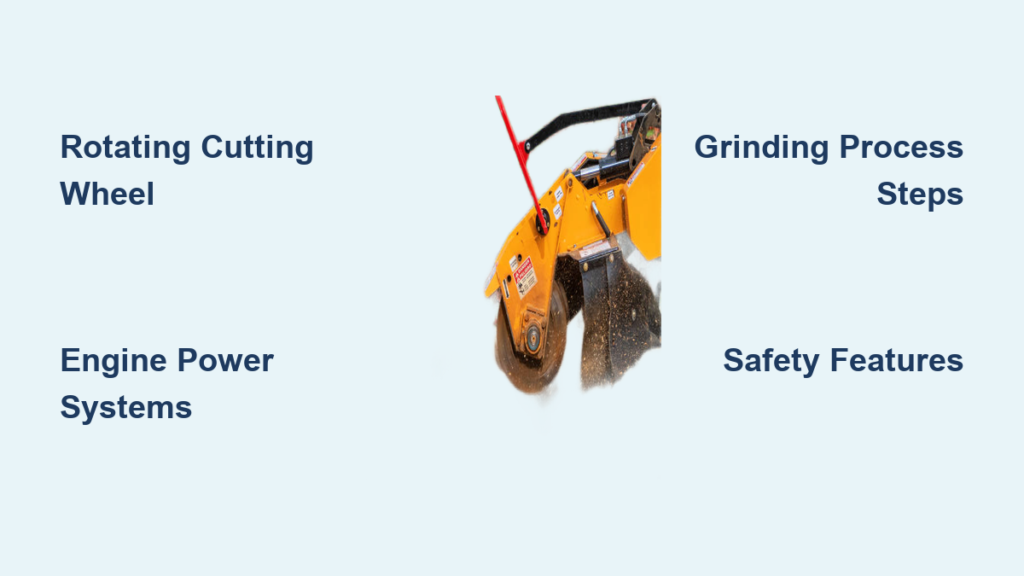
Tree stumps left after cutting down trees create tripping hazards, attract pests, and ruin landscape aesthetics. A stump grinder solves this problem efficiently by transforming stubborn tree remnants into reusable wood chips. Understanding how a stump grinder works is essential whether you’re considering renting one for a weekend project or operating one professionally. These powerful machines use rotating cutting wheels with hardened teeth to pulverize wood at high speeds, typically grinding stumps 4-12 inches below ground level in under an hour for most residential applications. By mastering the mechanics behind stump grinding, you’ll operate equipment more safely and effectively while achieving professional results.
Stump grinders represent a significant advancement over manual stump removal methods, combining precision engineering with brute force to tackle what was once a labor-intensive task. The machines work on a straightforward mechanical principle but incorporate sophisticated design elements that allow them to handle everything from soft pine to dense oak stumps. This guide breaks down exactly how each component functions together to eliminate tree stumps quickly and safely, giving you the knowledge needed to select the right equipment and operate it properly for your specific needs.
Cutting Wheel Mechanics That Shred Stumps
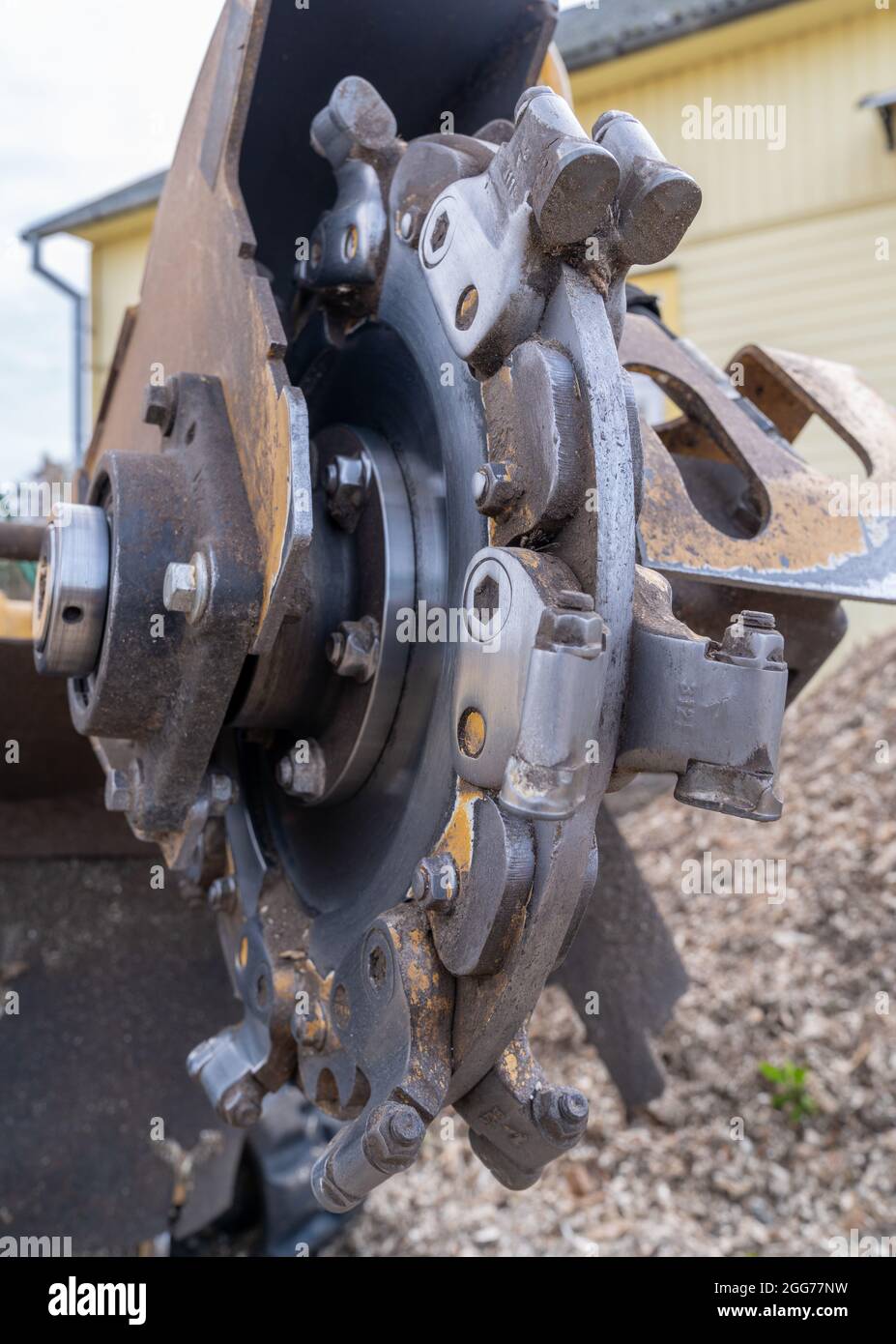
The rotating cutting wheel serves as the stump grinder’s business end, featuring hardened steel or tungsten carbide teeth mounted along its circumference. These teeth spin at 1,500-3,000 RPM, generating enough kinetic energy to shatter wood fibers on contact. Unlike saw blades that cut through wood, the grinding wheel’s teeth impact the stump surface repeatedly, chipping away small wood fragments with each rotation. This hammering action works effectively on both soft and hardwood species without getting bogged down by knots or irregular grain patterns.
Teeth arrangement follows a strategic pattern where at least one tooth engages the wood at all times during rotation. This continuous contact prevents the jarring stops that would occur if teeth were evenly spaced, resulting in smoother operation and more efficient material removal. Most professional models use replaceable teeth mounted in holders, allowing you to swap individual worn components rather than replacing the entire wheel. As teeth wear down through use, their effectiveness decreases significantly—replacing them when they’ve lost half their original height maintains optimal grinding performance and reduces strain on the machine’s drive system.
The cutting wheel operates within a protective housing called the grinding chamber, which contains flying debris while directing wood chips away from the operator. This chamber features precisely engineered openings that allow chips to exit while preventing direct line-of-sight to the spinning teeth. The housing design also enables the wheel to access the stump from multiple angles, allowing you to grind both the top surface and sides of the stump without repositioning the entire machine.
Engine Power Systems Driving the Process
Stump grinders utilize three distinct power systems, each suited to different applications based on mobility needs and job requirements. Gas-powered models dominate professional and rental markets with engine outputs ranging from 11-25 HP for walk-behind units to over 100 HP for large towable machines. These provide maximum independence from external power sources, making them ideal for remote locations or jobs without electrical access. The trade-off includes higher maintenance requirements, fuel management considerations, and greater noise levels compared to other options.
Electric stump grinders offer a cleaner, quieter alternative powered by either cords or rechargeable batteries. These typically deliver 1-5 HP, sufficient for small to medium residential stumps but less effective on larger, denser wood. Corded electric models provide unlimited runtime but restrict mobility to the length of your extension cords, while battery-powered units offer true portability with limited operating time per charge. Electric models appeal to homeowners prioritizing convenience and reduced maintenance, as they eliminate fuel-related issues and require minimal upkeep beyond occasional lubrication and blade checks.
Hydraulic-powered stump grinders represent the professional solution, connecting to the hydraulic system of a skid steer, excavator, or dedicated carrier machine. This configuration allows the host vehicle’s engine to power multiple attachments while delivering smooth, controllable power to the grinding wheel. The hydraulic system provides exceptional torque management, automatically adjusting cutting speed based on wood density to prevent stalling. Operators benefit from precise feathered control of the cutting wheel, enabling them to ease into difficult cuts without jarring the machine or compromising stability.
Machine Types and Their Unique Grinding Approaches

Walk-behind stump grinders deliver the most accessible option for homeowners and small contractors, featuring compact designs with cutting wheels between 8-16 inches in diameter. These units weigh 100-400 pounds depending on power configuration and require manual positioning by the operator. Standard models need you to push the machine across the stump surface, while self-propelled versions feature drive wheels that move the unit automatically, reducing physical strain during extended use. The operator controls cutting depth through handle-mounted levers, lowering the wheel incrementally with each pass until reaching the desired depth.
Towable stump grinders provide serious grinding power for larger jobs, mounting on single or tandem axles for transportation behind trucks or utility vehicles. With cutting wheels measuring 18-30 inches and engines producing 25-75 HP, these machines tackle stumps too large for walk-behind units. Many feature hydraulic positioning systems that allow operators to raise, lower, and tilt the grinding head from a control station, providing better access to stumps in challenging locations. The towable design offers professional contractors an efficient way to transport heavy equipment between job sites without dedicating a full trailer.
Track-mounted and attachment-style grinders serve specialized applications where terrain or equipment availability presents challenges. Track units use rubber tracks instead of wheels for superior traction on soft or uneven ground, often featuring enclosed operator cabins for comfort during extended use. Excavator-mounted and skid steer-mounted grinders connect directly to standard hydraulic ports on heavy equipment, transforming existing machinery into stump removal tools. These attachment systems leverage the carrier machine’s mobility and power while positioning the cutting head through the boom or arm system, providing exceptional reach and versatility.
Step-by-Step Grinding Process for Maximum Efficiency
Successful stump grinding follows a systematic approach that ensures safety while maximizing efficiency. Begin by thoroughly clearing the area around the stump of rocks, branches, and other debris that could become dangerous projectiles when the grinder operates. Remove any exposed surface roots extending from the stump that might interfere with the machine’s movement or damage cutting teeth. Position the grinder with the cutting wheel facing the stump and engage the wheel brake to prevent unwanted rotation during setup.
Start the engine according to manufacturer specifications, allowing it to reach normal operating temperature before engaging the cutting wheel. Lower the grinding wheel slowly until teeth contact the stump surface near the top edge, then engage wheel rotation using the control lever. Move the wheel side to side in a sweeping motion, removing material with each pass while maintaining consistent downward pressure. As wood chips accumulate in the grinding chamber, periodically raise the wheel to allow debris to fall away or clear it with a rake.
Continue lowering the wheel incrementally and making passes across the stump surface, working from the outer edges toward the center. Most jobs require grinding 4-12 inches below ground level to prevent regrowth and accommodate future landscaping. The process generates significant sawdust that can be left in place as mulch or collected for disposal. Once the stump is fully ground, fill the remaining hole with topsoil and seed or sod to restore the landscape surface.
Safety Features That Protect Operators
Stump grinders incorporate multiple safety mechanisms to protect against the inherent hazards of high-speed wood processing. The grinding chamber housing serves as the primary defense, containing wood chips and debris that could otherwise become dangerous projectiles. Quality machines feature reinforced housing with strategic openings that allow chips to escape while blocking direct line-of-sight to the spinning teeth. Always maintain a safe distance from the grinding chamber during operation, keeping hands, feet, and loose clothing well clear.
Kill switches and emergency stop controls allow immediate shutdown of the cutting wheel in hazardous situations. These prominently colored controls mount within easy reach on handlebars or control panels. Many modern grinders also include anti-kickback systems that detect sudden resistance changes and automatically reduce wheel speed to prevent the machine from being thrown backward. Operator presence switches require you to be in the control position before the cutting wheel can engage, preventing accidental starts.
Personal protective equipment remains essential despite built-in safety features. Wear safety glasses or face shields to protect against flying debris, hearing protection for extended operation, and sturdy boots with ankle support. Long pants and sleeves protect against scratches from branches and flying chips, while work gloves improve grip and reduce vibration exposure. Before each use, inspect the machine for damaged components, loose fasteners, and proper function of all safety controls.
Maintenance Practices for Reliable Performance
Regular maintenance ensures your stump grinder operates reliably and efficiently across multiple jobs. After each use, inspect cutting wheel teeth for damage or excessive wear, replacing components as needed. Clean wood residue from the grinding chamber, wheel housing, and engine compartment to prevent overheating and rodent nesting. Gas-powered units require oil changes every 25-50 operating hours, air filter cleaning, and periodic spark plug inspection.
Hydraulic systems need regular fluid level checks and filter changes according to manufacturer recommendations, with any leaks addressed immediately. Belt drives require periodic tension adjustment and replacement when signs of wear appear, as slipping belts reduce cutting efficiency. For long-term storage, particularly through winter months, drain fuel tanks or add fuel stabilizer to prevent carburetor clogs. Store machines in dry, protected locations with cutting wheels elevated off the ground to protect grinding teeth.
Understanding how a stump grinder works empowers you to operate safely, select appropriate equipment, and achieve professional results. The combination of high-speed cutting wheels, robust power systems, and thoughtful engineering makes these machines remarkably effective at transforming stubborn obstacles into useful wood chips. By following proper operational procedures, maintaining your equipment diligently, and prioritizing safety throughout every project, you can efficiently clear stumps and transform your landscape with confidence.