
Angle grinders rank among the most versatile yet potentially dangerous tools found in metalworking shops, fabrication facilities, and automotive repair environments. These powerful rotary instruments operate at extremely high rotational speeds, creating significant hazards that demand rigorous safety protocols. Whether you’re smoothing down welds in a fabrication shop, preparing metal surfaces for painting, or cutting through rebar on a construction site, understanding proper grinder machine safety precautions is essential for preventing serious injuries. The combination of high-velocity rotation, abrasive disc surfaces, and flying debris means that accidents can occur within fractions of a second, making prevention through knowledge and proper technique your strongest defenses.
This comprehensive guide covers the critical safety measures every operator should master before operating an angle grinder. From selecting appropriate personal protective equipment to understanding kickback dynamics and performing thorough tool inspections, each section provides actionable guidance you can apply immediately. By integrating these grinder machine safety precautions into your regular workflow, you significantly reduce the risk of eye injuries, traumatic wounds, and other serious accidents that plague workshops where these powerful tools see regular use.
Protect Your Eyes and Face from Debris
Eye injuries represent the most frequently occurring harm in angle grinder operations, making comprehensive facial protection your first priority whenever these tools are in use. The abrasive action of grinding discs generates a continuous stream of microscopic metal particles, sparks, and fragmented disc material that travel at dangerous velocities away from the work zone. These particles possess enough kinetic energy to penetrate eye tissue, cause corneal abrasions, or embed themselves in the orbital area, potentially resulting in permanent vision impairment or loss.
Selecting Appropriate Eye Protection
Wide-vision goggles provide the minimum acceptable protection for angle grinder operations, forming a complete seal around the eye area to prevent debris from entering from any angle. Standard safety glasses, while better than no protection at all, leave gaps where fast-moving particles can slip through, particularly from above or below the frame. For operations generating significant debris volume—such as grinding down heavy welds or cutting through thick metal—goggles should be worn in conjunction with a full face shield that protects the entire facial surface from impact and heat.
Your eye protection must meet relevant safety standards for impact resistance, with markings indicating compliance with ANSI Z87.1 requirements in the United States or EN166 standards in Europe. Damaged protective equipment that shows scratches, cracks, or compromised seals should be replaced immediately, as compromised lenses may fail precisely when you need them most.
Shielding Against Sparks and Hot Metal
Beyond particle protection, operators must guard against burns from sparks and hot metal fragments that can cause painful injuries or ignite ordinary clothing. Face shields rated for high-heat exposure provide essential protection for the neck and facial areas, particularly during welding cleanup operations where spark production is intense. Flame-resistant balaclavas or welding caps protect the hair and scalp from ember contact, while ensuring that any sparks that escape eye protection are directed away from vulnerable skin surfaces.
Prevent Dangerous Kickback Incidents
Kickback ranks among the most violent and hazardous phenomena associated with angle grinder operation, occurring when the grinding disc catches on an edge, encounters unexpected resistance, or contacts the workpiece in a manner that thrusts the tool violently away from the material. This sudden reactive force can wrench the tool from your control with explosive speed, creating scenarios where severe injuries occur across multiple body regions including hands, arms, torso, and face.
Recognizing and Avoiding Kickback Conditions
Understanding what triggers kickback enables you to recognize dangerous situations before they develop. Applying excessive lateral pressure while grinding forces the disc to work harder than its design intends, increasing the likelihood that it will catch and throw the tool. Grinding on the side of the disc rather than the proper face exposes you to greater kickback forces, as the disc’s design concentrates cutting action on its outer edge. Working on curved surfaces without proper technique allows the disc to edge into the material, creating catch points that initiate violent reaction.
Maintaining awareness of your workpiece’s condition helps prevent unexpected encounters. Burrs, sharp edges, and uneven surfaces can grab a disc suddenly, making it essential to approach such features cautiously and use controlled movements rather than aggressive cutting actions.
Body Positioning for Maximum Control
Your physical position relative to the work area dramatically influences your ability to manage kickback when it occurs. Always position yourself to the side of the disc’s rotation plane, never placing your body directly in line where an uncontrolled tool could strike you. This lateral positioning allows you to maintain tool control even if kickback occurs, reducing the likelihood of the tool impacting your body. Maintain a stable stance with feet shoulder-width apart, providing a solid base of support for managing the reactive forces that kickback generates.
Two-handed operation with the auxiliary handle properly attached provides maximum stability and allows rapid response to unexpected tool behavior. Grip pressure should be firm enough to maintain control without causing fatigue that could lead to loss of grip strength over extended operation periods.
Avoid Disc Shatter and Fragmentation
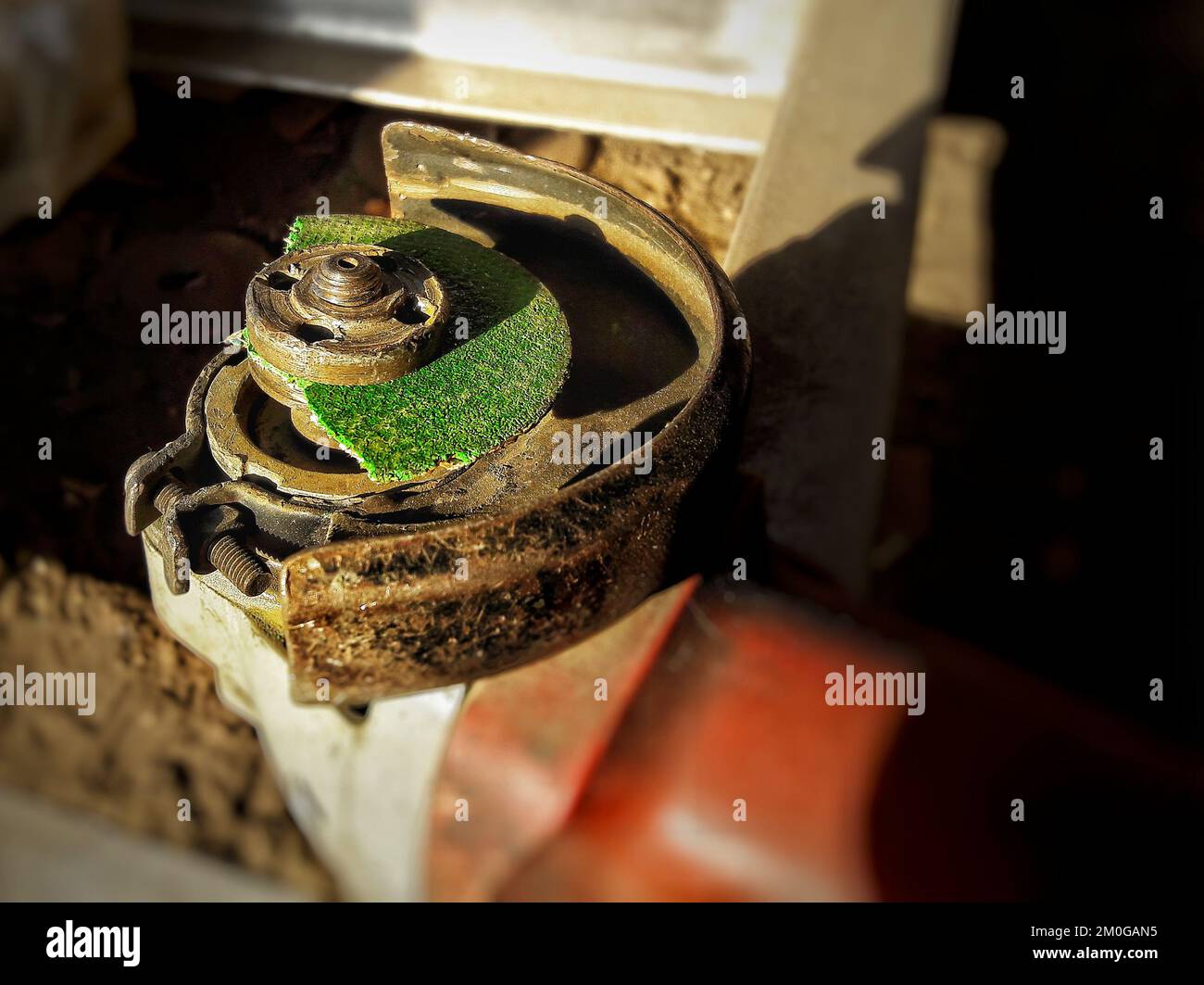
Disc failure events represent high-consequence hazards that can send lethal projectiles across the work area at dangerous velocities. Understanding the conditions that lead to disc failure enables operators to take preventive measures and recognize when discs should be removed from service before catastrophic failure occurs.
Disc Damage Indicators and Failure Causes
Operating discs at speeds exceeding their rated capacity places enormous stress on the disc structure, eventually leading to catastrophic failure. Always match disc speed ratings to your grinder’s output specifications, and never use discs rated for lower speeds than your tool produces. Physical damage from drops, impacts, or improper storage creates internal weaknesses that may not be visible but significantly compromise structural integrity.
Excessive pressure during operation stresses discs beyond their design limits, particularly when grinding on side surfaces rather than disc faces. Worn discs that have been significantly reduced in thickness through use become more susceptible to cracking, especially near the mounting hole where stress concentrations develop.
Safe Distances and Peripheral Protection
When disc fragmentation occurs, flying fragments can travel significant distances with lethal force. All personnel in the vicinity must maintain safe distances—typically a minimum of 15 feet from active grinding operations—and wear appropriate personal protective equipment. Clear the work area of unnecessary personnel before beginning operations, and ensure that anyone who must remain nearby is protected by the same eye and face protection standards as the operator.
Essential Personal Protective Equipment Requirements

Personal protective equipment forms the final line of defense against grinder-related hazards and must be selected and utilized with care appropriate to the specific operation’s risk level. Layering multiple protection types creates comprehensive coverage that addresses the various hazard categories angle grinders present.
Hand and Body Protection
Heavy-duty work gloves protect hands during operation while maintaining sufficient dexterity for tool control, though operators must ensure gloves do not create catch points that could contribute to kickback scenarios. Gloves should fit snugly without excess material at the fingers or wrists that could become entangled in rotating components. For operations generating significant heat, insulated gloves rated for thermal protection become necessary to prevent burns from hot workpieces and sparks.
Flame-resistant clothing protects against sparks and hot metal fragments that can cause burns or ignite ordinary cotton or synthetic fabrics. Standard work clothing made from natural fibers provides some spark resistance, but specialized flame-resistant garments offer superior protection for frequent grinding operations or work near welding activities. Avoid loose clothing, sleeves that can dangle near rotating components, and jewelry that could catch on tool handles or accessories.
Foot and Hearing Protection
Steel-toed or composite-toed footwear protects feet from dropped discs, falling workpieces, and rolling equipment that could cause crushing injuries. Puncture-resistant sole options provide additional protection against sharp metal fragments that might penetrate ordinary footwear. Anti-static or non-slip sole features contribute to stability on shop floors that may be contaminated with metal shavings or other slip hazards.
While angle grinders do not typically produce hearing-damaging noise levels during normal operation, extended use in enclosed spaces or particularly loud models may warrant hearing protection. Assess your specific work environment and tool characteristics to determine whether hearing protection enhances your safety protocol.
Perform Essential Tool Inspection Steps
Thorough tool inspection before each use identifies potential problems before they result in accidents or equipment damage. Developing a consistent inspection routine ensures that no critical component escapes examination.
Pre-Operation Inspection Checklist
The auxiliary handle must be securely attached before operation begins, providing essential additional grip points for controlling the tool during both normal operation and kickback events. Handle positioning should allow natural wrist alignment and comfortable grip pressure, with the handle oriented to complement your dominant hand position on the primary grip.
Disc inspection before installation checks for cracks, chips, or signs of damage that could indicate structural weakness. Hold the disc up to a light source and rotate it slowly, looking for any light transmission through areas that should be opaque, which indicates thin spots or potential delamination in reinforced discs. Verify that the disc is appropriate for the material being worked and rated for the speed at which your grinder operates—using a disc rated for 6,600 RPM on a tool producing 11,000 RPM invites catastrophic failure.
Mounting and Setup Verification
Installation procedures should follow manufacturer specifications precisely, ensuring that mounting hardware is properly tightened to specified torque values. Over-tightening can stress the disc during mounting, while under-tightening allows disc movement that creates vibration and potential loosening during operation. After mounting, manually rotate the disc to verify it spins freely without interference from guards, workpiece clamps, or other nearby objects.
Guard positioning requires careful attention, with the guard positioned to deflect debris away from the operator and any nearby personnel. The guard should remain in place throughout operation and should never be removed or modified to accommodate unusual positioning that seems more convenient.
Master Two-Handed Control Techniques
Maintaining continuous control over the angle grinder throughout operation prevents the loss of control events that lead to most serious injuries. Proper grip technique and body mechanics form the foundation of safe operation.
Grip Technique and Hand Placement
Both hands should maintain contact with the tool’s handles throughout active operation, with the primary hand controlling the rear handle and throttle switch while the auxiliary hand provides forward support and stability. Thumbs should wrap around handle fronts rather than pointing along the handle length, preventing thumb breakage if the tool kicks back toward the operator. Fingers should close naturally around handles without excessive clenching that causes premature fatigue.
Grip pressure requires balance between security and relaxation—firm enough to maintain control during unexpected tool behavior, but not so tight that hand muscles fatigue quickly or lose sensitivity to tool vibrations that might indicate developing problems.
Managing Tool Forces During Operation
The rotational forces generated by angle grinders create tendencies for the tool to pull in specific directions depending on disc rotation and application. Understanding these force patterns allows anticipation and compensation, maintaining control throughout the operation. Cutting operations create different force patterns than grinding operations, requiring adjustment of grip pressure and hand positioning as you switch between applications.
Allow the disc to do the work rather than forcing it through material. Excessive pressure accelerates disc wear, increases heat generation, and raises kickback probability. Light, controlled passes produce better results with less tool stress and reduced operator fatigue.
Establish Safe Workplace Setup Guidelines
The physical environment where angle grinder operations occur significantly impacts safety outcomes, making proper workplace setup an essential component of comprehensive safety protocols.
Workpiece Stabilization Methods
Clamping workpieces in vices, using holding fixtures, or securing them on stable work surfaces eliminates movement during grinding operations that could contribute to kickback or uneven cutting. Free-holding material with one hand while grinding with the other creates extreme risk of serious injury and should never be practiced regardless of how small or simple the workpiece appears. Jigs and fixtures designed for specific recurring tasks improve both safety and consistency, reducing the variation that creates unexpected situations.
Workpiece preparation before grinding removes sharp edges and burrs that could catch discs unexpectedly. While some catching is inevitable in metalwork, minimizing these features through proper preparation reduces kickback frequency and severity.
Fire Prevention and Ventilation
Fire prevention measures must be in place before grinding operations begin, including appropriate fire extinguishers rated for metal fires within immediate reach. Class D extinguishers designed for combustible metal fires provide coverage for magnesium, aluminum, and other reactive metals, while ABC-rated extinguishers handle ordinary combustible materials. Never operate angle grinders in areas where combustible dusts or vapors could create explosion hazards.
Adequate ventilation removes metal dust, sparks, and potentially harmful fumes generated during grinding operations. In enclosed spaces, local exhaust ventilation systems capture contaminants at the source before they reach dangerous concentrations. Respiratory protection may be necessary when working with coated metals, painted surfaces, or materials that generate toxic fumes when heated by grinding action.
Final Note: Angle grinder safety rests on integrating multiple protective layers, beginning with comprehensive hazard understanding and progressing through proper equipment selection, tool inspection, operational procedures, and appropriate personal protective equipment. Eye and face protection represents the minimum acceptable PPE standard, with goggles and face shields protecting against the most common injuries from metal particle exposure. Two-handed operation with auxiliary handle engagement and strategic body positioning reduces kickback injury severity when unexpected tool behavior occurs.
Tool inspection before each use identifies damaged components and improper setups before they result in accidents. Disc selection matching speed ratings and application requirements prevents catastrophic failure events. Workplace setup including proper ventilation, fire prevention measures, and workpiece stabilization creates conditions where safe operation is achievable.
Training and competency verification ensure that every operator understands both the hazards they face and the procedures that mitigate those hazards. Ongoing safety reinforcement through regular communication and observable leadership commitment maintains safety culture over time. While angle grinders present serious hazards inherent to their design and operation, systematic application of these grinder machine safety precautions minimizes risks substantially, allowing operators to utilize these versatile tools effectively while protecting themselves and others from injury.