Cutting a mirror with an angle grinder opens up possibilities for custom sizes, unique shapes, and home improvement projects that would otherwise require professional glass services. While traditional glass cutters remain the standard for straight cuts, an angle grinder equipped with a diamond blade offers unmatched versatility for curved cuts, notches, and situations where precision tools aren’t available. This guide walks you through the entire process, covering essential safety measures, tool selection, technique refinement, and finishing methods to help you achieve clean, professional results without shattering your mirror.
Understanding the risks involved is just as important as knowing the techniques. Mirrors are essentially glass with a reflective coating on one side, making them brittle and prone to cracking under stress. The angle grinder’s high-speed rotation generates significant heat and vibration—two factors that can quickly destroy an unprepared workpiece. However, with proper preparation, the right blade, and controlled movements, you can cut mirrors cleanly and safely. The key lies in minimizing heat buildup, supporting the glass properly, and making cuts that work with the material’s natural properties rather than against them.
Essential Safety Gear for Mirror Cutting
Before touching an angle grinder, you must equip yourself with proper protective gear. The combination of high-speed debris, glass shards, and reflective particles creates hazards that regular workshop attire cannot address. Safety isn’t optional here—it’s the foundation upon which every successful mirror-cutting project rests.
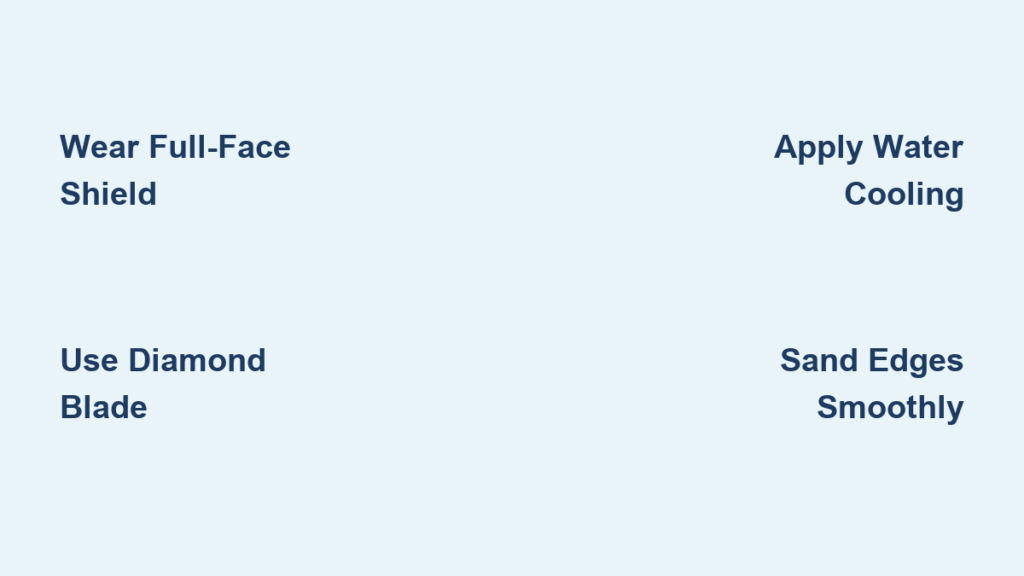
Full-face protection ranks as your top priority. Safety glasses alone won’t suffice when cutting mirror; you need a full-face shield rated for impact resistance. Flying glass fragments travel at dangerous velocities, and the reflective coating can shatter into razor-sharp pieces. Your shield should have anti-fog coating to maintain visibility throughout the cut, as perspiration and debris accumulation become major visibility issues during detailed work.
Respiratory protection prevents inhalation of glass dust and coating particles. Cutting mirror releases fine particulates that irritate lungs and may contain metals from the reflective backing. A NIOSH-approved N95 respirator provides minimum protection, though a half-face respirator with replaceable filters offers better coverage for extended projects. Never skip this protection—even brief exposure to mirror dust causes respiratory discomfort and long-term health concerns.
Cut-resistant gloves rated for glass handling are essential. Standard work gloves leave fingers vulnerable to glass shards, while thin nitrile gloves tear too easily. Look for gloves with a cut-resistance rating of A4 or higher, ensuring they can withstand glass edges without compromising dexterity. Your gloves must allow you to maintain firm control of the angle grinder while handling glass pieces safely.
Choosing the Right Diamond Blade

The blade determines your cutting success more than any other factor. Standard abrasive cut-off wheels tear through mirror coating and generate excessive heat, producing ragged edges and stress cracks that propagate through the glass. Diamond blades, specifically designed for glass and tile work, deliver the clean cuts mirror projects demand.
Continuous rim diamond blades feature industrial-grade diamond particles embedded in a metal matrix. The continuous rim design prevents chipping and produces smoother cuts than segmented alternatives. Look for blades labeled specifically for glass or tile work—these have finer diamond grit and softer bond materials that allow the blade to release glass particles efficiently without generating harmful heat.
Blade size considerations affect both compatibility and control. Most angle grinders accept 4.5-inch or 5-inch diameter blades. Smaller blades (4.5 inches) offer superior control for detailed work and curved cuts, while larger blades (5 inches or bigger) cut faster but require steadier hands and more clearance behind the workpiece. For most DIY mirror projects, a 4.5-inch blade provides the best balance of control and cutting speed.
Proper Mirror Preparation Techniques

Proper preparation prevents costly mistakes and dangerous situations. Mirrors require careful handling throughout every project stage, from initial measurement to final edge finishing. Taking extra time during preparation pays dividends in cut quality and personal safety.
Thorough mirror inspection should be your first step. Examine both surfaces for existing cracks, chips, or weak spots—these imperfections become failure points under the stress of cutting. Tap the mirror lightly with your fingernail; a clear, ringing sound indicates intact glass, while dull or muffled sounds suggest delamination or hidden damage that may cause unexpected breakage. Any mirror showing signs of existing damage should be replaced rather than cut.
Secure work surface setup prevents dangerous movement during cutting. Create a support structure using two parallel 2×4 boards spaced slightly narrower than the mirror’s width. Place the mirror atop these supports with the cut line positioned directly over the gap between boards. This configuration allows debris to fall away and prevents the mirror from sagging into the cutting path, which causes binding and dangerous kickback. Secure the mirror with painter’s tape along the cut line to minimize chipping.
How to Mark Your Cut Line Accurately
Mark your cut line clearly using a glass-marking pencil or fine-tip permanent marker. For straight cuts, use a straightedge clamped securely to the mirror, drawing the line in one continuous motion. Curved cuts require a template—cardboard or plastic sheeting cut to your desired shape serves this purpose perfectly. Double-check all measurements before marking; glass cutting allows no margin for error once the blade touches the surface. Apply masking tape along the cut line to further reduce chipping during cutting.
Angle Grinder Setup for Mirror Cutting
Correct tool configuration directly impacts cut quality and operator safety. Angle grinders arrive configured for factory-standard applications, requiring adjustment before mirror work begins.
Blade installation procedure requires careful attention. Loosen the spindle lock and remove the arbor nut. Position the blade on the spindle, ensuring the direction arrow matches your grinder’s rotation direction (most grinders rotate counterclockwise when viewed from the front). Hand-tighten the arbor nut, then use the spindle lock and appropriate wrench to secure the blade firmly. Overtightening damages the blade and grinder components, while insufficient tightening causes dangerous wobble and vibration.
Optimal speed settings make a significant difference in cut quality. Diamond glass-cutting blades perform best at medium speeds—typically 5,000 to 8,000 RPM for 4.5-inch blades. Excessive speed generates dangerous heat and accelerates blade wear, while insufficient speed causes blade drag and uneven cuts. If your grinder lacks variable speed, maintain light pressure and avoid prolonged contact with any single section of the mirror.
Executing the Mirror Cut: Step-by-Step
The actual cutting technique separates successful mirror projects from shattered failures. Your movements must be confident yet controlled, applying appropriate pressure while maintaining consistent speed.
Body positioning ensures safety and control. Stand to the side of the cut line rather than directly behind it—if the mirror breaks, debris travels forward rather than toward your face. Place your feet shoulder-width apart for stable footing, and position your hands to control both the grinder handle and the tool’s body. The leading hand (on the handle) guides the cut direction, while the trailing hand stabilizes and controls depth.
Starting and Maintaining the Cut
Initiate the cut at the edge of the mirror rather than starting mid-glass. Position the blade at the edge of your marked line, allowing it to reach full speed before making contact. Approach the cut line at a shallow angle (approximately 30 degrees), gradually lowering the blade until it engages the glass surface. Guide the grinder along the cut line using smooth, consistent motions—maintain steady forward progress without pausing, as stopping in place generates heat that cracks glass.
Water cooling technique is essential for successful mirror cutting. Direct a steady stream of water at the cutting point using a spray bottle or have an assistant manage water flow. Water cools the blade and glass, reduces dust, and flushes particles from the cut line—improving visibility and preventing dangerous overheating. Keep the area clear of accumulated debris to maintain a clean work surface.
Troubleshooting Common Cutting Problems
Even with proper technique, you may encounter issues during the cutting process. Recognizing problems early prevents wasted materials and potential injuries.
Cracking along the cut line usually indicates excessive heat or uneven pressure. Reduce speed, apply more water, and ensure continuous forward motion without pausing. If cracks appear after completing the cut, they may have developed during the cooling process—support the mirror evenly and avoid thermal shock (sudden temperature changes) for at least an hour after cutting.
Blade catching or grabbing creates dangerous kickback situations. This typically happens when the blade angle is too steep, the blade is clogged with coating material, or the operator tries to change direction too quickly. Reduce your entry angle, clean the blade with a wire brush, and plan cuts to minimize direction changes. If catching continues, the blade may be damaged and requires replacement.
Finishing the Cut Mirror Edges
Raw cut edges on mirrors present safety hazards requiring attention before installation.
Progressive sanding technique transforms rough edges into smooth surfaces. Start with 120-grit wet sandpaper and progress through 220, 400, and finally 600-grit. Keep the sandpaper wet throughout to prevent heat buildup and glass dust generation. Sand in consistent strokes along the edge, maintaining even pressure to avoid creating low spots or uneven surfaces.
Edge sealing protects the reflective coating from moisture damage. Apply a thin bead of clear silicone sealant along the exposed backing. This prevents the reflective layer from peeling or oxidizing and provides additional structural support to the cut edge. Allow the sealant to cure fully (typically 24 hours) before installing the mirror.
When to Consider Alternative Methods
While angle grinders excel at certain mirror-cutting tasks, they aren’t universally optimal. For simple straight cuts on standard mirrors, traditional glass cutters produce cleaner results with less risk of edge chipping. If you only need to make one or two straight cuts, borrowing a glass cutter might be safer and more efficient than using an angle grinder.
For larger projects or when precision matters most, professional glass-cutting services may prove more economical than purchasing equipment. Many home improvement stores offer cutting services at reasonable rates, providing clean cuts without the investment in tools, safety equipment, and practice time.
Cutting mirrors with an angle grinder rewards careful preparation and proper technique. Start with scrap mirrors to develop your skills before attempting finished pieces, and always prioritize safety over speed. With practice, you’ll achieve clean cuts that expand your capabilities for mirror-based projects around your home. Remember that patience and attention to detail make the difference between a shattered mirror and a successful custom installation.