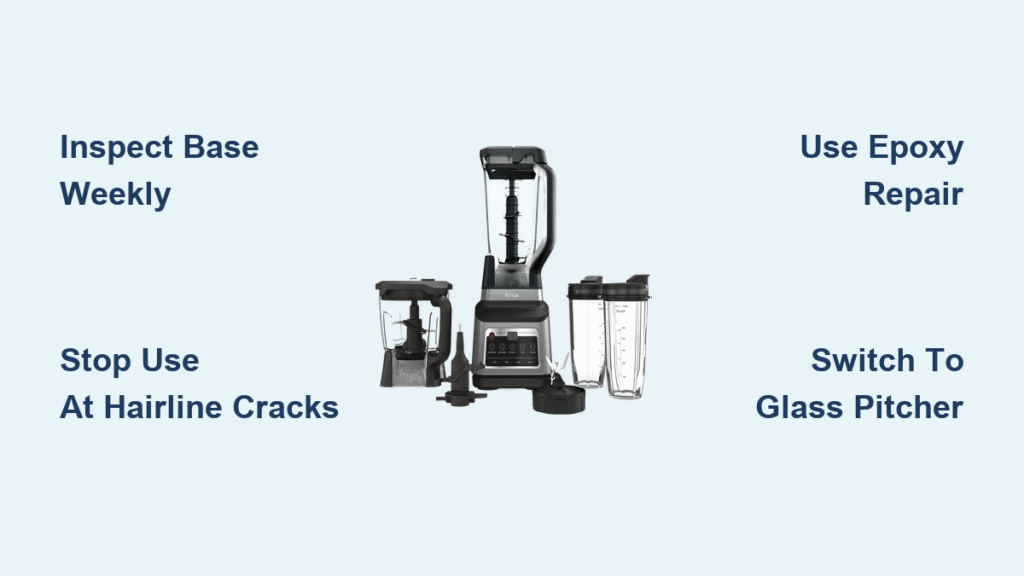
That familiar thunk as your Ninja pitcher locks into place—only to watch green smoothie seep through a new hairline crack during your morning blend. You haven’t dropped it or run it through the dishwasher, yet here’s another $40 pitcher ruined before its first birthday. Thousands of Ninja owners face this exact frustration, with cracks consistently forming at the blade-coupler base within 6–12 months of regular use. This isn’t user error—it’s a documented design flaw in polycarbonate pitchers that fails even during routine salsa or ice crushing. Stop cleaning up leaks and discover exactly how to salvage your blender, whether warranty claims actually work, and when it’s smarter to switch brands permanently.
Why Ninja Pitchers Crack at the Blade Base Within Months
Your Ninja pitcher isn’t failing because you’re rough with it—the crack always starts where rotational stress meets structural weakness. High-torque motors transmit immense force through the thin plastic wall surrounding the blade coupling, gradually fatiguing the material with every blend cycle. Even gentle users report cracks after just 20 uses because three critical factors converge at this precise location:
- Motor torque overload from sustained high-speed blending creates microfractures
- Brittle plastic formulation in polycarbonate/Tritan pitchers accelerates fatigue
- Inadequate reinforcement around the blade-coupler boss concentrates stress
Unlike glass alternatives, these pitchers lack the structural integrity to handle Ninja’s powerful motor over time. The result? Premature failure during everyday tasks like crushing ice or blending nut butters—no drops required.
Spot Cracks Before Your Motor Base Drowns
Waiting for visible leaks means you’ve already lost the battle. Inspect the pitcher base after every 5–10 blends using a flashlight to catch these progression stages early:
Hairline Crazing Stage
Look for fine spider-web cracks radiating from the blade coupling under bright light—often invisible to the naked eye. Stop using immediately at this stage. If ignored, these microfractures will connect within weeks.
Visible Fracture Stage
You can now feel the crack with your fingernail. Small drips appear during blending, especially with liquid-heavy recipes. This is your last chance to prevent motor damage before leaks escalate.
Complete Failure Stage
Cracks span the entire base, causing steady streams of liquid during operation. Unplug immediately—continued use risks electrical short-circuiting in the motor housing. Water intrusion at this stage often totals the entire unit.
Emergency Fixes to Buy 2–8 Weeks of Use

When you need your blender functional today, these temporary solutions stop leaks long enough to finish your current pitcher’s lifespan—but understand they’re band-aids, not cures.
Marine Epoxy Repair Protocol
This method works best on hairline cracks but requires patience:
- Sand the crack area lightly with 220-grit paper
- Wipe thoroughly with 90%+ isopropyl alcohol
- Mix marine-grade epoxy (like JB Weld WaterWeld) per instructions
- Apply a thin layer extending ½ inch beyond the crack
- Critical: Allow 72 hours full cure before any food contact
Success rate: 60% hold for 4–6 weeks with light use. Never use on cracks near the motor coupling ring—epoxy can interfere with blade assembly rotation.
Food-Grade Silicone Sealant Method
For quick, low-skill sealing on visible fractures:
- Apply 100% pure silicone sealant (marine-grade boat caulk works)
- Squeeze a thin bead along the crack’s interior surface
- Smooth with a gloved finger dipped in soapy water
- Cure minimum 24 hours before light use
Warning: Silicone degrades faster than epoxy under high-speed blending. Avoid hot liquids—the sealant softens above 140°F. Both methods eventually fail as cracks propagate underneath.
Warranty Claims That Actually Get Pitchers Replaced
Ninja’s official policy excludes pitchers, but documented design flaws create leverage. Follow this battle-tested approach:
Document Like a Legal Case
- Photograph cracks with a dated note beside the pitcher
- Locate your serial number (on motor base label) and original receipt
- Track usage frequency—under 20 uses strengthens your “normal use” argument
The Supervisor Escalation Script
- Call 1-866-826-6941 and say: “My pitcher cracked under normal use without drops or dishwasher exposure. I believe this is a design defect covered under implied warranty.”
- Immediately request supervisor transfer when denied
- Reference CPSC complaint reports: “Thousands report identical failures at the blade coupling.”
Realistic Outcomes
- 40% receive free refurbished pitcher (ships in 7–10 days)
- 60% get 25% off replacement pitcher ($35–$57 after discount)
- Replacement pitchers often crack again within 6 months—have your documentation ready for round two.
Replacement Parts: Model-Specific Guide
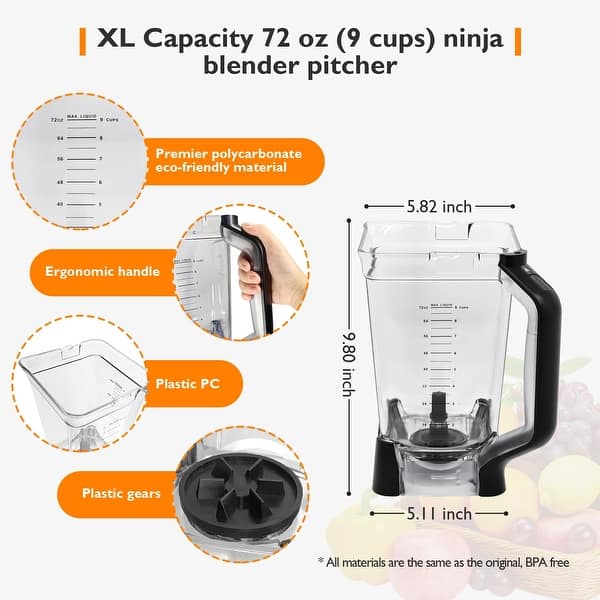
Ordering the wrong pitcher guarantees immediate failure. Verify your exact model number (e.g., BL610, CT680) on the motor base label before purchasing:
Ninja 72 oz Pitchers
- BL610/BL660 series: SKU 518KKU610 ($56.99 with blade assembly)
- CT680/CT682 series: SKU 589KKUC680 ($34.99 pitcher only)
- BL770 square jar: SKU 492KUB490 ($44.99 with lid and blade)
Processor Bowls
- 64 oz bowl: SKU 490KKU685 ($34.99 with blade)
- Critical check: Confirm locking tab direction—some models rotate clockwise to lock while others use counterclockwise.
Pro tip: Order refurbished parts (180-day warranty) before 4 PM CT for same-day shipping. Never buy third-party pitchers—they lack OEM spline patterns and fail within weeks.
When to Ditch Ninja Forever

Calculate your true cost before replacing another pitcher:
The Two-Year Cost Trap
- Initial blender: $99
- Year 1 pitcher replacement: $45
- Year 2 pitcher replacement: $45
- Total: $189 for a $99 appliance
Glass Pitcher Alternatives That Last
Switch to these proven solutions with unbreakable bases:
– Oster Pro 1200: Glass pitcher + 1400W motor ($79)
– Instant Ace Nova: Glass jar with heating function ($99)
– Hamilton Beach Professional: Metal drive system + glass jar ($89)
These units handle ice crushing without pitcher fatigue—no $45 replacements needed annually.
Prevent Future Cracks If You Stick With Ninja
If you’re committed to Ninja, implement these damage-control tactics immediately:
Smart Blending Habits
- Pulse instead of continuous to reduce sustained torque stress
- Never exceed max fill line—overloading strains the base
- Align tabs gently—never force-twist the pitcher onto the base
Mandatory Weekly Checks
After washing, dry the base thoroughly and inspect with a flashlight. Stop using at the first sign of hairline crazing—delaying guarantees motor damage from leaks.
Build Your Paper Trail
Photograph each new pitcher upon delivery and save receipts. This documentation proves repeated failures for future warranty claims or potential class-action participation.
5-Step Emergency Action Plan
Don’t panic—follow this sequence when cracks appear:
- Stop blending immediately—continued use risks motor destruction
- Photograph damage with timestamp—essential for warranty claims
- Call Ninja with documented evidence—request supervisor using “design defect” language
- Choose your path: Attempt epoxy repair, order verified OEM part, or switch to glass pitcher brand
- Verify model match—cross-reference SKUs with your base label before purchasing
Your cracked Ninja pitcher isn’t your fault—it’s a systemic flaw affecting thousands. While epoxy can buy weeks of use, the only permanent solution is switching to glass-pitcher alternatives or accepting annual $45 replacement costs. Push hard on warranty claims using the supervisor escalation script; some users secure free replacements even outside policy windows. Most importantly: inspect that blade-coupler base weekly. Catching hairline cracks early prevents $100 motor base replacements—and saves your morning smoothie routine from disaster.