That acrid smell of burning plastic mixed with coffee beans is unmistakable—and terrifying. When your coffee grinder starts smoking, it’s not just a minor annoyance; it’s a serious warning sign that could indicate an electrical fire hazard. Coffee grinder smoking incidents, while not common, can escalate rapidly from mild smoke emission to full-blown fires that require extinguishers to contain. Whether you own a budget-friendly home model or a commercial-grade machine, understanding why this happens and how to respond could prevent property damage or even save your kitchen from disaster.
This guide cuts through the panic to deliver actionable information you need when your grinder starts smoking. You’ll learn the specific technical causes behind these frightening incidents, recognize early warning signs before smoke appears, respond correctly to active smoking events, and implement maintenance practices that virtually eliminate this risk. Most importantly, you’ll discover whether your smoking grinder can be saved or must be replaced immediately for safety.
Immediate Danger: What to Do When Smoke Appears
When your coffee grinder begins emitting smoke, your first 30 seconds determine whether you contain a minor incident or face a kitchen emergency. This isn’t the time for hesitation—follow these critical steps immediately.
Unplug and Isolate the Smoking Grinder
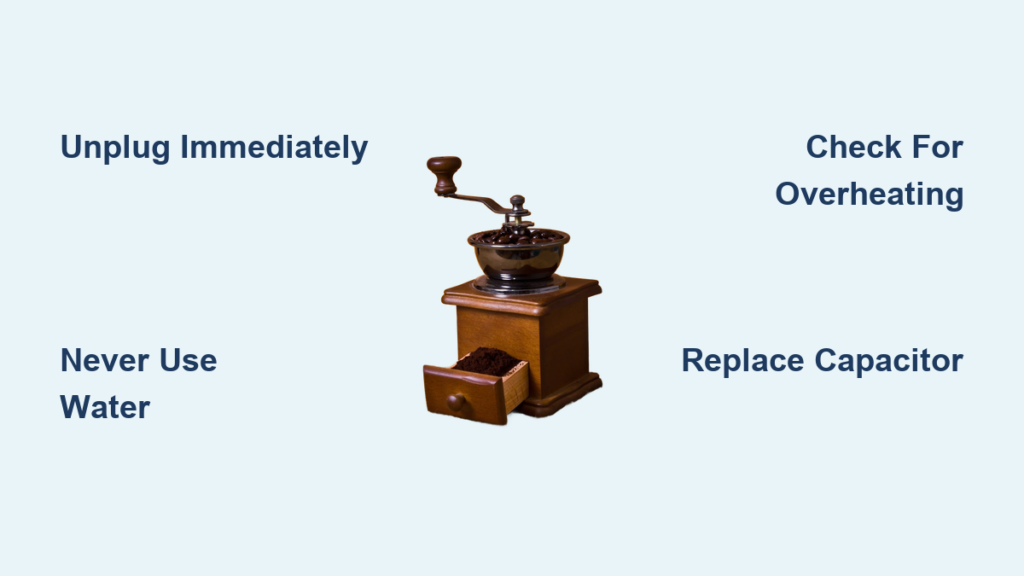
If the grinder is still plugged in and smoke has just started, unplug it immediately if you can safely reach the cord without touching the appliance. Do not attempt to unplug it if heavy smoke or flames are visible—prioritize your safety over electrical disconnection. Electrical fires create shock hazards, and toxic smoke inhalation poses immediate health risks. One Macap M5 owner reported moving their smoking grinder outside on a fire blanket, which contained the incident before kitchen damage occurred.
Never Use Water on Electrical Fires
Pouring water on a smoking coffee grinder creates dangerous electrical shock risks and can actually spread burning materials. Water conducts electricity and may cause the fire to jump to surrounding surfaces. Instead, use a Class C fire extinguisher (rated for electrical fires) or smother small flames with a fire blanket. A documented KitchenAid grinder incident required multiple extinguisher applications after initial water attempts only worsened the situation by creating boiling steam and additional smoke.
Assess the Situation Before Re-Entry
After containing the immediate hazard, wait at least 15 minutes before approaching the area. Residual heat can reignite materials, and toxic fumes from melting plastics may linger. Check for secondary damage to countertops or cabinets—coffee grinder fires often leave melted residue that indicates the severity of the incident. Document everything with photos for insurance purposes before cleaning, as evidence of “electrical fusion” strengthens claims for sudden mechanical failure versus gradual wear and tear.
Technical Causes Behind Coffee Grinder Smoking
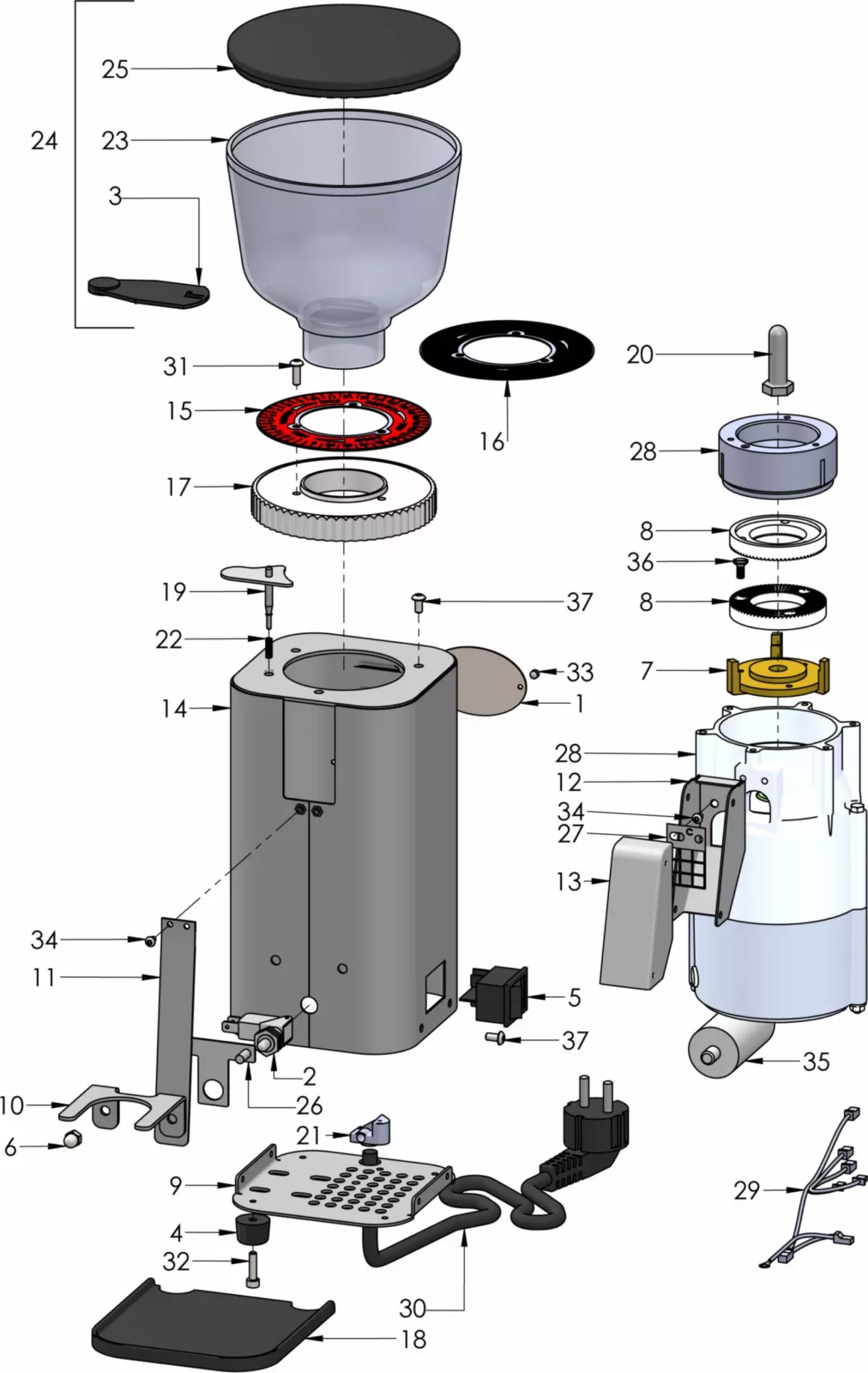
Most coffee grinder smoking incidents trace back to specific technical failures that develop over time or strike suddenly. Understanding these causes helps you prevent problems before they occur.
Motor Overheating from Repeated Stalling
The most common cause of coffee grinder smoking is motor overheating due to repeated stalling events. When burrs jam from foreign objects or excessive pressure, the motor continues drawing power while unable to rotate—similar to revving a car engine in neutral. Each stalling incident degrades motor windings and insulation until the accumulated damage triggers smoking or fire. Commercial users grinding high volumes without adequate cooling breaks accelerate this process significantly.
Failed Capacitors That Leak Melted Plastic
Start capacitors—a small but critical component in most grinder motors—typically last 5-15 years before failing. When these components malfunction, they leak electrolyte materials that appear as melted grey plastic while producing smoke. The loud “pop” reported in the Macap M5 fire incident likely signaled capacitor failure. Unlike gradual motor degradation, capacitor failures often happen suddenly with little warning, making them particularly dangerous.
Blocked Airflow from Coffee Residue Buildup
Coffee grinders require unobstructed airflow to dissipate heat generated during operation. Over time, fine grounds and oily bean residue accumulate in ventilation pathways, creating an insulating layer that traps heat. This problem worsens with dark roast beans that contain more surface oils. Home users who skip weekly cleaning and commercial operations without daily maintenance routines create perfect conditions for heat accumulation that eventually leads to smoking.
Early Warning Signs You’re Ignoring
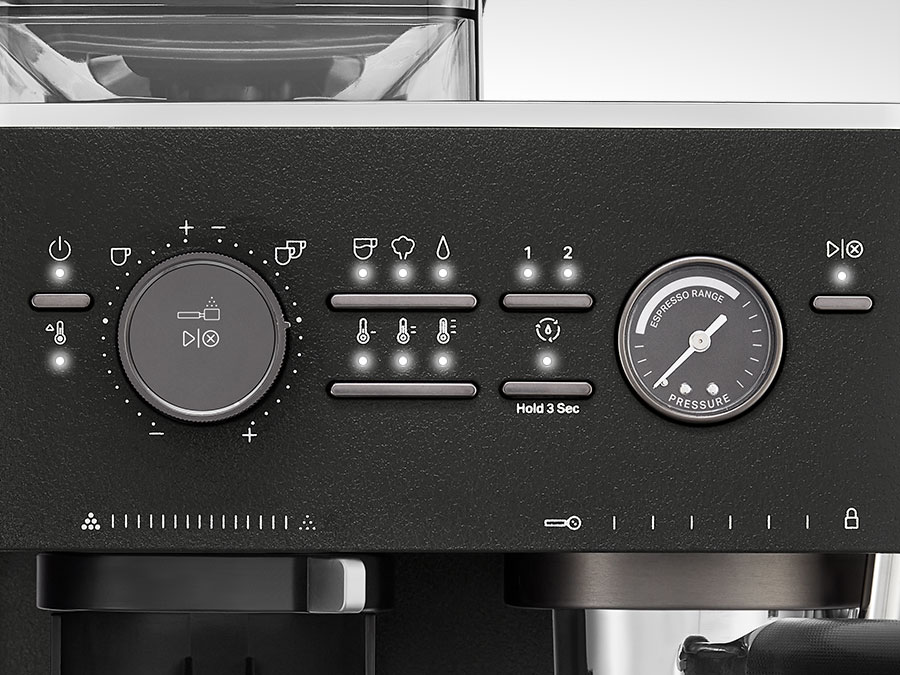
Your coffee grinder typically provides clear warnings before smoking occurs. Recognizing these signs could prevent a catastrophic failure.
Unusual Sounds During Operation
Listen for changes in your grinder’s normal sound profile. High-pitched whining indicates bearing wear or motor stress, while irregular clicking suggests debris interfering with burr rotation. Difficulty starting—where the motor hesitates or takes multiple attempts to begin rotating—is often the precursor to capacitor failure. These sounds merit immediate investigation, even if no smoke is visible.
Performance Changes That Signal Trouble
Monitor for subtle shifts in grinding performance. If your grinder takes longer to process the same amount of beans, produces more fines than usual, or delivers inconsistent particle sizes, the motor is working harder than it should. Increased motor load generates additional heat that accelerates component degradation. Track your grinder’s performance weekly—you’ll notice changes before they become emergencies.
Physical Indicators of Impending Failure
Check for excessive heat emanating from the housing beyond normal warmth, visible oil residue on external surfaces, or unusual vibration levels. Any grinder that feels hot to the touch after normal use warrants immediate inspection. Wipe down your grinder weekly—accumulated oil on the exterior often signals internal seal failure that allows residue to migrate toward critical components.
Prevention Through Strategic Maintenance
Preventing coffee grinder smoking requires specific maintenance practices tailored to your usage pattern—not generic “clean your grinder” advice.
Daily Cleaning Protocol for Home Users
Empty your grounds catch bin before it becomes completely full—overfilling allows grounds to enter ventilation pathways. Wipe exterior surfaces with a dry cloth to remove coffee oil accumulation. For weekly deep cleaning, use a specialized grinder brush to remove grounds between burr teeth without damaging surfaces. Run dry rice or cleaning pellets through your grinder monthly to absorb oily residues that brushing misses.
Commercial-Grade Maintenance Schedule
High-volume operations require more rigorous protocols. Vacuum the internal housing cavity daily to remove settled grounds that impede airflow. Disassemble and clean burrs thoroughly at the end of each business day. Implement a schedule where staff inspect for warning signs during routine cleaning—unusual sounds or excessive heat should trigger immediate service. Commercial users grinding 1kg+ daily should consider professional servicing every 6 months.
When to Replace Critical Components
Capacitors typically need replacement every 5-10 years depending on usage. If your grinder is within this age range and shows any warning signs, replace the capacitor during routine service. Burr replacement intervals vary—steel burrs last 500-1000 pounds of coffee—monitor grind consistency for signs of wear. Worn burrs force the motor to work harder, accelerating heat buildup that leads to smoking incidents.
Repair Versus Replacement Decision Framework
After a smoking incident, your grinder should never be reconnected to power—even if it appears undamaged. When deciding whether to replace or repair:
- Choose replacement when the grinder is older than 10 years, spare parts are unavailable (common with discontinued KitchenAid models), or repair costs exceed 50% of a new unit’s price
- Consider repair only for newer grinders from brands with excellent service support like Rancilio (Rocky models documented at 25+ years) or Baratza
- Always replace after any smoking incident involving visible flames or melted components—internal damage creates re-ignition hazards that professional repair cannot guarantee to eliminate
Manual Grinder Safety Alternative
For users prioritizing absolute safety over convenience, manual grinders eliminate electrical fire risks entirely. The Hario V60 ceramic burr hand grinder produces excellent results with zero fire hazard. Steel burr models like Porlex or 1Zpresso offer larger capacity (up to 250g) for users processing Illy-sized cans regularly. While manual grinding requires physical effort, it provides complete reliability and portability—essential for users who’ve experienced a terrifying coffee grinder smoking incident.
A coffee grinder that smokes represents a serious electrical malfunction that should never be ignored or dismissed as “just a little smoke.” By recognizing early warning signs, implementing strategic maintenance, and responding correctly to incidents, you protect both your home and your morning coffee ritual. Whether you choose to maintain your current equipment, upgrade to a more reliable model like the Sage Smart Grinder Pro, or switch to a manual alternative, the knowledge in this guide ensures your coffee routine remains safe, consistent, and smoke-free. Remember—the first wisp of smoke isn’t a minor issue to work through; it’s your equipment screaming for immediate attention before disaster strikes.