Nothing transforms your morning coffee routine like a quality burr grinder—this single piece of equipment determines whether your beans deliver their full aromatic potential or produce inconsistent, bitter results. Unlike blade grinders that chop beans haphazardly, burr grinders crush coffee between two abrasive surfaces at a controlled rate, creating uniform particles that extract evenly during brewing. When grounds vary wildly in size, smaller particles over-extract (creating bitterness) while larger ones under-extract (yielding sourness), ruining the balance your roaster carefully developed. Investing in the right burr grinder type directly impacts every cup you brew, making this decision critical for coffee enthusiasts at any level.
Understanding the landscape of burr grinder types prevents costly mistakes and ensures your equipment matches your brewing habits. Whether you’re dialing in espresso shots that require micron-level precision or simply want reliable French press grounds, the wrong grinder creates frustration where there should be joy. This guide cuts through marketing hype to reveal exactly how different burr grinder types perform in real-world use, helping you identify which features genuinely matter for your specific needs and which represent unnecessary expenses.
Conical vs Flat Burr Designs
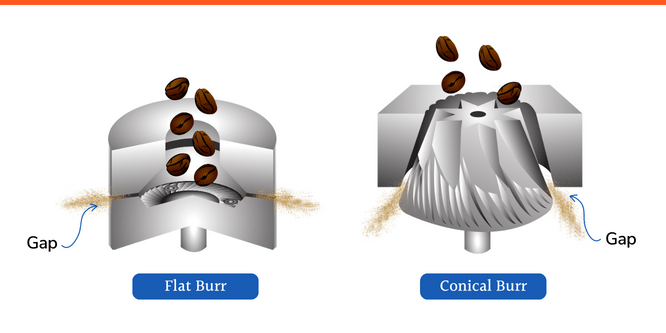
The core distinction among burr grinder types centers on burr geometry, with conical and flat designs producing measurably different results through their mechanical approaches. Conical burrs feature a cone-shaped grinding element rotating within a matching bell-shaped housing, allowing beans to flow downward naturally as they reduce in size. As coffee moves from the wider top to narrower bottom of the cone, particles undergo gradual size reduction through multiple contact points. This design creates a slightly wider particle distribution but generates less heat and noise than flat burr alternatives—critical factors for home users who grind early in the morning.
Conical burr grinders excel for most home brewers due to their forgiving nature and quieter operation. The tapered design naturally directs grounds downward, minimizing retention (stale coffee left inside the grinder between sessions). Their wider particle distribution proves advantageous for immersion brewing methods like French press or cold brew, where extraction happens gently over time rather than under pressure. If you prioritize low noise levels, minimal heat generation, and straightforward operation without extensive dialing-in requirements, conical burrs deliver exceptional value across price ranges. Many entry-level burr grinders use conical designs precisely because they produce reliably good results even with minor adjustment errors.
Flat burr grinders, conversely, employ two parallel rings with precision-cut teeth that fracture beans between them with surgical precision. This parallel arrangement creates consistent fracture points across all particles, yielding an exceptionally narrow particle size distribution that serious espresso enthusiasts demand. Under the high pressure of espresso extraction, even minor variations in particle size cause channeling—where water finds paths of least resistance through the puck—resulting in uneven extraction. Flat burrs minimize this risk through their superior uniformity, but this precision requires more careful adjustment since small changes to the grind setting produce noticeable taste differences. While flat burrs run louder and generate more heat, their performance for pressure-based brewing methods makes them worth the investment for espresso-focused users.
Electric and Manual Power Options
Your choice between electric and manual burr grinders affects not just convenience but the actual flavor profile of your coffee. Electric burr grinders deliver consistent RPM regardless of user effort, producing grounds rapidly with programmable settings for precise dosing. Modern electric models often include timed grinding cycles or weight-based auto-shutoff, removing human error from the process. However, the motors generate heat that can degrade delicate coffee aromatics if they run too hot or too long—particularly problematic for light-roast specialty coffees with nuanced flavor notes.
Manual burr grinders offer surprising advantages that appeal to flavor-focused enthusiasts despite requiring physical effort. Hand-cranked models typically operate at 60-120 RPM, significantly slower than most electric grinders (which often run at 1,000+ RPM), minimizing heat generation that could alter volatile compounds. The tactile feedback during cranking develops your understanding of coffee texture at different grind sizes—a skill that transfers to better espresso dialing and pour-over technique. Premium manual grinders from brands like 1Zpresso and Comandante now rival mid-range electric models in particle consistency, featuring the same precision-machined burrs found in equipment costing twice as much.
Consider your daily routine when choosing power options: electric grinders suit busy mornings where consistency matters more than ritual, while manual models transform grinding into a mindful practice that enhances appreciation for the coffee process. If counter space or noise concerns dominate your kitchen environment, a manual grinder eliminates both issues while delivering exceptional quality. For travelers or remote workers, portable manual grinders ensure you never compromise on grind quality—simply pack them in your bag alongside beans and a brewer for cafe-quality coffee anywhere.
Commercial, Home, and Portable Categories

Burr grinders also categorize by intended use case, with significant performance differences between commercial, home, and portable models. Commercial burr grinders feature high-torque motors designed for continuous use in cafe environments, where a single machine might produce hundreds of espresso shots daily. These units incorporate heavy-duty construction with metal components throughout, doser mechanisms that portion grounds precisely for baskets, and thermal protection systems that prevent overheating during marathon service periods. While commercial grinders deliver unmatched durability, their size, noise output, and price tags (often $1,000+) make them impractical for home use.
Home burr grinders balance performance with practical considerations like counter space, noise levels, and budget constraints. These machines typically use smaller motors that generate less heat during intermittent home use, with footprints designed to fit kitchen countertops rather than commercial baristas’ stations. Look for home grinders with these critical features: stepless adjustment for fine-tuning, low retention pathways to minimize stale coffee carryover, and burr sets appropriate for your primary brewing method. The best home grinders deliver 80% of commercial performance at 20% of the cost—sufficient for even serious enthusiasts who brew multiple methods daily.
Portable burr grinders solve the “on-the-go” coffee problem without sacrificing quality. These compact manual units feature precision burrs in travel-friendly packages that fit in backpacks or luggage. Modern portable grinders like the 1Zpresso Q series maintain the same burr geometries found in premium home models, ensuring your campsite pour-over tastes as good as your kitchen counter version. While their small hoppers limit batch sizes to single servings, this actually benefits freshness—grinding immediately before brewing prevents oxidation that occurs when storing pre-ground coffee. For coffee enthusiasts who refuse to compromise quality while traveling, a quality portable grinder represents the ultimate freedom.
Burr Materials and Construction Quality
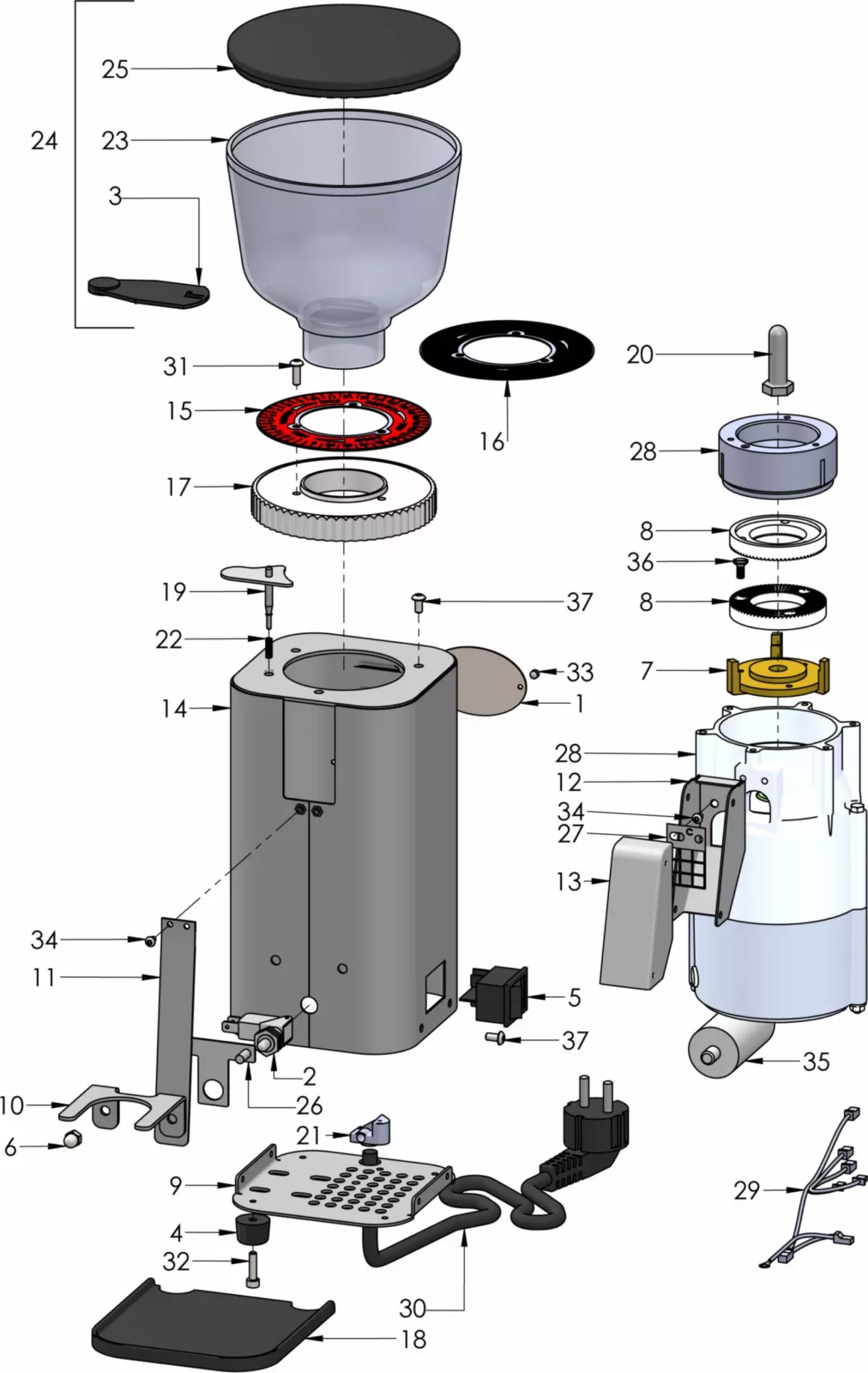
The material composition of burrs significantly impacts longevity, heat generation, and flavor development. Steel burrs dominate the market for good reason—they maintain sharpness longer than alternatives, resist corrosion from coffee oils, and deliver consistent performance across all roast levels. Premium steel burrs undergo specialized heat treatments that enhance edge retention while reducing friction, with higher-end models featuring precisely engineered tooth geometries that optimize particle size distribution. Steel burrs work exceptionally well for espresso due to their ability to maintain sharpness through high-volume use, making them the professional standard in cafes worldwide.
Ceramic burrs present an alternative that some manufacturers promote for specific advantages: they stay sharper longer than steel (in theory), generate less heat during grinding, and resist corrosion from acidic compounds. However, ceramic’s brittleness means it can chip if foreign objects enter the grinding chamber, and it often produces more fines (ultra-fine particles) that contribute bitterness in espresso. For most applications, modern steel burrs outperform ceramic options, though ceramic may suit users focused exclusively on pour-over or French press who prioritize heat reduction above all else.
Construction quality extends beyond the burrs themselves to encompass the entire grinding mechanism. Low-cost grinders often use plastic components that flex under pressure, causing burrs to wobble during operation and producing inconsistent grounds. Premium grinders feature metal-on-metal construction throughout the grinding pathway, with precisely engineered tolerances that maintain burr alignment regardless of adjustment setting. Pay special attention to the adjustment mechanism—stepless grinders allow infinite fine-tuning between settings (essential for espresso), while stepped grinders offer predetermined snap points that sacrifice flexibility for repeatability. For serious coffee enthusiasts, investing in solid construction quality pays immediate dividends in taste consistency and long-term reliability.
Key Performance Considerations
When evaluating burr grinder types, focus on these performance factors that directly impact your coffee quality:
Heat generation matters because temperatures above 140°F begin degrading volatile aromatic compounds that contribute to coffee’s complexity. Conical burrs and manual grinders naturally run cooler than high-speed flat burr electric models, though modern electric grinders incorporate thermal management systems to mitigate this issue. If you prioritize nuanced flavor notes in light-roast coffees, choose a grinder that minimizes thermal impact.
Grind retention refers to stale coffee left inside the grinder between sessions—some low-quality grinders retain 5+ grams of old grounds, meaning your fresh batch mixes with yesterday’s coffee. Look for grinders with straightforward pathways and minimal dead space, particularly if you frequently change between different coffee beans. Retention matters most for espresso enthusiasts who require absolute consistency between shots.
Particle distribution directly affects extraction uniformity. Flat burrs typically produce narrower distributions ideal for espresso, while conical burrs create slightly wider distributions more forgiving for immersion methods. Understand your primary brewing method before prioritizing this characteristic—don’t pay for espresso-level precision if you only make French press.
Selecting Your Ideal Grinder
Match your burr grinder type to your actual brewing habits rather than theoretical ideals. Espresso enthusiasts need flat burrs with precise stepless adjustment, while pour-over lovers benefit more from conical burrs with wide adjustment ranges. Budget-conscious beginners should invest $100-$150 in a quality entry-level grinder rather than settling for a cheap model that disappoints—this price range delivers dramatic improvements over blade grinders without breaking the bank.
Prioritize construction quality over feature count at every price point. A grinder that lasts ten years outperforms one with fancy timers that fails after eighteen months. Read verified purchaser reviews to separate marketing claims from real-world performance, and pay attention to warranty coverage that protects your investment.
For the ultimate versatility, consider owning both an electric home grinder for daily convenience and a premium manual grinder for travel or specialty brewing. This combination ensures consistent quality regardless of your location while providing the ritual engagement many coffee lovers cherish. Remember—your grinder affects every cup you brew, making this investment foundational to your entire coffee journey. Choose wisely, and let precision become the cornerstone of your daily ritual.