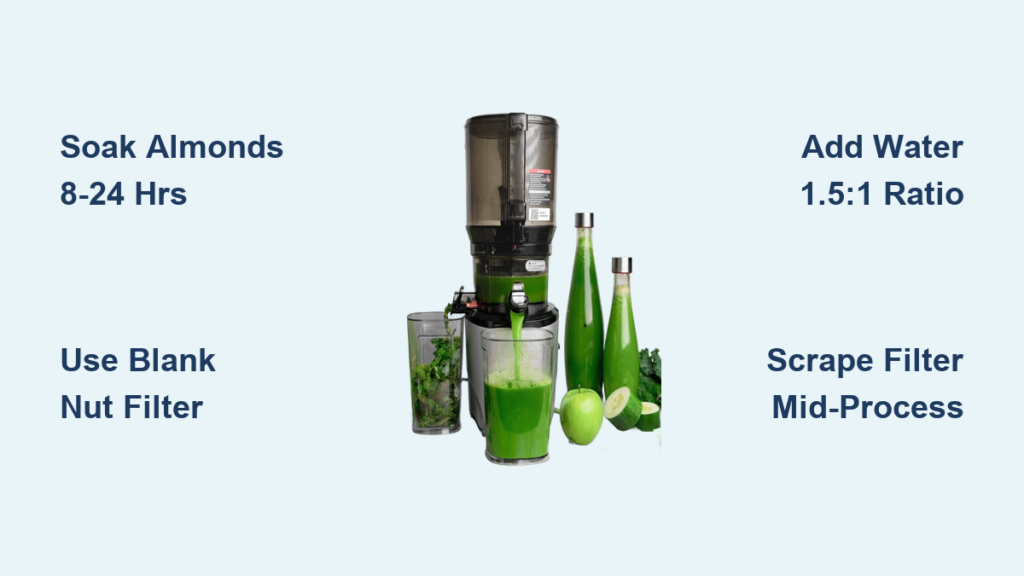
Creating fresh almond milk with your Kuvings juicer transforms a traditionally messy, time-consuming process into a streamlined operation that yields smooth, nutrient-rich milk without the gritty texture of blender methods. Unlike store-bought versions that often contain just 2% almonds, your homemade Kuvings almond milk delivers intense flavor and superior nutrition through cold-press extraction. Whether you own a C7000, B6000, or EVO series model, this guide shows you exactly how to leverage your juicer’s blank nut milk filter for professional-quality results that outperform commercial alternatives.
The key advantage of using your Kuvings juicer lies in its slow masticating action that operates at just 50-60 RPM, preserving heat-sensitive nutrients while thoroughly separating milk from pulp. This eliminates the need for cheesecloth straining that plagues traditional methods, giving you more yield with less effort. In just minutes, you’ll produce almond milk with a luxurious texture that stays fresh longer thanks to minimal oxidation during extraction.
Choose Your Kuvings Model for Optimal Almond Milk

Your specific Kuvings model determines extraction efficiency and final texture. The C7000 Professional Juicer stands out with its powerful 240-watt motor and dedicated blank nut milk filter that processes whole soaked almonds without preprocessing. Its 3-inch feed chute accommodates almonds directly while the reverse function prevents pulp jamming during thick extractions.
For quiet operation under 60 decibels, the B6000 Silent Series delivers exceptional results with its patented Juicer Cap technology that lets you control milk flow mid-process. The wider 4.3-inch feed tube reduces prep time significantly, while the brushless motor maintains consistent speed when processing dense almond mixtures. EVO820 and EVO830 models feature enhanced auger systems specifically engineered for nut milk extraction, with improved pulp containers that minimize jamming during extended processing.
Prepare Almonds with Perfect Soaking Technique
Soaking transforms hard almonds into plump, milk-producing powerhouses. Cover 1 cup (140-150g) raw almonds with cool water plus 2 extra inches in a glass bowl and soak at room temperature for 8-24 hours. Discard soaking water completely—it contains enzyme inhibitors—and rinse thoroughly under running water until the water runs clear.
Pro tip: For ultra-smooth milk, blanch soaked almonds by dropping them in boiling water for 90 seconds, then transferring to ice water. The skins will slip off easily, yielding the creamiest, whitest milk ideal for photography or special occasions. While optional, this extra step makes a noticeable difference in texture.
Measure Water-to-Almond Ratios for Your Preferred Consistency
Your water ratio directly controls richness. For standard drinking milk that works in cereal or smoothies, use 3-4 cups water per 1 cup almonds. Coffee enthusiasts should try 2 cups water per 1 cup almonds for a thicker creamer that doesn’t instantly dilute espresso. Want restaurant-quality richness? Go 1.5 cups water per 1 cup almonds for a near-heavy cream texture perfect for vegan desserts.
Warning: Using too much water during secondary extraction creates watery milk. Reserve extra water for thinning only after initial processing.
Assemble Your Kuvings Juicer with Nut Milk Filter

Install the blank nut milk filter—not the standard juice filter—by screwing it securely onto the juicing bowl’s spindle. This specialized filter has fine mesh that captures pulp particles while allowing smooth milk flow. Position a 1-liter glass container under the milk出口 and a separate container for pulp, ensuring both have adequate capacity for your batch size.
Visual cue: When properly assembled, the blank filter should sit flush against the juicing bowl with no gaps visible. The Smart Cap (if your model has one) should rotate smoothly to control milk flow.
Process Almonds Through Kuvings Juicer for Maximum Yield
Begin with a small handful of soaked almonds to let the auger engage properly before adding more. Feed consistently but slowly—rushing causes motor strain. Listen for the steady hum indicating proper operation; a struggling motor means you’re adding almonds too quickly.
Critical step: Pause every 30-60 seconds to scrape accumulated pulp from the filter using the included cleaning tool. This simple action maintains continuous milk flow and boosts yield by 20-30%. If the motor strains, engage reverse for 3-5 seconds to dislodge compacted pulp before resuming.
Boost Yield with Secondary Almond Pulp Extraction

After first pressing, add 1-2 cups fresh water to the pulp container and swirl to moisten. Feed this mixture through the juicer again to extract additional milk—this “second press” yields 20-30% more liquid with slightly thinner consistency. Blend both batches together for perfectly balanced texture, or save the thinner milk for cooking applications.
Zero-waste tip: Dry the final pulp in a 200°F oven for 2-3 hours, then pulse in a food processor to create homemade almond flour for baking.
Flavor and Sweeten Almond Milk Without Additives
For vanilla almond milk, add 1-2 teaspoons vanilla extract and 2 tablespoons maple syrup to the freshly extracted milk, then shake vigorously in a sealed container. For natural sweetness, process 3-4 pitted Medjool dates with your almonds—they dissolve completely while adding caramel notes and fiber.
Expert note: A pinch of sea salt (¼ teaspoon) enhances sweetness perception without making milk salty. Add it during flavoring for noticeably richer taste.
Store Homemade Almond Milk to Prevent Separation
Refrigerate in airtight glass containers for 3-5 days. Natural separation is normal—simply shake vigorously before use. For extended freshness, add 1 tablespoon lemon juice during preparation to lower pH and inhibit bacterial growth.
Freezing hack: Pour into ice cube trays for portion-controlled freezing. Thawed cubes blend perfectly into smoothies without texture issues, while larger containers may require brief reprocessing for smoothness.
Fix Common Kuvings Almond Milk Problems Fast
Grainy texture means your blank filter isn’t properly installed or almonds were under-soaked. Verify filter security and extend soaking to 12+ hours next time. Watery results typically indicate too much water—reduce to 2 cups per almond cup for creamier milk.
Motor stalling solution: Feed smaller almond quantities and pause more frequently to scrape the filter. Ensure your juicer sits on a level surface with proper ventilation around the motor base.
Clean Kuvings Juicer After Almond Milk Production
Disassemble while components are still wet—almond residue dries quickly into stubborn films. Rinse the auger, filter, and bowl under warm water immediately, using the included brush for mesh cleaning. Soak stubborn residue in warm soapy water for 15 minutes before gentle scrubbing.
Critical warning: Never submerge the motor base. Wipe only with a damp cloth to prevent electrical damage.
Customize Almond Milk with Flavor Variations
For roasted almond milk, spread raw almonds on a baking sheet and roast at 350°F for 10-15 minutes until fragrant. Cool completely before soaking—warm almonds can damage juicer components. For chocolate almond milk, add 2-3 tablespoons raw cacao powder and 1-2 tablespoons maple syrup during flavoring.
Barista tip: The 1.5:1 water-to-almond ratio creates milk that steams beautifully for lattes without curdling in hot coffee.
Final Thoughts
Your Kuvings juicer transforms almond milk making from a chore into a effortless process that yields superior results to store-bought versions. By following these precise techniques—proper soaking, correct filter installation, strategic pulp management, and immediate cleaning—you’ll consistently produce creamy, nutrient-dense almond milk that stays fresh longer. The investment in quality almonds and proper technique pays off in flavor, nutrition, and cost savings, with each batch costing less than premium commercial alternatives while containing significantly more actual almonds. With just minutes of active time, you control every ingredient for dairy-free milk that perfectly matches your taste preferences and dietary needs.