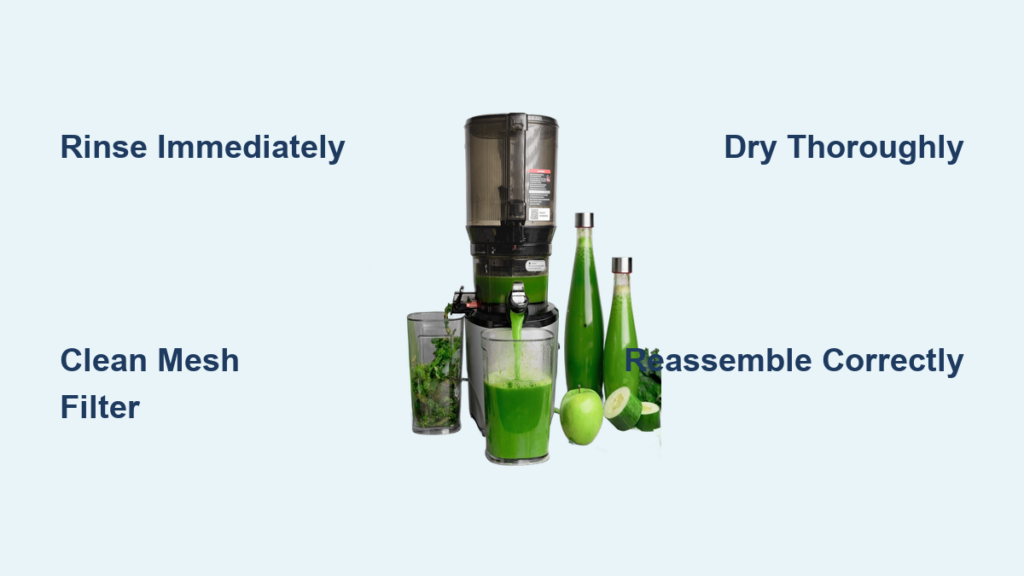
If your Kuvings slow juicer isn’t producing clear juice or has developed unpleasant odors between uses, improper cleaning is likely the culprit. Unlike centrifugal juicers, masticating models like Kuvings operate at lower speeds that extract more juice but also leave behind stubborn pulp in intricate components. That vibrant green wheatgrass juice you love? It’s notorious for staining the mesh filter if not cleaned immediately. When residue builds up in the auger threads or silicone seals, your juicer works harder, produces less juice, and can even develop bacterial growth that affects taste. This guide reveals the exact cleaning process Kuvings owners need to maintain peak performance and extend their appliance’s lifespan.
Neglecting proper cleaning routines does more than create messy appliances—it directly impacts your health and investment. Leftover pulp trapped in the mesh filter basket or seal grooves becomes a breeding ground for bacteria within hours, potentially contaminating your next juice batch. Over time, dried residue strains the motor, causing premature wear that shortens your juicer’s operational life. The good news? With the right techniques, cleaning your Kuvings slow juicer takes less time than preparing your produce. Let’s transform your cleaning routine from a dreaded chore into a quick, effective process that keeps your juicer performing like new.
Gather Your Essential Cleaning Tools Before Starting
Having the right supplies within reach turns juicer cleaning from a frustrating task into a streamlined routine. Skip the guesswork by preparing these specific items before disassembly.
Collect a soft-bristled nylon brush designed specifically for juicer maintenance—regular dish brushes can’t reach into the fine mesh holes without causing damage. A microfiber cloth works better than paper towels for drying because it won’t leave lint in crevices. For stubborn residue, keep baking soda and white vinegar accessible as natural cleaning boosters that won’t damage plastic components. Your kitchen sponge should be dedicated to juicer cleaning only, as regular food residue on sponges can transfer odors to juicer parts.
Store these supplies in a caddy near your juicing station so everything’s ready immediately after juicing. Pro tip: Keep a small bowl of warm water with a drop of dish soap next to your juicer while you juice—this lets you drop components in for immediate soaking before residue hardens.
Disassemble Your Kuvings Model Correctly Without Damage

Forcing components during disassembly is the #1 cause of accidental damage to Kuvings slow juicers. Follow this precise sequence to safely take apart your specific model.
Always unplug the motor base first and work on a towel-lined surface to catch drips. On vertical Kuvings models like the C7000 or NS621, twist the juicing bowl counterclockwise while lifting straight up to remove it from the motor base. Never pull straight up without twisting, as this can damage the connection mechanism. Next, separate the hopper from the juicing bowl by pressing the release button and lifting straight off.
The juicing screw (auger) requires careful handling—grasp it firmly at the top and lift straight out without wobbling. Pay attention to the silicone seal at the bottom; forcing the auger can dislodge or tear this critical component. The mesh filter basket typically releases with a quarter-turn counterclockwise motion. If your model has a smart cap or juice cap, remove it by pressing the release tab before attempting to clean the bottom chamber.
Clean the Mesh Filter Basket Without Causing Damage
The mesh filter basket is your Kuvings juicer’s most delicate yet critical component, and improper cleaning destroys its effectiveness within months. Follow this method to preserve its integrity while removing stubborn residue.
Rinse the filter immediately after juicing while pulp is still wet—dried residue requires aggressive cleaning that damages the fine mesh. Hold the basket under warm running water while using your soft brush in circular motions from the inside out. This pushes debris through the holes rather than packing it tighter. For wheatgrass or celery fibers clogging the mesh, soak the filter in warm water with a tablespoon of baking soda for 20 minutes before brushing.
Never use toothpicks, knives, or metal tools to poke through clogged holes—this creates permanent tears that allow pulp in your juice. If fibers remain stubborn after soaking, try a vinegar solution (1 part vinegar to 3 parts water) which helps break down organic material. After cleaning, hold the filter up to light to check for any remaining blockages before drying.
Remove Stubborn Stains from Plastic Components

Beet juice and carrot pulp leave permanent discoloration on Kuvings juicer bowls if not treated properly. Combat these stains before they set using these targeted methods.
For general discoloration, make a thick paste of baking soda and water. Apply it to stained areas and let sit for 15 minutes before gently scrubbing with a soft cloth. The mild abrasiveness lifts stains without scratching plastic surfaces. For severe beet stains around the silicone seal groove, remove the seal and soak both components in a solution of warm water and white vinegar (1 cup vinegar per gallon of water) for 30 minutes.
Sunlight exposure works surprisingly well for fading stubborn stains—place cleaned components on a sunny windowsill for 2-3 hours. The UV rays naturally break down organic pigments. For immediate juicing needs, alternate between staining produce (like beets) and non-staining items (like apples) which helps prevent deep-set discoloration during regular use.
Protect Your Motor Base from Liquid Damage

Water damage to the motor base accounts for 40% of premature Kuvings juicer failures according to service technicians. Prevent this costly mistake with proper cleaning techniques.
Never submerge the motor base or run it under water—moisture infiltration destroys electrical components. Instead, unplug the unit and wipe it immediately after juicing with a damp microfiber cloth. Focus on the connection point where the juicing bowl attaches, as juice frequently seeps into this area during operation. For dried residue, dampen your cloth with a solution of equal parts water and white vinegar, then follow with a dry cloth.
If liquid spills into the control panel, turn off and unplug immediately. Use cotton swabs barely dampened with rubbing alcohol to clean around buttons—alcohol evaporates quickly without leaving moisture behind. Always allow the motor base to air dry completely for at least 30 minutes before reassembly or storage.
Dry Components Thoroughly Before Reassembly
Incomplete drying causes more mold and mildew issues in Kuvings juicers than any other factor. Follow this drying protocol to prevent microbial growth in hidden areas.
After washing, shake each component vigorously to remove excess water, then place them on a clean microfiber towel with space between items for air circulation. The mesh filter basket requires special attention—turn it upside down to drain water trapped in the mesh. The juicing screw’s threaded areas retain water, so tap it gently against the towel to dislodge droplets.
Never rush drying with heat sources like hair dryers on high settings, as excessive heat warps plastic components. Instead, allow 1-2 hours for complete air drying in a well-ventilated area. Before reassembly, inspect all parts by holding them up to light—any remaining water droplets will be visible as light reflections.
Reassemble in the Correct Sequence for Proper Function
Incorrect reassembly causes 70% of “broken juicer” complaints that actually stem from improper cleaning procedures. Follow this exact sequence to ensure optimal performance.
Begin by verifying the silicone seal is properly seated in its groove around the juicing bowl rim—this creates the watertight seal essential for proper juice extraction. Insert the juicing screw straight down without forcing it; if it doesn’t slide in smoothly, check that the seal isn’t twisted. The mesh filter basket should rotate freely when installed correctly—if it binds, realign it with the guide tabs.
When attaching the lid, align the arrows or markers on both pieces before twisting into place. The final test: after mounting the assembly on the motor base, it should lock with a distinct click and resist moderate upward pressure. If components feel loose or wobbly, disassemble and check for misaligned parts before operating.
Implement a Cleaning Schedule That Fits Your Routine
Daily quick cleaning takes just 5 minutes but prevents 90% of major cleaning problems. Adapt this schedule to your juicing frequency for optimal results.
After every use: Rinse all components immediately while residue is wet, then perform a 3-minute cleaning with warm water and soft brush. This simple step prevents dried pulp that requires soaking. For daily juicers, perform a deeper cleaning every third use by soaking components in warm soapy water for 15 minutes.
Weekly maintenance: Disassemble completely and clean all parts thoroughly, paying special attention to the silicone seal groove and mesh filter. Monthly, inspect seals for wear and check that all moving parts operate smoothly. Busy schedule? Keep a dedicated “juicer cleaning station” with pre-measured cleaning solutions ready to go immediately after juicing.
Your Kuvings slow juicer delivers maximum nutrition from your produce only when properly maintained. By implementing these precise cleaning techniques, you’ll extend your appliance’s lifespan by years while ensuring every glass of juice tastes fresh and pure. The small time investment after each use prevents hours of difficult cleaning later and protects your significant investment in healthy living. Remember: immediate rinsing, gentle cleaning methods, and thorough drying form the trifecta of effective juicer maintenance that keeps your Kuvings performing like new through hundreds of juice cycles. Start applying these techniques today, and notice the difference in both your juicer’s performance and the quality of your juice tomorrow.