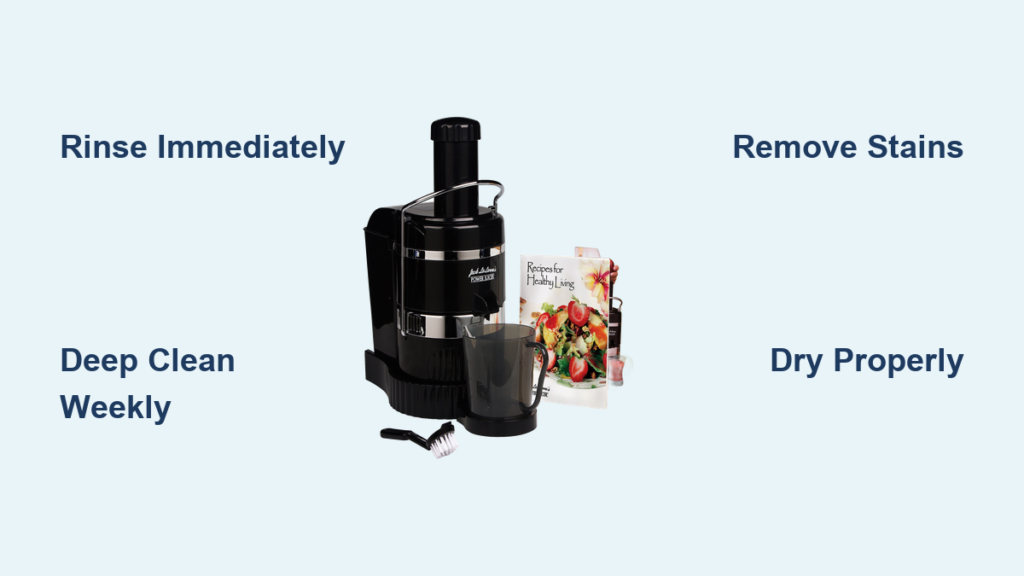
That stubborn pulp clogging your Jack Lalanne power juicer isn’t just unsightly—it’s stealing up to 30% of your juice yield and creating a breeding ground for bacteria with every use. When dried pulp accumulates around the blade assembly and in the feeding chute, your once-powerful juicer struggles to extract every drop of nutrition from your produce. This comprehensive cleaning guide delivers immediate solutions for post-juice cleanup, deep cleaning techniques that remove years of buildup, and maintenance habits that will keep your Jack Lalanne power juicer performing like new for decades. Whether you own the classic Power Juicer, Power Juicer Express, or Elite model, these specific cleaning protocols address the exact pain points that plague most owners.
Most users make the critical mistake of letting their juicer sit while they enjoy their juice, only to face hardened pulp that requires aggressive scrubbing later. By implementing the immediate cleaning techniques outlined here, you’ll spend just 5-10 minutes after each use instead of 30 minutes battling dried residue days later. This guide covers not just the “how” but the “why” behind each cleaning step—understanding where pulp hides and how stains develop lets you target your efforts where they matter most. You’ll learn professional-grade stain removal for carrot and beet discoloration, safe motor base cleaning that prevents electrical hazards, and a maintenance schedule that transforms cleaning from a chore into an effortless habit.
Stop Pulp Hardening: Your 5-Minute Jack Lalanne Power Juicer Cleanup Routine
The difference between effortless cleaning and frustrating scrubbing sessions comes down to what you do in the first five minutes after finishing your juice. As soon as you’ve poured your last glass, unplug the unit and disassemble all components while pulp remains wet and pliable. Remove the feeding chute, pulp container, juice pitcher, and cutting blade assembly immediately—dried pulp transforms from soft residue to concrete-like buildup within 20 minutes. Hold each piece under warm running water, focusing first on the blade assembly where fibrous strands from kale or celery wrap around the hub.
Why Immediate Rinsing Prevents 90% of Cleaning Problems
Pulp residue contains natural sugars that oxidize and harden rapidly when exposed to air, creating a stubborn barrier that resists standard cleaning. The blade assembly requires your closest attention during this initial rinse—use a soft-bristled brush to gently dislodge particles without scratching plastic surfaces or dulling cutting edges. Look for pulp strands trapped in the small gap where the blade connects to the container, as this area often escapes notice but significantly impacts performance when clogged. Many owners keep a small basin of warm, soapy water next to their juicer during operation for immediate soaking, reducing post-juice cleanup to a simple dunk and rinse.
Essential Tools for Quick Post-Juice Cleaning
You don’t need specialty equipment for daily maintenance—just three items kept within arm’s reach: a soft-bristled brush (an old toothbrush works perfectly), a microfiber cloth for drying, and a small container for soaking parts. The brush should have soft nylon bristles to avoid scratching plastic components while effectively removing fibrous residue. Keep these tools in a dedicated drawer near your juicer so they’re always available when you finish juicing. This simple setup ensures you never skip the critical immediate cleaning step that protects your investment.
Remove Dried Pulp From Blade Assembly in 20 Minutes
Weekly deep cleaning targets the residue that daily rinsing misses, particularly around the blade hub and in the feeding chute’s interior ridges. Fill your sink with warm water and a tablespoon of mild dish soap, then submerge all removable plastic components for 15-20 minutes. This soaking period loosens dried pulp that would otherwise require aggressive scrubbing. While components soak, address the motor base with a damp (not wet) cloth, focusing on the junction where the juicing container attaches—the area most prone to sticky residue buildup that affects stability.
Step-by-Step Blade Assembly Deep Cleaning
- Remove the blade assembly from the soaking solution and hold it under running water
- Use a soft brush to clean both sides of the blade, paying special attention to the cutting edges
- Insert a cotton swab dipped in soapy water into the central hub area where pulp accumulates
- Rotate the swab gently to remove trapped fibers without damaging the mechanism
- Rinse thoroughly under running water until water runs clear
Why Proper Rinsing Matters for Juice Taste
Leftover soap residue on juicer components transfers directly to your next juice batch, creating an unpleasant chemical aftertaste and potentially degrading plastic over time. After cleaning, rinse each component under running water for at least 30 seconds, holding pieces at different angles to ensure water flows through all channels. Shake components vigorously to remove excess water before proceeding to drying—this simple step reduces air drying time by 50%.
Eliminate Carrot & Beet Stains From Power Juicer Parts

Deeply pigmented produce leaves stubborn orange and red stains on plastic components that worsen with each use if not addressed properly. Create a paste using two tablespoons of baking soda and one tablespoon of water, then apply it directly to stained areas with a soft cloth. Work the paste into the plastic surface using circular motions, allowing it to sit for at least two hours (overnight for severe staining). The mild abrasive action lifts discoloration without scratching, while the alkaline properties neutralize acidic compounds in vegetable pigments.
Vinegar Soak for Hard Water Deposits and Odors
White vinegar dissolves mineral deposits from hard water and eliminates odors from strong-smelling produce like garlic or ginger. Mix equal parts white vinegar and warm water in a container large enough to submerge affected parts. Soak stained components for 30-60 minutes, then scrub gently with a soft brush before rinsing thoroughly. For persistent odors, add one tablespoon of baking soda to the vinegar solution—this creates a foaming reaction that penetrates microscopic pores in the plastic where smells linger.
Safe Motor Base Cleaning: Never Submerge Your Power Juicer

Electrical components in the motor base require fundamentally different care than removable parts—water exposure causes irreversible damage that voids warranties and creates safety hazards. Always unplug the unit before cleaning and verify your hands are completely dry. Dampen a microfiber cloth with water (wring out thoroughly), then wipe the exterior housing, paying special attention to the area around the on/off switch where juice splatters accumulate. For stubborn residue, add one drop of mild dish soap to your cloth rather than applying directly to the base.
Critical Areas That Trap Residue and Cause Leaks
The circular groove where the juicing container attaches to the motor base collects juice during operation, drying into a sticky film that prevents proper sealing. Use a cotton swab dipped in vinegar solution to clean this groove, removing all residue before it hardens. Similarly, inspect and clean the rubber feet regularly—debris trapped beneath them causes instability during operation and makes cleanup more difficult over time. If you notice any fraying or damage to the power cord, discontinue use immediately and contact the manufacturer for replacement options.
Prevent Musty Odors: Proper Jack Lalanne Power Juicer Drying Techniques
Air drying components on a clean dish rack for 1-2 hours prevents bacterial growth better than towel drying alone, but strategic positioning accelerates the process. Place the juicing container upside down on a clean towel with the blade assembly removed, allowing water to drain from the critical connection point. Stand the pulp container on its side rather than upright to prevent water pooling in corners. For the blade assembly, position it with the cutting edges facing downward so gravity pulls moisture away from the hub mechanism.
Reassembly Checklist for Leak-Free Operation
Before storing or using your juicer again, verify these three critical connections:
– The rubber gasket sits flush in its groove with no twists or folds
– The blade assembly twists securely into the juicing container with no play
– The pulp container slides smoothly into position without resistance
Proper assembly prevents the most common post-cleaning issue: mysterious leaks during operation. Take an extra 15 seconds to confirm these connections are secure—you’ll avoid messy countertop cleanups and wasted juice during your next session.
Jack Lalanne Power Juicer Maintenance Calendar: What to Do Daily, Weekly, Monthly
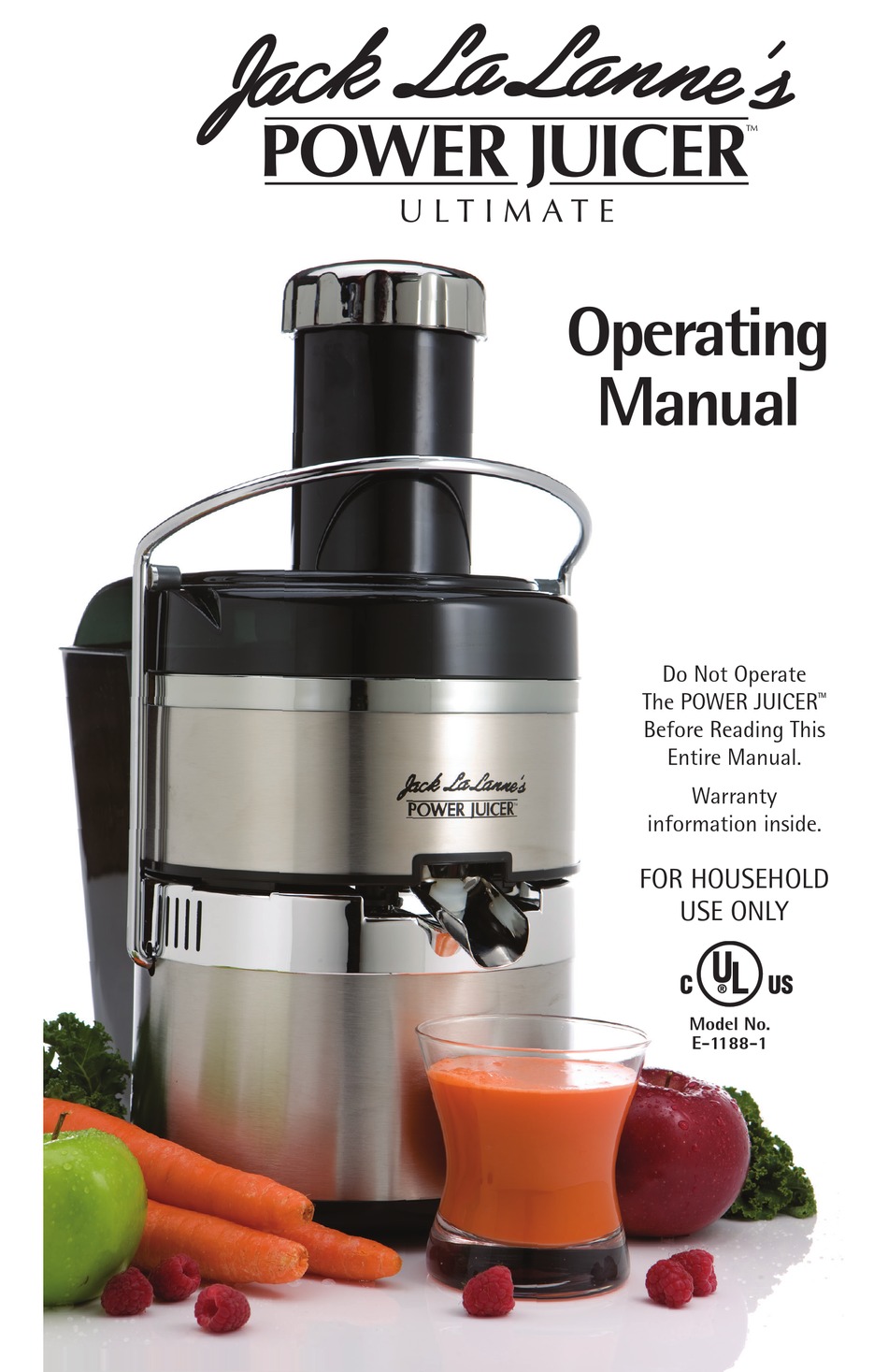
Transform cleaning from a chore into an automatic habit with this simple schedule:
– After every use: Disassemble and rinse components immediately
– Weekly: Deep clean with baking soda soak and vinegar treatment
– Monthly: Inspect rubber gaskets for cracking and blades for dullness
– Quarterly: Replace worn gaskets and check power cord integrity
When to Replace Critical Components
Rubber seals lose flexibility after 6-12 months of regular use, leading to leaks even with proper assembly. Replace gaskets annually or immediately if you notice cracks, hardening, or loss of elasticity. Cutting blades typically last 2-3 years with proper cleaning but should be replaced if juice yield decreases significantly despite thorough cleaning. Investing $15-20 in replacement parts extends your juicer’s lifespan by decades—far more cost-effective than replacing the entire unit.
Regular cleaning and maintenance transforms your Jack Lalanne power juicer from a high-maintenance appliance into a reliable daily tool that delivers maximum nutrition with minimal effort. By implementing these specific cleaning protocols immediately after each use and following the deep cleaning schedule, you’ll prevent 95% of common problems that plague neglected juicers. The time you invest now pays exponential dividends in extended appliance life, improved hygiene, and consistently excellent juice extraction. Your Jack Lalanne power juicer represents a significant investment in your health—protect that investment with these proven cleaning techniques, and it will serve you faithfully for years to come.