Fresh pomegranate juice delivers a burst of sweet-tart flavor along with powerful antioxidants, but manually extracting that vibrant ruby liquid can be messy and time-consuming. An electric juicer transforms this ancient fruit into a convenient kitchen task, allowing you to process whole pomegranates in minutes rather than the hour-long struggle of hand-squeezing. Whether you’re a health enthusiast adding nutrient-dense juices to your morning routine or a home cook seeking fresh ingredients for cocktails and recipes, mastering the electric juicer method opens up a world of possibilities. This guide walks you through selecting the right equipment, preparing your pomegranate correctly, and executing each step to yield the maximum amount of delicious, fresh juice.
Choose the Best Juicer for Pomegranate Processing
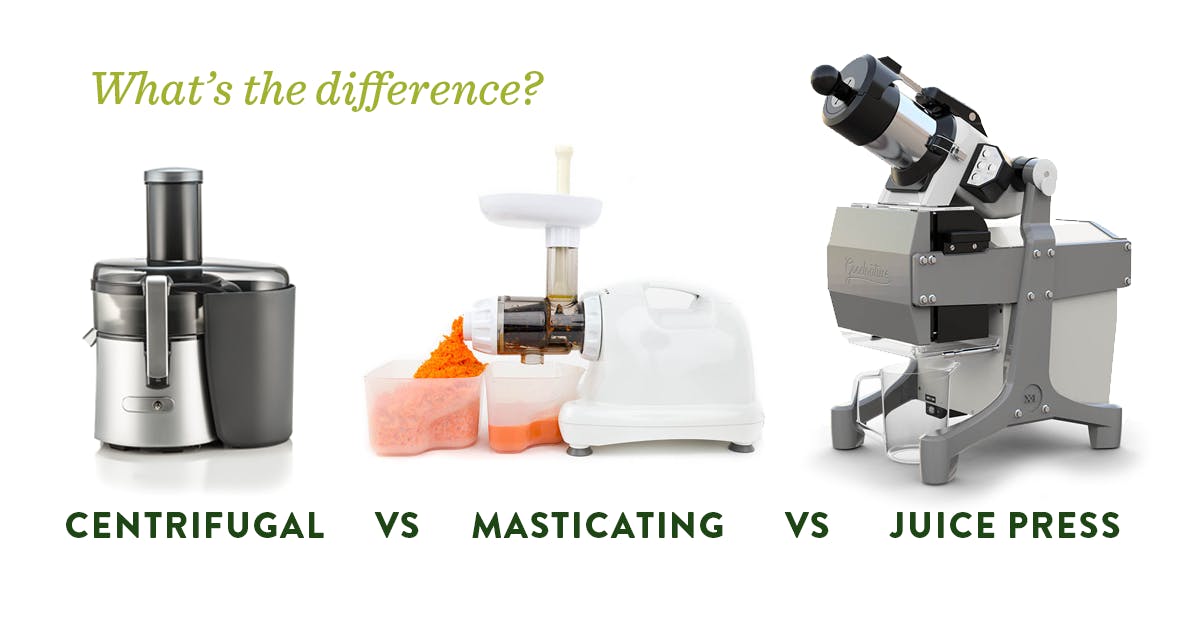
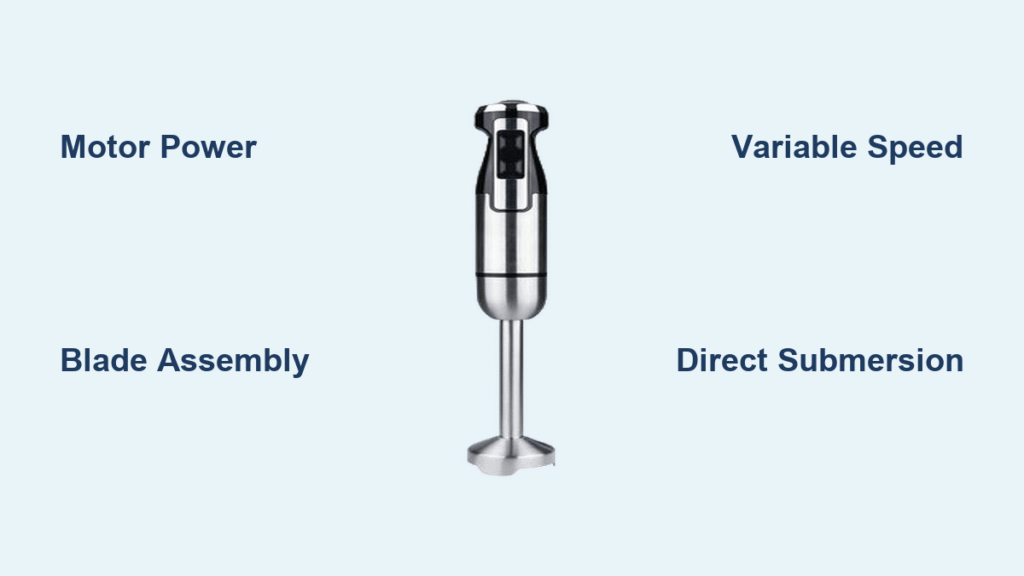
Centrifugal juicers work well for quick pomegranate juicing sessions thanks to their wide feed tubes that accept whole or halved fruits. These high-speed models (typically 3,000-16,000 RPM) efficiently separate juice from pulp and seeds with minimal preparation. The fast-spinning blade assembly handles pomegranate arils effectively, though you’ll need to clean the mesh filter thoroughly afterward to remove stubborn membrane fragments. Look for models with at least 700 watts of power to handle the dense arils without straining, and consider units with reverse function to clear any seed clogs that might occur during processing.
Masticating juicers provide superior yield and nutrient retention for pomegranates but require more preparation work. These slow-press models (typically 40-160 RPM) extract up to 30% more juice by gently crushing arils rather than shredding them. Since masticating juicers have narrower feed chutes, you’ll need to seed your pomegranates first, but the trade-off is noticeably smoother juice with less foam and oxidation. When shopping, prioritize juicers with stainless steel augers and dual-stage extraction systems specifically designed for handling seeded fruits like pomegranates.
Select Perfectly Ripe Pomegranates for Maximum Juice
Heavy pomegranates yield significantly more juice than lighter ones of similar size—this simple weight test is your best indicator of juice content. When shopping, pick up several fruits of comparable size and choose the heaviest specimen, which could contain up to 20% more liquid. The skin should feel firm and leathery, not soft or wrinkled, with a deep, uniform color ranging from bright red to dark crimson depending on the variety. Avoid fruits with cracks, soft spots, or yellowish patches, which indicate overripeness or damage that reduces juice quality.
The tapping test reveals ripeness secrets most shoppers miss: hold the pomegranate and tap it gently with your knuckle. A ripe fruit produces a metallic, hollow sound, while unripe specimens sound dull and solid. This happens because mature pomegranates develop more air pockets between their internal chambers as they ripen. For best results, use pomegranates within one week of purchase, as their juice content and flavor peak shortly after harvest and gradually decline during storage.
Master the Water Method for Clean Seeding
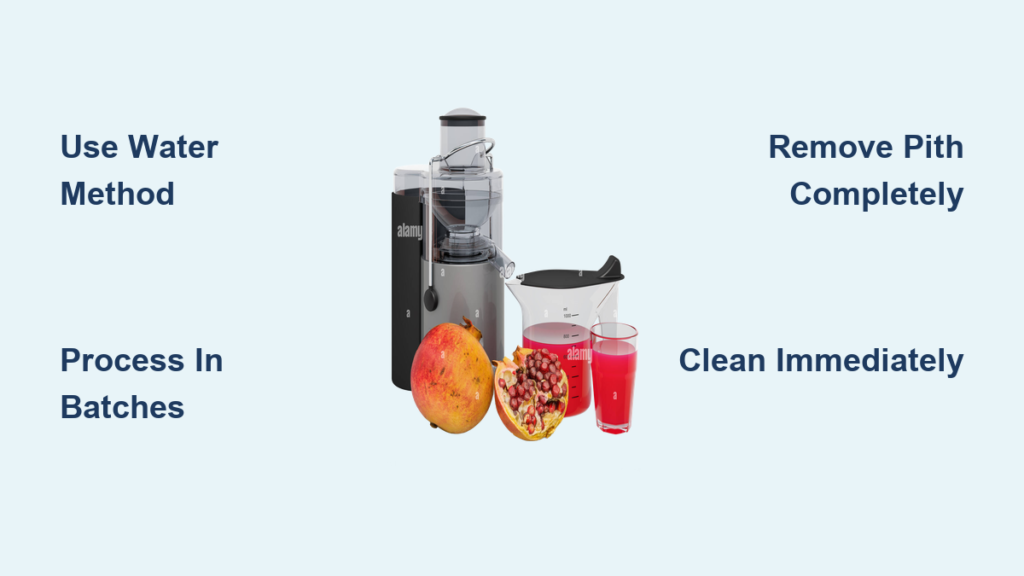
Submerging your pomegranate in water while seeding prevents messy juice splatters and makes separation effortless. Start by cutting off the crown end to expose the white pith, then score the skin vertically in 4-6 sections following the fruit’s natural ridges. Fill a large bowl with cold water, submerge the scored pomegranate, and carefully break it apart along the scored lines. The arils will sink to the bottom while the bitter white pith floats to the surface—simply skim away the pith with your hand.
This water technique works because pomegranate arils are denser than water while the pith contains air pockets that make it buoyant. For faster processing, use your fingers to gently rub the arils away from the membrane underwater. Once separated, drain the seeds in a fine-mesh strainer and pat them dry with a clean kitchen towel before juicing. Dry arils feed more efficiently into your juicer and produce clearer juice with less foam than wet seeds.
Process Arils in Small, Manageable Batches
Overloading your juicer’s feed chute causes immediate clogs and inconsistent extraction—limit each batch to ½ cup of pomegranate arils for optimal results. Start your juicer before adding any fruit, then slowly pour the arils through the feed tube using the pusher accessory to guide them downward. Listen for the motor’s consistent hum; if it changes pitch or strains, stop feeding immediately and let the machine catch up. For centrifugal juicers, you’ll notice juice flowing steadily within seconds, while masticating models may take 10-15 seconds to establish consistent flow.
The size of your batches directly impacts yield—smaller quantities allow the juicer to fully process each aril before adding more. When juicing multiple pomegranates, work in 3-5 minute cycles with 30-second breaks between batches to prevent motor overheating. During these breaks, quickly wipe the juice spout with a damp cloth to prevent sticky buildup that could contaminate your next batch. This rhythmic approach maintains consistent extraction pressure and extends your juicer’s lifespan during extended juicing sessions.
Eliminate Bitter Pith Contamination During Juicing

Bitter juice almost always results from pith entering your juicer—prevent this by thoroughly removing membrane fragments during seeding. When breaking apart the pomegranate underwater, take extra time to separate any small white bits clinging to the arils, as these contain the bitter compounds. If using a centrifugal juicer with whole pomegranates, cut the fruit into quarters and carefully remove the central pith core before feeding pieces into the chute.
For stubborn bitterness, double-strain your juice through a fine-mesh sieve followed by cheesecloth. First, pour the freshly extracted juice through a standard mesh strainer to catch large pulp particles, then line the strainer with two layers of damp cheesecloth for a second pass. Let gravity do the work—avoid squeezing the cheesecloth, which forces bitter compounds from the membrane into your juice. This two-stage filtration produces exceptionally smooth, sweet juice perfect for drinking straight or using in delicate recipes.
Store Fresh Juice to Preserve Flavor and Nutrients
Refrigerate pomegranate juice immediately after straining in glass containers with minimal headspace to slow oxidation. Fill jars to within ½ inch of the top and seal tightly—this reduces air exposure that degrades flavor compounds and vitamin C. For best results, consume within 3 days when stored at 40°F or below, as homemade juice lacks the preservatives found in commercial products. If you notice separation, simply give the container a gentle swirl before serving; this is natural and doesn’t indicate spoilage.
Freezing preserves pomegranate juice for up to 6 months while maintaining most nutritional value. Pour juice into ice cube trays, freeze solid, then transfer cubes to labeled freezer bags. These portion-controlled cubes work perfectly for smoothies, cocktails, or quick single servings. When thawing, place frozen cubes in the refrigerator overnight rather than using heat, which destroys heat-sensitive antioxidants. Discard juice showing signs of mold, fermentation bubbles, or sour odors—fresh pomegranate juice should have a clean, tart aroma and vibrant ruby color.
Clean Your Juicer Immediately After Processing
Disassemble and rinse all juicer components within 15 minutes of finishing to prevent dried-on stains that become difficult to remove. Start by running a cup of water through the juicer to flush loose pulp from internal components, then disassemble according to your model’s instructions. Soak the mesh filter, pulp container, and other removable parts in warm, soapy water for 5-10 minutes before scrubbing with a soft brush—this loosens stubborn pomegranate membranes without damaging surfaces.
Pay special attention to the filter screen, where pomegranate membranes create nearly invisible residue that affects future juicing sessions. Use an old toothbrush to gently scrub both sides of the screen under running water, working from the inside out to push debris through the holes. For stainless steel components with persistent stains, soak in a 1:1 water and white vinegar solution for 15 minutes before scrubbing. Always air-dry all parts completely before reassembling to prevent mold growth in hidden crevices.
Troubleshoot Low Yield and Clogging Issues

When juice output decreases noticeably during processing, stop immediately and check for seed blockages in the feed chute. Most clogs occur when users add arils too quickly—resume juicing with smaller quantities and allow 5-10 seconds between additions. If the motor strains, unplug the unit and use the reverse function (if available) to clear obstructions before continuing. For severe clogs, disassemble the juicer according to your manual’s instructions and remove the blockage with a small tool.
Low juice yield often stems from underripe fruit or improper preparation techniques. Ensure your pomegranates are fully ripe by checking for the hollow tapping sound and heavy weight. If using a masticating juicer, verify you’re not overloading the feed chute—these models process more efficiently with steady, moderate feeding rather than large batches. For centrifugal juicers, try running the extracted pulp through a second time to capture additional juice, though this may increase bitterness slightly. Consistent, patient feeding produces better results than forceful pushing that overwhelms the juicing mechanism.
An electric juicer transforms pomegranate preparation from a dreaded chore into an enjoyable kitchen ritual that yields vibrant, nutrient-rich juice with minimal effort. By selecting quality equipment, perfecting your seeding technique, and following proper processing methods, you’ll consistently produce professional-quality juice that enhances everything from morning smoothies to gourmet sauces. Remember to clean your juicer immediately after use, store juice properly to maintain freshness, and troubleshoot common issues before they become problems. With practice, juicing pomegranates becomes second nature, rewarding you with ruby-red liquid that captures the essence of this ancient superfruit in its purest, most delicious form.