Freshly squeezed citrus juice elevates everything from morning beverages to gourmet recipes, but struggling with your juicer can turn this simple task into a frustrating mess. Knowing exactly how to use a citrus juicer properly means the difference between wasting half your fruit and effortlessly extracting every drop of flavorful juice. Whether you’re using a basic handheld reamer or a countertop electric model, this guide delivers the precise techniques that maximize yield while protecting your equipment. You’ll learn how to prepare fruit, operate your specific juicer type, and avoid the common mistakes that ruin juice quality and damage your appliance.
The right juicing technique transforms ordinary citrus into vibrant, nutrient-rich liquid gold that tastes noticeably better than store-bought alternatives. By following these proven methods, you’ll get 15-20% more juice from each fruit while preserving maximum vitamin content and flavor. Let’s dive into the exact steps that make professional-quality citrus juice accessible in your own kitchen.
Choose Your Citrus Juicer Type Wisely

Selecting the appropriate citrus juicer sets the foundation for successful juicing sessions. The two primary categories—manual and electric—each offer distinct advantages depending on your needs and volume requirements.
Electric Citrus Juicers for High-Volume Efficiency
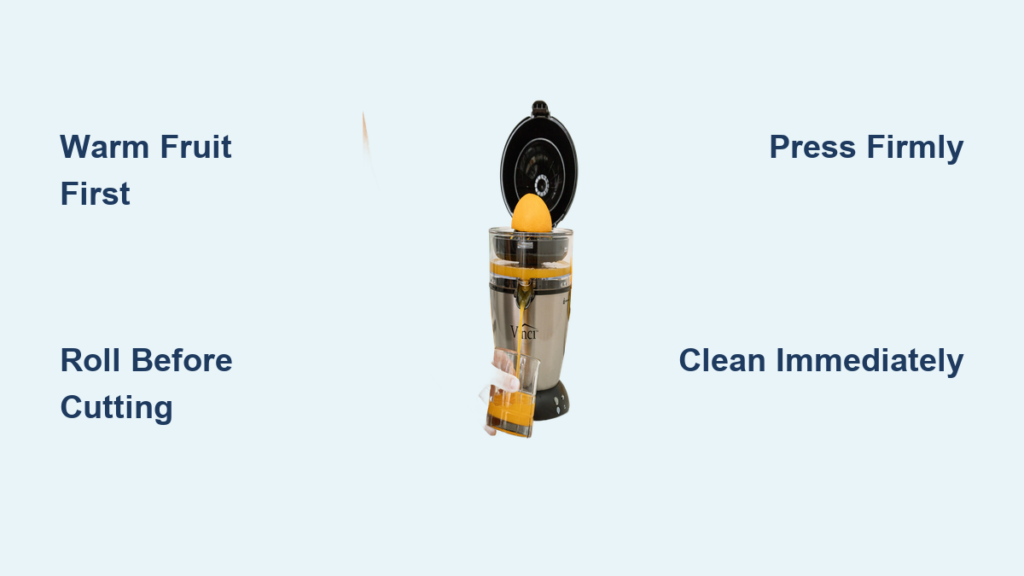
Electric juicers automate extraction through motorized mechanisms that spin reamers at consistent speeds. Countertop electric models feature motorized bases with attachments that extract juice through centrifugal force, processing each fruit half in 30-45 seconds. These units excel when juicing multiple fruits for families or entertaining guests. Professional-grade commercial juicers operate at higher speeds with stainless steel construction designed for restaurant environments. For best results with electric models, ensure the reamer is securely attached to the drive shaft and position a clean container beneath the juice spout before starting.
Manual Juicers for Precision Control
Manual options provide excellent control over the juicing process without electricity. Hand reamers consist of cone-shaped devices with ridged surfaces that you press and twist into halved fruit, forcing juice through small holes while pulp collects outside. Lever-style manual juicers feature hinged mechanisms that multiply your input force, making them easier on your hands for larger batches. Citrus presses apply even pressure across the fruit’s surface through a ridged bowl and pressing mechanism. Choose manual juicers when quiet operation matters or you prefer minimal appliance use, especially for small quantities of lemons, limes, or single servings of orange juice.
Prepare Citrus Fruits for Maximum Juice Yield
Proper fruit preparation significantly impacts juice extraction, making this step essential for successful citrus juicing sessions.
Select Ripe, Room-Temperature Citrus
Choose fruits that feel heavy for their size—indicating high juice content—and yield slightly to gentle pressure without feeling mushy. Color alone isn’t a reliable ripeness indicator since some varieties ripen while still green-skinned. Room-temperature citrus yields approximately 15-20% more juice than refrigerated fruit, so remove citrus from the refrigerator at least two hours before juicing. For immediate results, microwave fruits for 10-15 seconds to warm them gently without cooking.
Wash and Roll Before Cutting
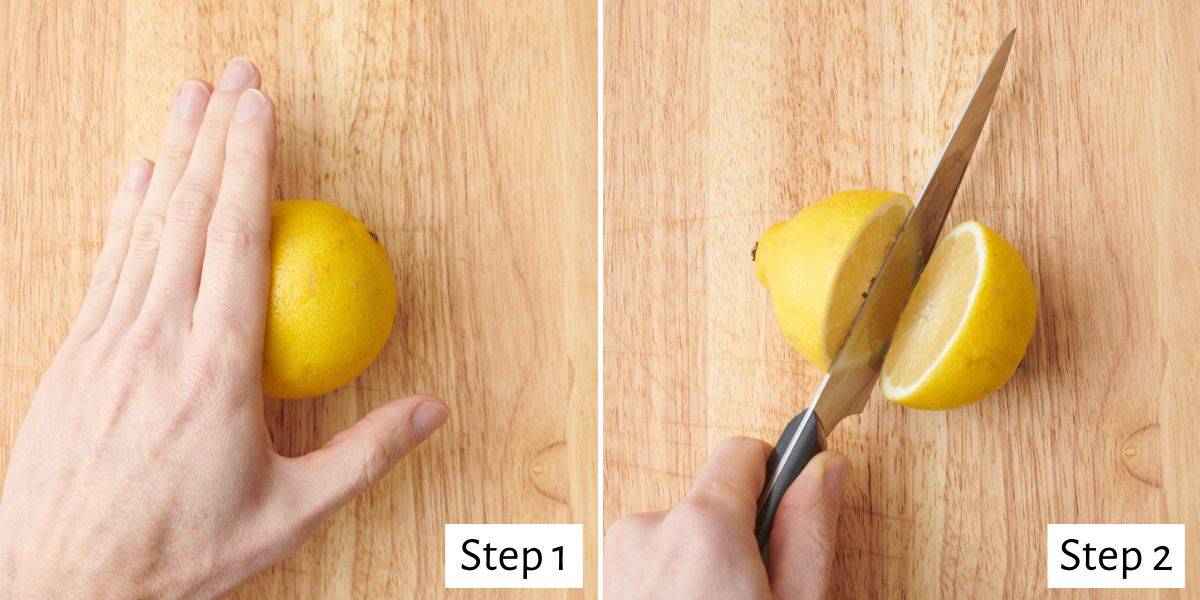
Wash fruits thoroughly under running water, rubbing the surface to remove dirt and potential chemical residues. Dry fruits completely before juicing, as excess water dilutes juice and can introduce contaminants. Roll each fruit firmly on a hard surface for 10-15 times—this breaks internal cell walls and softens the pulp, increasing juice release by 10-15%. Cut citrus fruits in half crosswise using a clean, sharp knife to create even halves that seat properly on reamers, exposing maximum pulp surface to the extraction mechanism.
Master Electric Juicer Operation
Operating an electric citrus juicer efficiently requires understanding proper setup and technique that maximizes extraction while protecting your investment.
Proper Setup and Activation
Place your electric juicer on a stable, level surface with adequate workspace surrounding it. Position a clean container beneath the juice spout, ensuring it can accommodate the expected yield without overflowing. For models with pulp control features, select your desired setting before beginning. Activate the juicer according to manufacturer guidelines—typically by pressing a start button or simply pressing the fruit against the reamer (which automatically engages the motor in sensor-equipped models).
Optimal Juicing Technique
Place a fruit half firmly onto the reamer, applying steady downward pressure while the motor spins. Hold the fruit with both hands when possible, using a protective glove if your juicer lacks a fruit guard. Rotate the fruit slowly in circular motions while maintaining pressure to engage all portions of the fruit’s interior surface. Continue pressing until the fruit rind shows no remaining moisture and the interior appears fully dried—typically 30-45 seconds for oranges, less for lemons and limes. For multiple fruits, work systematically through your prepared halves, pausing briefly between fruits to allow motor cooling during extended sessions.
Use Manual Citrus Juicers Effectively
Manual citrus juicers offer precision control that some users prefer over electric alternatives. Mastering the technique for your specific manual juicer type ensures efficient extraction without excessive physical effort.
Hand Reamer Technique for Small Citrus
Hold the reamer handle firmly in your dominant hand while stabilizing the fruit half with your other hand. Press the reamer’s pointed tip into the center of the cut fruit surface, then rotate back and forth while applying downward pressure. Once securely engaged, grasp the handle between both palms and twist while pressing downward in a circular motion covering the entire interior surface. Continue for 30-60 seconds per fruit half until the rind shows no remaining moisture—ideal for lemons and limes where you want precise control over extraction.
Lever-Style Juicer for Medium to Large Citrus
Position the fruit half cut-side down on the juicing bowl, ensuring it centers beneath the pressing dome. Lower the dome onto the fruit surface, adjusting if necessary for even contact. Press down on the lever handle gradually, allowing the mechanical linkage to multiply your input force. Apply steady, even pressure rather than sudden bursts that cause splashing. Continue pressing until the lever reaches its lowest position and no more juice flows from the spout—perfect for oranges and grapefruits where consistent pressure matters most.
Extract Every Drop of Juice
Several proven techniques significantly increase juice extraction beyond basic juicing procedures, helping you get the most value from every piece of fruit.
Double Extraction Method
After initial juicing, allow spent fruit halves to rest for 5-10 minutes, then re-press them to recover remaining juice. This secondary extraction typically yields an additional 5% of the fruit’s total juice content. The brief rest period allows remaining juice to redistribute within the pulp structure, making it accessible for a second pass through your juicer.
Warm Fruit for Maximum Yield
Microwave citrus fruits for 10-15 seconds or submerge them in warm water for several minutes before juicing. This simple step expands internal volume and reduces viscosity, increasing juice yield by 15-20% compared to cold fruit. Test fruit temperature with your hand—it should feel comfortably warm but not hot. Combine this with the rolling technique for optimal results.
Manage Pulp Levels to Your Preference
Controlling pulp content in your fresh juice requires understanding your juicer’s capabilities and implementing supplementary techniques.
Adjust Pulp During Extraction
Electric juicers with adjustable pulp controls allow real-time adjustment during juicing, though the setting primarily controls pulp particle size rather than total quantity. For manual juicers or when your electric juicer’s pulp control doesn’t achieve your desired consistency, strain juice through a fine mesh sieve, cheesecloth, or nut milk bag. Multiple layers of cheesecloth remove virtually all pulp for clear juice, while a single layer produces juice with moderate pulp content.
Reserve Pulp for Custom Blending
Store excess pulp in an airtight container in the refrigerator and add back a controlled amount to each glass until you achieve your preferred consistency. This approach gives you precise control over texture without waste. Remember that different citrus varieties naturally produce different pulp levels—oranges typically yield more pulp than lemons or limes.
Clean Your Juicer Immediately After Use
Regular cleaning prevents juice residue from drying and hardening on surfaces while maintaining hygienic operation.
Basic Cleaning Procedure
Unplug electric juicers before cleaning and disassemble all removable components according to manufacturer instructions. Rinse components under warm running water to remove loose pulp and juice residue. For stubborn residue, soak components in warm water with a small amount of dish soap for 10-15 minutes before scrubbing with a soft brush. Pay particular attention to crevices around the reamer base and pulp spout channels.
Weekly Deep Cleaning
Disassemble all components and soak in a solution of warm water and baking soda (2 tablespoons per quart) for 30 minutes to neutralize acids and remove buildup. For electric units, wipe the motor base with a damp cloth only—never immerse in water. Clean the reamer thoroughly with a small brush designed for juicer cleaning, working into all crevices. Inspect components for wear that might affect performance or hygiene.
Troubleshoot Common Juicing Problems
When your citrus juicer doesn’t perform as expected, systematic troubleshooting identifies the problem and guides appropriate solutions.
Insufficient Juice Extraction Fixes
If your juicer produces less juice than expected, check these common issues:
– Cold fruit: Warm citrus to at least 65°F before juicing
– Under-ripe citrus: Select fruits that feel heavy for their size
– Inadequate technique: Apply steady pressure for full extraction time
– Damaged reamer: Examine for wear that reduces efficiency
Excessive Juice Spray Solutions
Reduce juice spray by:
– Ensuring fruit halves completely cover the reamer with no gaps
– Reducing applied pressure during juicing
– Checking that pulp filters are properly seated
– Positioning a deeper juice container to reduce splash-back
Store Fresh Juice Properly to Maintain Flavor
Proper juice storage preserves flavor, nutritional content, and extends enjoyment of your fresh-squeezed citrus juice.
Immediate Consumption for Best Results
Fresh citrus juice is best consumed immediately after juicing for maximum nutritional benefit. Vitamin C content begins declining immediately upon exposure to air, with approximately 30% loss within 30 minutes at room temperature. If immediate consumption isn’t possible, store juice in airtight containers refrigerated and consume within 24-48 hours.
Refrigeration and Freezing Techniques
For short-term storage (1-7 days), refrigerate juice in airtight glass containers with minimal headspace to reduce oxidation. Freeze juice for longer storage (3-4 months), leaving 1-2 inches of headspace in containers for expansion. Thaw frozen juice overnight in the refrigerator and consume within 3-4 days of thawing. For best results with large batches, freeze juice in ice cube trays, then transfer cubes to freezer bags for portion-controlled use.
Mastering how to use a citrus juicer properly transforms fresh citrus into nutritious, delicious juice that enhances your daily routine. By selecting appropriate equipment, preparing fruits correctly, applying effective techniques, and maintaining your juicer regularly, you’ll enjoy maximum juice yield and quality for years to come. The investment in learning proper technique pays dividends in better-tasting juice, less waste, and a more enjoyable juicing experience every time you reach for that morning orange or lemon.