Nothing beats fresh lime juice in your margarita, ceviche, or homemade salad dressing. But squeezing limes by hand often leaves you with dry hands, minimal juice, and wasted fruit. Learning how to juice a lime with a juicer properly can double your yield while cutting your effort in half. Whether you’re a home cook or cocktail enthusiast, mastering this simple technique ensures you extract every precious drop of tangy citrus goodness with minimal fuss. In this guide, you’ll discover exactly which juicer works best for limes, how to prepare your fruit for maximum extraction, and troubleshooting tips when things go wrong—so you never waste another lime again.
Select Your Ideal Lime Juicer for Maximum Results

Choosing the right juicing tool makes all the difference between abundant, bright juice and frustratingly dry pulp. Not all juicers handle limes equally, so matching your equipment to your needs saves time and preserves precious citrus.
Manual Reamers Deliver Control for Occasional Use
For those who juice limes once in a while, a handheld reamer costs under $10 and gives you complete control over extraction. These simple tools feature a ridged cone that fits perfectly into halved limes. Hold the reamer over a bowl, press firmly into the lime half, and twist steadily for 15-20 seconds. The ridges break down pulp while channeling juice downward. Pro tip: Place a fine-mesh strainer over your bowl to catch seeds as you juice—this eliminates the need for a second straining step later.
Citrus Presses Extract More Juice with Less Effort
When you need consistent results without electricity, citrus presses outperform simple reamers. These leverage-based tools feature a ridged cone beneath a hinged dome. Place your halved lime cut-side down on the cone, close the dome, and squeeze the handles firmly. The mechanical advantage extracts up to 30% more juice than manual twisting alone. Look for models with built-in pulp collection chambers that separate juice from solids automatically. Warning: Avoid applying excessive force that might squeeze bitter oils from the rind into your juice.
Electric Citrus Juicers Provide Effortless, Consistent Extraction
For frequent juicing or entertaining, electric citrus juicers deliver professional results with minimal effort. These specialized machines feature rotating cones that extract juice in seconds. Choose models with auto-reversing cones that change direction to maximize yield—this feature alone can increase extraction by 15-20%. When shopping, prioritize juicers with 20+ watts of power and non-slip bases that stay stable during operation. Expert note: Electric citrus juicers work best with standard Persian limes (the most common grocery store variety) but may struggle with smaller key limes unless you use an adapter cone.
Centrifugal Juicers Work in a Pinch but With Limitations
Don’t own a dedicated citrus juicer? Your regular centrifugal juicer can process limes with some adjustments. Cut limes into quarters to fit the feed chute, then process slowly using the tamper. Expect less yield than with citrus-specific juicers, as centrifugal models generate heat that can alter flavor and extract more bitterness from the rind. Critical step: Place a fine-mesh strainer over your container to catch pulp fragments that centrifugal juicers often miss.
Prepare Limes for Optimal Juice Extraction
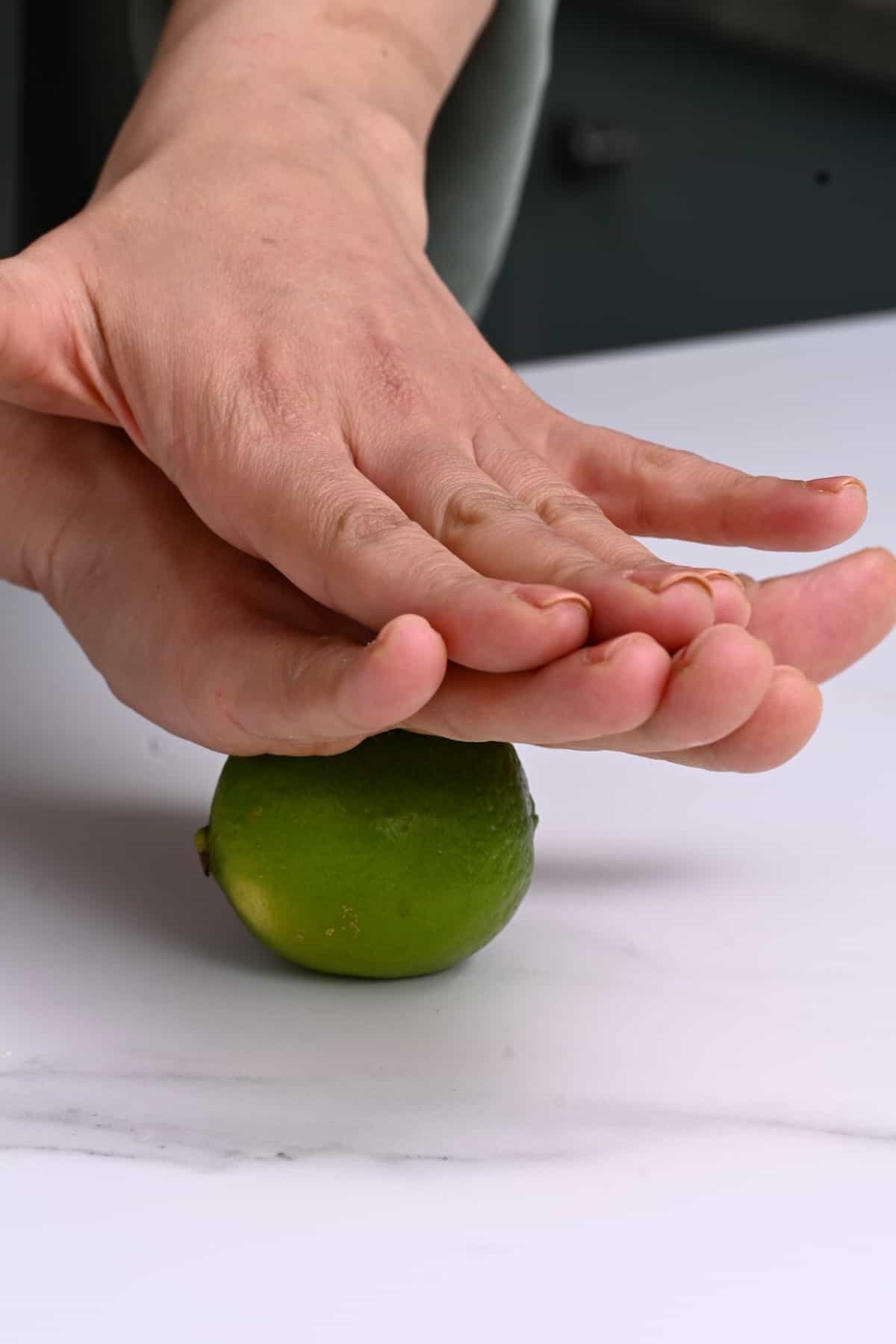
What you do before juicing determines how much juice you’ll actually get. These simple preparation techniques can increase your yield by up to 40% compared to juicing straight from the fridge.
Roll Limes Firmly Before Cutting
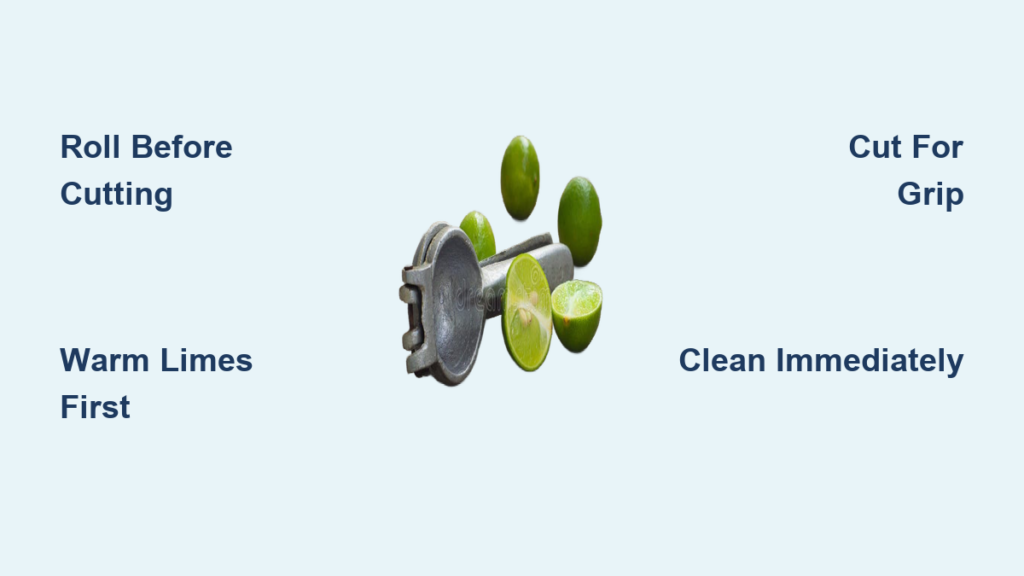
Place each whole lime on your countertop and press down firmly with your palm. Roll the lime back and forth for 30-60 seconds, applying enough pressure to feel the fruit yield slightly without breaking the skin. This crucial step breaks down internal membranes, freeing juice that would otherwise remain trapped. Visual cue: Properly rolled limes will feel noticeably softer and more pliable when squeezed.
Warm Refrigerated Limes for Maximum Yield
Cold limes yield significantly less juice than room-temperature fruit. If your limes have been refrigerated, warm them briefly by microwaving for 10-15 seconds or submerging in warm (not hot) water for 2 minutes. The gentle heat loosens pectin bonds that hold juice within the fruit cells. Safety check: Always test lime temperature with your finger before cutting to avoid accidental burns.
Cut Limes Correctly for Your Specific Juicer
The perfect cut varies by juicer type. For cone-style juicers (manual or electric), slice limes crosswise through the equator—not parallel to the stem—for maximum surface area contact with the cone. For centrifugal juicers, quarter limes to fit the feed chute. Pro technique: If your juicer struggles to grip the lime, make a shallow “X” cut on the cut surface before juicing—this creates channels for the cone to seat securely.
Troubleshoot Common Juicing Problems Immediately
Even with proper technique, issues sometimes occur. Knowing how to fix them on the spot saves wasted fruit and frustration.
Fix Spinning Limes in Seconds
When your lime spins instead of juicing, the cone isn’t gripping properly. This happens most often with over-ripe or irregularly shaped limes. Quick solution: Recut the lime with a sharper knife to create a flatter surface, or place a small rubber band around the cut surface to improve grip. For stubborn cases, switch to a manual reamer where you control the rotation.
Stop Juice Spraying Everywhere
Uncontrolled spraying usually means your collection container is misaligned or overfilled. Immediate fix: Position your container so the juice spout points directly into the center, leaving at least one inch of space below the rim. If using an electric juicer, reduce downward pressure slightly—the motor does most of the work, and excessive force can force juice sideways.
Clear Pulp Clogs Without Disassembly
Pulp buildup happens most with soft, overripe limes. Prevention tip: Process limes immediately after rolling—they’ll extract cleaner. If clogging occurs, pause the juicer and use a small brush (most come with a cleaning brush) to clear the cone while the machine is off. Never insert fingers or metal tools into active juicing mechanisms.
Boost Low Juice Yield Instantly
If you’re getting surprisingly little juice, check three factors: lime temperature (cold limes yield less), ripeness (overly dry limes have less moisture), and juicing technique (inconsistent pressure reduces extraction). Quick test: Compare your yield to a simple squeeze test—properly prepared limes should yield 1-2 tablespoons per fruit depending on size.
Store Fresh Lime Juice for Long-Lasting Flavor
Freshly extracted lime juice begins deteriorating immediately, but smart storage preserves flavor and nutrients.
Refrigerate Properly for One-Week Freshness
Transfer strained juice to an airtight glass container, filling to the top to minimize oxygen exposure. Glass preserves flavor better than plastic, which can absorb citrus oils. Critical detail: Label containers with the juicing date—refrigerated lime juice maintains peak quality for exactly 7 days before noticeable flavor degradation begins.
Freeze for Six Months of Bright Citrus Flavor
For long-term storage, pour juice into ice cube trays (one cube = one tablespoon), then transfer frozen cubes to labeled freezer bags. Pro move: Add one cube directly to cocktails or sauces without thawing—it chills while dissolving perfectly. Frozen lime juice retains 95% of its flavor for up to six months.
Maintain Your Juicer for Peak Performance
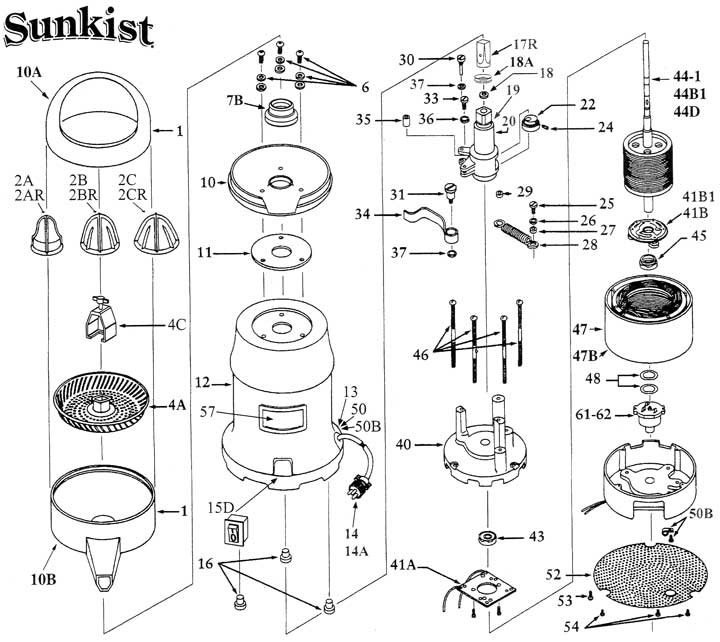
Cleaning immediately after use prevents dried citrus residue from damaging your equipment.
Clean Electric Juicers Safely
Disassemble all removable parts and rinse under warm water within 15 minutes of juicing. Use the included brush to clean cone crevices where pulp collects. Warning: Never submerge the motor base—wipe with a damp cloth only. Most citrus juicer parts are dishwasher-safe (top rack), but verify with your manufacturer.
Deep Clean Monthly for Smooth Operation
Soak juicing components in warm, soapy water for 15 minutes monthly to dissolve built-up citrus oils. For stubborn residue, use a paste of baking soda and water applied with a soft toothbrush. Inspection point: Check cone ridges monthly—replace when they become smooth from wear, as this reduces extraction efficiency by up to 25%.
Fresh lime juice elevates everything from guacamole to cocktails, and mastering how to juice a lime with a juicer properly transforms a tedious chore into a quick, satisfying task. By selecting the right juicer for your needs, preparing limes correctly, and troubleshooting issues as they arise, you’ll consistently extract maximum juice with minimal effort. Remember to store your fresh juice properly and maintain your equipment regularly—these small habits ensure years of bright, tangy citrus flavor at your fingertips. The next time you reach for limes, skip the hand-squeezing struggle and let your juicer do the work while you enjoy restaurant-quality results at home.