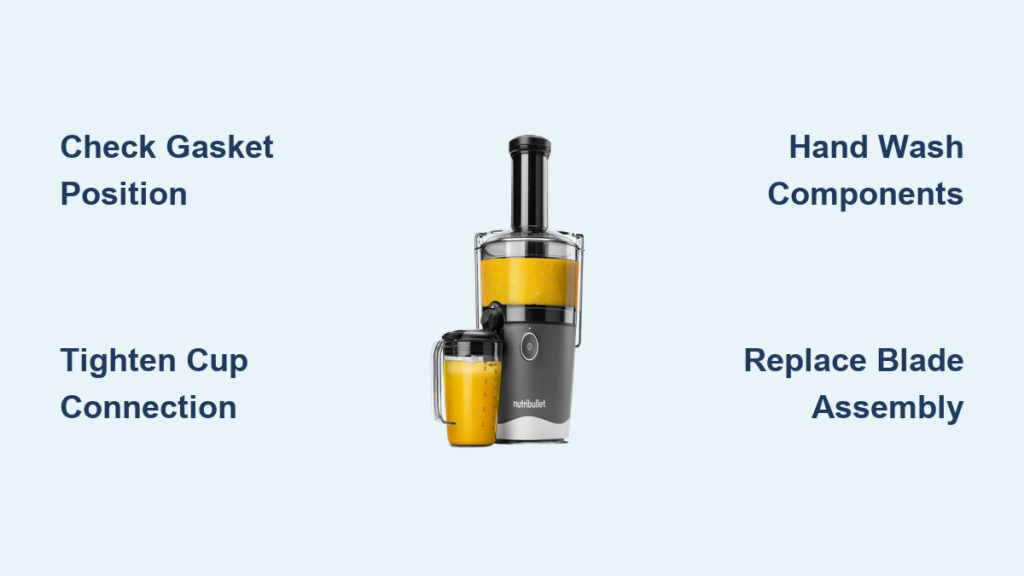
Your NutriBullet juicer leaking shouldn’t turn your morning smoothie ritual into a frustrating cleanup operation. One moment you’re blending fresh ingredients, and the next you’re mopping juice off your counter. This widespread problem affects NutriBullet RX, Pro, Pro+, and standard models, with leaks ranging from minor seeps to severe gushing that can damage your countertop and motor base. The leaking typically appears around the blade assembly or, worse, infiltrates the motor housing where it creates persistent odors as organic matter decomposes. Understanding why your NutriBullet juicer leaking occurs and knowing the right fixes can save you wasted ingredients, damaged surfaces, and potentially your entire appliance.
Most NutriBullet leaking problems stem from specific, identifiable causes rather than random failures. Many users experience leaks even with brand-new units, pointing to manufacturing defects and design limitations as significant contributors. The good news is that nearly all leaking issues can be diagnosed and resolved at home without professional help. This guide provides precise troubleshooting steps, immediate solutions for active leaks, replacement strategies for damaged components, and essential prevention techniques to keep your NutriBullet running cleanly for months to come.
Pinpoint Your NutriBullet Leak Location

Before attempting repairs, you must identify exactly where the leak originates. NutriBullet juicer leaking manifests in three distinct locations, each requiring different solutions.
Blade Assembly Leaks Create Visible Drips During Operation. When liquid escapes where the cup meets the blade base, you’ll notice juice streaming down the cup’s exterior or pooling at the connection point. These leaks worsen with thick mixtures or high-speed settings, often appearing as foam or droplets near the threads. To confirm this issue, run a water-only test cycle with paper towels around the base—moisture appearing at the cup-blade junction confirms this problem.
Motor Housing Infiltration Causes Serious Damage and Odors. If liquid seeps through the bottom of your unit or you detect moisture inside the base compartment, your motor faces serious risk. This type of leak creates persistent smells resembling “rotten wine” as decomposed organic matter accumulates near electrical components. One user reported their NutriBullet “won’t even power on” after motor housing leaks, indicating permanent damage that requires immediate attention.
Cup Seal Failures Trigger Immediate Leaking Upon Assembly. Unlike blade assembly leaks that occur during blending, cup seal issues cause dripping as soon as you twist the container onto the base—even before powering on. These failures happen when the connection between cup and blade assembly can’t maintain a watertight seal due to gasket damage or misalignment.
Why Your NutriBullet Juicer Keeps Leaking

Understanding the root causes of NutriBullet juicer leaking helps you implement the right fix immediately, avoiding wasted effort on ineffective solutions.
The Inverted Design Creates Unavoidable Pressure Points. Unlike traditional blenders with motors below fixed containers, NutriBullets operate with the cup inverted as the base during blending. As one technical analysis explains: “Turn something with liquid in it upside down with only a screw cap to seal it—and apply a very strong force—the motor—it’s going to leak. This is a design fault.” The screw cap mechanism simply cannot withstand both liquid weight and motor vibration simultaneously.
Damaged Gaskets Account for 80% of Leaks. The silicone rubber gasket creates the critical seal between blade assembly and cup. High dishwasher heat accelerates gasket degradation, causing it to loosen, warp, or fall out entirely. Even new units sometimes ship with missing or improperly seated gaskets due to quality control issues. If you notice the blade assembly clicking when manually rotated, this indicates gasket failure allowing movement that breaks the seal.
Blade Assembly Defects Enable Liquid Escape Paths. When the internal bearing clutch becomes loose or damaged, the blade assembly develops vertical movement that compromises the seal. This failure often produces a distinctive clicking sound during manual rotation and causes difficulty starting the unit. The NutriBullet Pro+ model is particularly vulnerable to this issue since its gasket is permanently seated and cannot be adjusted.
Stop Active Leaks With These Immediate Fixes

When you discover your NutriBullet juicer leaking, implement these proven solutions before considering parts replacement.
Tighten the Cup Connection Using Proper Technique. Unscrew the cup, verify gasket position, then twist the cup back on until you feel full engagement without overtightening. The correct connection should seat firmly with a subtle click—excessive force can damage threads or distort the gasket. Many users resolve minor leaks simply by ensuring proper assembly.
Apply the Vegetable Oil Seal Enhancer. Place one drop of vegetable oil on your finger and rub it around the inner lip of the cup (avoiding threads). This lubricates the seal interface, creating an immediate barrier against leaks. While temporary, this fix often works for several uses and provides crucial time to order replacement parts.
Check for Gasket Displacement During Assembly. Remove the blade assembly and inspect whether the gasket has shifted from its groove. For models with removable gaskets, carefully reseat it along the entire circumference. Remember that Pro+ models have permanently seated gaskets that cannot be adjusted—attempting to move them often causes further damage.
Replace Defective Blade Assemblies Properly
When gasket issues cause persistent NutriBullet juicer leaking, replacing the entire blade assembly provides the only reliable long-term solution.
Understand Why Gaskets Aren’t Sold Separately. NutriBullet intentionally doesn’t sell gaskets individually because they’re difficult to install correctly and easily damaged during replacement attempts. As official guidance states: “Replacement gaskets are not available for purchase because they are difficult to install correctly and can easily be damaged during the process. If you find gaskets for sale online, they are likely counterfeit and unsafe to use.”
Follow the Six-Month Blade Replacement Schedule. For daily users, replace the blade assembly every six months to maintain an effective seal. Units processing thick mixtures like nut butters or frozen fruits may require more frequent replacement. This preventive maintenance avoids most gasket-related leaks before they start.
Maximize Warranty Coverage for New Units. The one-year limited warranty covers manufacturing defects causing leaks, including missing or improperly seated gaskets. Contact NutriBullet with your order number, purchase date, and photos of the blade assembly. For new units experiencing first-use leaks with clicking blades and startup difficulties, request immediate replacement as these indicate defective assemblies.
Prevent Future Leaks With Proper Maintenance
Implement these maintenance practices to extend your NutriBullet’s lifespan and prevent recurring leaks.
Hand Wash Blade Assemblies Correctly. Clean with warm, soapy water and a soft dish brush, avoiding dishwashers entirely. High heat and aggressive water pressure damage gaskets, causing premature failure. For deeper cleaning, use a 10% white vinegar solution or fresh lemon juice, then rinse thoroughly.
Inspect Components Monthly for Early Warning Signs. Remove the blade assembly and examine the gasket for cracks, warping, or stiffness. Check the cup for damage that could prevent proper sealing. Early detection of degradation allows replacement before leaks develop.
Store Components Separately When Not in Use. Keep the blade assembly detached from cups to prevent accidental pressure on the gasket. This simple habit maintains seal integrity and allows air circulation that prevents moisture buildup and bacterial growth.
Safety Protocols for Leaking NutriBullet Units
Certain leaking scenarios require immediate action beyond standard troubleshooting.
Stop Using Units with Motor Housing Infiltration Immediately. Liquid in the motor compartment creates electrical hazards and health risks from decomposing organic matter. If your unit shows startup difficulties, unusual noises, or persistent odors after leaking, discontinue use permanently.
Replace Clicking Blade Assemblies Without Delay. The clicking sound indicates mechanical failure that could worsen during operation. Technical guidance specifically warns to “cease using it for safety reasons (the clicking clutch might fail under load).” A sudden clutch failure during blending could cause injury or create extensive damage.
Never Operate Without Proper Gasket Seating. Even brief operation without this critical seal risks introducing liquid to electrical components. Always verify gasket position before assembly—this simple check prevents most serious leaks.
When Replacement Beats Repair
Sometimes the most economical solution involves replacing your entire NutriBullet rather than continuing repairs.
Choose New Units for Persistent Motor Housing Leaks. Once juice infiltrates the motor housing, complete cleaning becomes nearly impossible. The lingering smell of decomposing produce indicates contamination that persists despite your best efforts. In these cases, replacement eliminates health concerns and ongoing frustration.
Consider Full Replacement for Out-of-Warranty Units. The cost of multiple replacement blade assemblies often approaches the price of a new NutriBullet. When your unit is out of warranty with recurring leaks, new models may incorporate design improvements that reduce future leaking risks.
Prioritize Safety Over Repair Costs. If your leaking NutriBullet shows any electrical problems, has contained liquid in the motor housing for extended periods, or displays damage to electrical components, replacement is the only safe option. No amount of troubleshooting justifies electrical hazards in your kitchen.
Your NutriBullet juicer leaking problem doesn’t have to end your smoothie routine. By identifying the leak location, understanding the specific causes, and implementing the right solutions, you can restore your appliance to leak-free operation. Regular maintenance prevents most issues before they start, while proper warranty utilization protects your investment. When leaks persist or safety concerns arise, replacement provides the cleanest solution. With these strategies, you’ll enjoy nutritious blends without the mess—turning your NutriBullet back into the reliable kitchen companion it was designed to be.