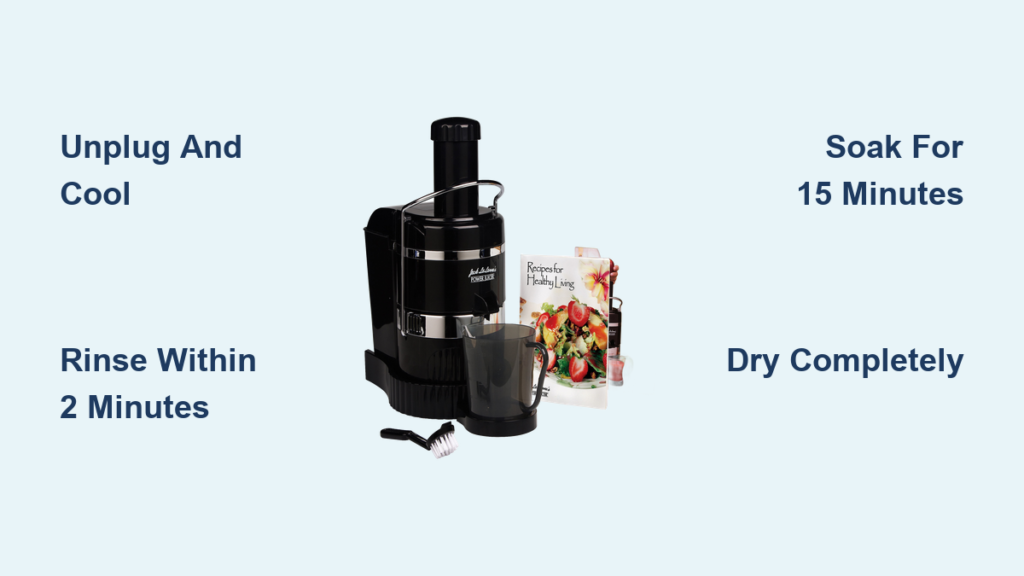
Your power juicer’s performance and lifespan depend almost entirely on how well you clean it after each use. When pulp residue dries on critical components like the mesh filter or blade assembly, it creates friction that strains the motor and reduces juice yield by up to 30%. Following the proper cleaning routine takes just 10 minutes but prevents the most common reasons juicers fail prematurely. Whether you own a Jack Lalanne Power Juicer or another popular model, these specific cleaning techniques ensure your appliance delivers maximum nutrition from every fruit and vegetable while avoiding the frustrating clogs and odors that plague poorly maintained units.
Many users make the critical mistake of letting residue dry before cleaning, turning what should be a simple process into a battle against stubborn buildup. This guide reveals exactly how to clean your power juicer the professional way—starting with the essential disassembly techniques most manuals gloss over and ending with the drying methods that prevent mold growth in hidden crevices.
Unplug and Cool Your Juicer Before Touching Any Components
Never skip this critical safety step—always disconnect your power juicer from the electrical outlet before beginning any cleaning procedure. Even when the power switch is off, residual electricity in the system could accidentally activate the motor while your hands are near sharp blades. If you’ve just finished juicing, allow the unit to cool for 5-10 minutes; the motor generates significant heat during operation that could cause minor burns when handling components.
This cooling period serves a dual purpose: it gives you time to gather your cleaning supplies while allowing fresh pulp residue to firm up slightly, making initial removal easier. However, don’t let this cooling time stretch into hours—immediate cleaning prevents the most problematic buildup. Keep your warm water, mild dish soap, and soft-bristled brushes ready to go so you can transition smoothly from cooling to cleaning.
Rinse All Parts Under Warm Water Within 2 Minutes of Juicing
The single most effective habit for maintaining your power juicer is rinsing components immediately after use—before pulp has time to dry. Grab your juice container, pulp collector, and mesh filter basket and rinse them thoroughly under warm (not hot) running water within 2 minutes of finishing juicing. Warm water breaks down organic residue more effectively than cold water, loosening fibers that would otherwise harden into stubborn buildup.
Focus your stream on problem areas where pulp accumulates fastest:
– Around the blade assembly edges
– Inside corners of the pulp collector
– Both sides of the mesh filter
– Juice flow channels
This quick rinse takes less than 60 seconds but saves you 10-15 minutes of difficult scrubbing later. If you can’t complete the full cleaning immediately, at minimum give all parts this thorough rinse and submerge them in a basin of warm water until you can continue. Never let residue dry completely—especially with fibrous produce like celery or kale, which transform from soft pulp to concrete-like buildup within hours.
Disassemble Using Your Model’s Specialized Tool
Most power juicers, including popular Jack Lalanne models, require a specific crescent-shaped disassembly tool with two small stubs that fit into corresponding holes on the blade assembly. This tool performs a function screws alone cannot accomplish—it releases the blade mechanism for complete access during deep cleaning. If you’ve lost yours, contact the manufacturer for a replacement rather than forcing components with improper tools.
When disassembling:
1. Remove the three screws from the blade assembly (this only takes off the top portion)
2. Insert the specialized tool into the designated holes
3. Turn the tool to release the complete blade mechanism
4. Carefully remove the mesh filter basket
Pay special attention to the locking bar component, which must fit into a specific hole on the juicer’s side. During reassembly, the base remains stationary while the top component moves back and forth to achieve proper alignment. Improper disassembly often leads to reassembly difficulties, so take photos of each step if you’re new to the process.
Soak Components for 15 Minutes to Dissolve Stubborn Residue
For parts with dried-on pulp, prepare a soaking solution of warm water and mild dish soap in a large basin. Submerge all non-electronic components completely and let them soak for exactly 15 minutes—longer risks warping plastic parts. This soaking period loosens dried fibers, breaks down juice residue, and softens buildup in hard-to-reach areas like the mesh filter’s fine openings.
The mesh filter benefits most from soaking, as small particles commonly become trapped in its microscopic openings. After soaking, residue wipes away with minimal effort, reducing the need for aggressive scrubbing that could damage delicate components. For extra-stubborn buildup, add one tablespoon of baking soda to your soaking solution—it enhances cleaning power without scratching surfaces.
Critical warning: Never soak electronic components, the motor base, or any parts with electrical connections. These areas should never be submerged in water, as moisture exposure creates electrical hazards and permanent motor damage.
Clean the Mesh Filter with a Soft-Bristled Brush
The mesh filter requires specialized cleaning techniques to remove trapped pulp without damaging its delicate structure. Use an old toothbrush with soft bristles or a specialized juicer cleaning brush to gently work residue from both sides of the mesh. Apply light pressure in small circular motions—excessive force stretches the mesh and reduces filtration efficiency.
For particularly stubborn particles embedded deep in the mesh:
– Continue soaking for another 5 minutes
– Use the brush at a 45-degree angle to lift fibers
– Rinse thoroughly between cleaning attempts
– Repeat if necessary rather than applying excessive pressure
A bottle brush with soft bristles works well for cylindrical filter components, reaching into interior surfaces that standard brushes miss. Always inspect the mesh carefully after cleaning—hold it up to light to ensure no residue remains in the openings, as even small amounts significantly reduce juice yield.
Wipe the Motor Base with a Damp Vinegar Cloth
The motor base requires fundamentally different treatment than removable parts—never submerge it in water or run it under the faucet. Instead, create a cleaning solution of equal parts white vinegar and water, then dampen a soft cloth with this mixture. Wipe all exterior surfaces thoroughly, paying special attention to air vents and crevices where juice spray may have landed during operation.
Vinegar’s natural acidity cuts through residue and neutralizes odors without damaging plastic surfaces. For stubborn spots, apply the vinegar solution directly to the cloth rather than the juicer, then use gentle circular motions to lift residue. Most importantly: ensure no moisture enters any openings in the base unit, including air vents or cord connections. If you suspect moisture penetration, allow at least 24 hours of drying time before reconnecting power.
Dry All Components Completely Before Reassembly

Thorough drying is non-negotiable for both safety and performance. Air drying is safest—place all components on clean towels in a well-ventilated area with both interior and exterior surfaces exposed to air. The mesh filter requires particular attention; turn it upside down periodically to ensure complete drying of all openings.
When time is limited:
– Gently shake components to remove excess water
– Use a clean, dry dish towel for initial drying
– For plastic parts, a hair dryer on cool setting held 6+ inches away speeds drying
– Never use heat settings that could warp components
Critical check: Before reassembly, run your fingers over all surfaces—no moisture should remain, especially around sealing areas. Incomplete drying causes leaks during operation and creates mold growth opportunities in hidden crevices.
Reassemble with Proper Alignment to Prevent Operational Issues
Reassembly requires precise component positioning—forcing parts together often indicates incorrect orientation. The blade and filter assembly must seat correctly in their designated slots, with all alignment features matching perfectly. If resistance occurs, disassemble and verify orientation before proceeding.
The locking bar must fit securely into its specific hole on the juicer’s side. During this final step, keep the base stationary while moving the top component back and forth to achieve proper alignment. Before using your juicer again, conduct a dry test run without produce to verify all components function smoothly and no leaks occur.
Prevent Future Buildup with These Maintenance Habits
Establish these simple habits to minimize future cleaning effort:
– Rinse immediately after juicing fibrous produce like kale or celery
– Alternate between leafy greens and pulpy fruits to prevent fiber accumulation
– Never overfill the pulp collector beyond the recommended line
– Perform a deep clean with baking soda paste weekly for daily users
For persistent odors, soak affected components in a baking soda solution (2 tablespoons per quart of water) for 2 hours. To prevent staining from beets or berries, run a final rinse with lemon juice water after cleaning—it leaves components with a fresh scent and mild disinfecting properties.
By following these specific cleaning procedures, you’ll maintain your power juicer’s peak performance while extending its lifespan by years. The 10 minutes you invest after each use transforms cleaning from a dreaded chore into a simple routine that ensures every glass of juice delivers maximum nutrition without unpleasant odors or mechanical issues. Your juicer’s motor, mesh filter, and blade assembly will thank you with consistent performance that makes healthy living effortless.