When your commercial Zummo juicer stops performing optimally, every hour of downtime directly impacts your business operations. Whether you run a busy health bar, manage a hotel breakfast service, or operate a supermarket juice station, understanding your Zummo juicer repair options becomes essential for maintaining consistent service quality. This comprehensive guide walks you through everything you need to know about diagnosing issues, sourcing genuine replacement parts, navigating warranty coverage, and accessing technical support—all designed to get your equipment back in operation quickly.
Zummo has established itself as a premier manufacturer of commercial fruit extractors since establishing operations in Miami in 2006, bringing Spanish engineering excellence to American commercial kitchens. Their Z40 Nature Juicers and related equipment serve demanding environments where reliability isn’t optional—it’s a business necessity. Understanding how to maintain and repair these machines properly ensures your investment continues delivering the performance your operations depend on.
Fix Zummo Juicer Problems with Proper Repair Pathways
Before diving into specific repair procedures, you need to understand the available pathways for addressing equipment issues. Zummo juicer repair generally falls into three categories: DIY maintenance for routine wear items, professional technical support for complex diagnostics, and warranty service for qualifying defects. Each approach has its appropriate application, and knowing when to use which can save both time and money.
For minor issues such as unusual sounds during operation, reduced juice yield, or visible wear on cutting components, many maintenance tasks can be performed in-house by trained staff. The company’s technical documentation provides detailed guidance for routine procedures, and genuine spare parts are readily available through authorized distribution channels. However, electrical issues, motor problems, or internal component failures typically require professional assessment to ensure safe and effective resolution.
Commercial operations should establish relationships with qualified service technicians who understand Zummo equipment specifically. The manufacturer maintains technical support infrastructure capable of guiding diagnostics over the phone or coordinating repair services for more complex situations. Having these resources identified before emergencies occur ensures faster response when problems arise.
Diagnose Common Zummo Juicer Problems Before Repairing

Effective troubleshooting begins with systematic observation. When your Zummo juicer exhibits problems, identifying the specific symptoms narrows down potential causes and guides your repair approach. Most commercial juicer issues fall into categories related to cutting efficiency, extraction performance, electrical function, or mechanical operation.
Why Your Zummo Juicer Cutting System Fails
Cutting system problems typically manifest as inconsistent juice output, increased pulp in finished product, or unusual operational noises. The blade assembly represents the heart of the extraction system, and signs of degradation—such as longer processing times, incomplete extraction, or visible blade wear—indicate replacement is necessary. Zummo offers complete blade assemblies designed for specific models, with the Z40C complete blade (part 210507A) priced at $346.67 representing a primary replacement option for that platform.
How to Identify Motor and Drive System Failures
Motor and drive issues often present through abnormal sounds, failure to start, or intermittent operation. These symptoms suggest electrical or mechanical problems within the drive train that require careful diagnosis. The drive shaft connecting the motor to the filter system (part 210516C, $53.33) occasionally requires attention, though motor assemblies themselves represent more significant investments—some reaching $1,080.00 for higher-power variants.
What Causes Poor Juice Extraction Efficiency
Extraction efficiency problems frequently trace to worn squeezing trays or filter components rather than motor issues. The Z40 LG squeezing tray (part 210530K-6, $333.33) directly impacts juice yield, and visual inspection often reveals when replacement is needed. Similarly, the pulp scraper filter (part 210519, $36.00) requires periodic inspection as degraded filtration affects both product quality and equipment performance.
Replace Critical Zummo Juicer Components Properly
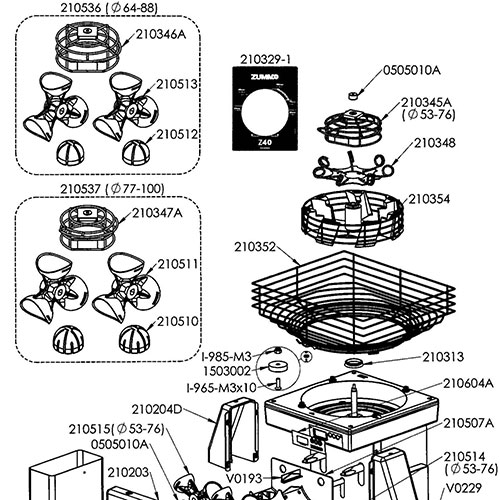
Maintaining your Zummo juicer requires access to genuine OEM components designed specifically for your equipment model. Understanding the key replacement parts—and their part numbers—streamlines the procurement process when maintenance needs arise. The following breakdown covers the most common replacement categories and specific part numbers commercial operators should keep in their maintenance inventory.
How to Select Correct Cutting System Parts
Cutting system components represent the most frequently replaced items on any commercial juicer. The complete blade assembly for Z40C models (210507A, $346.67) maintains strong availability with 37 units typically in stock, making it a practical keep-on-hand item for high-volume operations. Z06C model machines use a different blade configuration (0505022B-1, $173.33), so verifying your model number before ordering prevents costly compatibility errors. Standard dark gray blades for Z40 juicers (210507C-1, $260.00) remain available with 6 units in stock, though operations should order proactively rather than waiting until stock depletes.
When to Replace Squeezing Trays and Filter Components
Squeezing trays directly affect extraction efficiency and juice yield. The Z40 LG squeezing tray in light gray (210530K-6, $333.33) serves as a major wear component requiring periodic replacement based on usage intensity. Related tray components such as the Z06C GP squeezing tray (0505023A-1, $173.33) serve specific model configurations and should be matched to equipment precisely.
Filter and drive components ensure consistent operation but typically require less frequent attention. The drive shaft for filter and motor (210516C, $53.33) connects critical systems and occasionally requires replacement. The pulp scraper filter (210519, $36.00) represents a lower-cost maintenance item that affects juice quality and should be inspected regularly.
Order Genuine Zummo Replacement Parts Correctly
Procurement of authentic Zummo replacement components can be accomplished through multiple channels, each offering distinct advantages for different ordering scenarios. Understanding these options enables faster fulfillment when repairs are needed urgently or when planning routine maintenance inventory purchases.
How to Use Parts Town for Fast Juicer Repairs
The primary Parts Town distribution network operates as an authorized Zummo parts distributor, maintaining extensive inventory of genuine OEM replacement components. Parts Town offers real-time stock visibility, allowing customers to verify availability before ordering. Their sophisticated inventory system displays current quantities for each component—some parts showing dozens of units available while others maintain single-digit stock levels. Checking availability before finalizing orders prevents disappointment with backorder situations.
Parts Town provides flexible shipping options designed for commercial operational needs. Same-day shipping on in-stock items ordered until 9 PM Eastern Time ensures rapid fulfillment for time-sensitive repairs. Saturday shipping remains available for online air orders placed until 4 PM Eastern Time, providing an extra day of expedited service for weekend repair projects. For customers in Parts In Town service areas, same-day pickup at local distribution facilities eliminates shipping time entirely.
When to Contact Zummo Direct for Complex Repairs
Direct ordering through Zummo’s Spanish support line (+34) 961 301 246 offers assistance for customers unsure about part identification or compatibility. This telephone support proves particularly valuable when dealing with complex assemblies or when original part numbers are unclear. The direct support line also handles bulk ordering inquiries and can provide guidance on stocking recommendations for frequently replaced items.
When ordering, you’ll need to provide specific information including machine model designation, the exact reference number of the needed part, and contact information for fulfillment. The system supports adding multiple parts to single orders, enabling consolidated procurement for planned maintenance activities. Having your equipment serial number and model information readily available streamlines the ordering process considerably.
Preserve Warranty Coverage During Zummo Juicer Repairs
Zummo equipment includes warranty protection for defects in materials and workmanship under normal commercial use conditions, but maintaining this coverage requires attention to specific requirements—particularly regarding the use of genuine OEM replacement parts. Understanding warranty terms and conditions helps ensure you receive appropriate coverage when equipment failures occur.
Warranty claims require submitting equipment information through Zummo’s technical support contact form, where customers must indicate warranty status and provide their equipment serial number for verification. The form captures essential details including contact information, equipment specifics, and issue descriptions that enable the support team to evaluate claims efficiently. Selecting “yes” for the warranty inquiry flag triggers the appropriate review process for potential coverage.
Using non-OEM replacement parts during the equipment’s warranty period may void coverage and potentially compromise equipment safety, performance, and reliability. Zummo strongly emphasizes using only genuine manufacturer components for all repair and maintenance activities throughout the warranty period. This requirement ensures that any failures can be accurately attributed to manufacturing defects rather than compatibility issues or damage from substandard components.
Get Immediate Technical Support for Critical Juicer Failures
When DIY troubleshooting reaches its limits or complex issues require expert guidance, Zummo’s technical support infrastructure provides direct access to knowledgeable assistance. Understanding the support channels available—and when to use each—ensures you receive appropriate help efficiently.
How to Submit Effective Technical Support Requests
The primary support channel involves completing the dedicated technical support form, which captures comprehensive information about the issue and equipment. The form requires mandatory fields including contact information, country and region designation, reason for contact (warranty service, spare parts, technical instructions, or general inquiries), warranty status confirmation, equipment serial number, and detailed issue description. This structured approach ensures support representatives receive all information needed to provide accurate assistance.
For urgent situations requiring immediate guidance, telephone support lines connect customers directly with technical support representatives during business hours. These conversations enable real-time troubleshooting, allowing technicians to guide customers through diagnostic procedures or coordinate emergency service options. The direct communication proves invaluable when equipment downtime creates significant business disruption.
Prevent Costly Emergency Repairs with Proactive Maintenance
The most effective Zummo juicer repair strategy is preventing issues before they require intervention. Establishing routine maintenance protocols extends equipment service life, maintains extraction efficiency, and reduces unexpected downtime that disrupts business operations. Commercial operations benefit significantly from formalizing these practices into standard operating procedures.
Regular inspection of cutting system components should occur on scheduled basis appropriate to usage volume. High-volume operations processing hundreds of juices daily may require weekly visual inspections, while lower-volume establishments might schedule monthly reviews. Signs indicating blade replacement include visible wear, reduced cutting efficiency, unusual operational sounds, or processing times that increase beyond normal parameters. Keeping replacement blades in inventory ensures maintenance can proceed immediately when inspection reveals need.
Filter and pulp management components require similar regular attention. The pulp scraper filter should be inspected for signs of wear, damage, or accumulated debris affecting performance. Replacing this component before it fails completely prevents extraction quality issues and potential secondary damage to other systems. The relatively low cost—$36.00 for genuine OEM filters—makes proactive replacement economically sensible compared to quality degradation or emergency situations.
Documentation plays a crucial role in maintenance effectiveness. Keeping records of inspection dates, replacement components, operational observations, and any performance changes creates a maintenance history that supports troubleshooting when issues do occur. This documentation also helps identify patterns—such as specific components consistently requiring replacement at predictable intervals—that can inform inventory stocking decisions and operational adjustments.
Key Takeaways for Successful Zummo Juicer Repairs

When issues arise with your commercial juicer, systematic diagnosis narrows potential causes and guides appropriate repair responses. Cutting system components represent the most common replacement items, with blades and squeezing trays wearing predictably based on usage volume. Motor and drive issues typically require professional diagnosis, while electrical problems should always receive expert attention to ensure safety and proper resolution.
Warranty coverage provides important protection but requires using genuine OEM parts and following proper claim procedures through Zummo’s technical support infrastructure. Maintaining records of equipment serial numbers, purchase dates, and maintenance activities supports both warranty claims and ongoing operational management.
For commercial operations dependent on consistent juicing performance, proactive maintenance proves far more cost-effective than reactive repairs. Establishing inspection schedules, keeping critical replacement parts in inventory, and training staff on routine maintenance procedures creates operational resilience while extending equipment service life. The investment in preventive care pays dividends through reduced downtime, consistent product quality, and extended equipment lifespan.