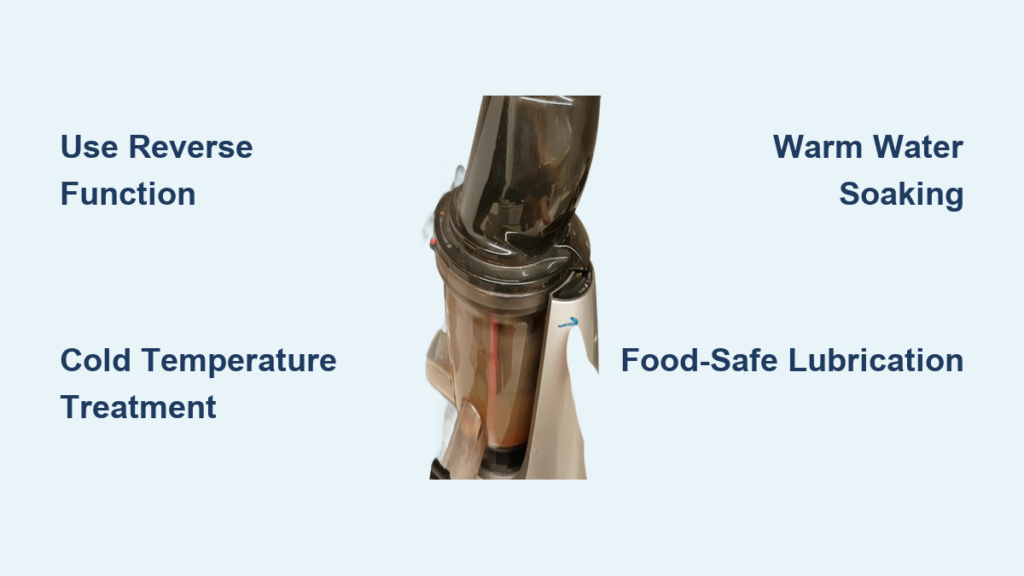
Your juicer shouldn’t feel like it’s welded shut. When the pusher won’t budge, the hopper seems permanently attached, or the chamber set refuses to separate, you’re facing one of the most common frustrations in home juicing. Many users mistakenly believe their juicer is beyond repair when components become stuck, but the reality is that most jamming issues can be resolved with the right approach. This guide provides proven methods to safely free stuck juicer parts without damaging your appliance. You’ll learn exactly how to open a stuck juicer using techniques that work with your machine’s design rather than against it.
Before attempting any fixes, understand that forcing components apart often causes more harm than good. Excessive pressure can crack plastic housings, deform critical seals, or damage internal mechanisms that affect juice extraction performance. The most effective solutions work with the physics of your juicer’s design—using temperature changes, mechanical advantages, and proper lubrication to release stuck components safely. By following this sequence of methods from least to most invasive, you’ll maximize your chances of success while minimizing risk to your appliance.
Activate the Reverse Function with Proper Pulp Lever Positioning
Your juicer’s built-in reverse function is specifically designed to handle jams, but most users activate it incorrectly. This feature works because it rotates the internal auger in the opposite direction of normal operation, releasing pressure that’s holding components together. However, the pulp lever’s position determines whether this method succeeds or fails.
Position the pulp lever to the half-open setting before engaging reverse. This critical step creates a pressure release pathway that dramatically increases the effectiveness of the reverse function. When the lever is fully open or closed, pressure remains trapped in the chamber, making separation nearly impossible. With the lever in the half-open position, internal pressure can escape, allowing the reverse rotation to work properly.
Run the reverse function for exactly 20 seconds, then pause for 15 seconds before repeating. Listen carefully to the motor sound—when you hear a change in pitch or reduced strain, the jam is likely loosening. Most moderate jams release within 2-3 reverse cycles. If the motor continues to strain heavily after three attempts, stop immediately to avoid overheating the motor. This precise timing prevents motor damage while giving the mechanism time to work the jam loose through controlled mechanical action.
Apply Strategic Cold Temperature Treatment

When pressure buildup or moisture-induced swelling causes components to stick, cold temperature treatment exploits the natural contraction properties of materials to break the bond between parts. This method works particularly well for plastic components that expand when warm and contract when cooled.
Place the entire chamber assembly in your refrigerator for 90 minutes—this specific timeframe allows materials to reach optimal contraction without risking condensation issues. After refrigeration, immediately attempt the reverse function while components are still cold. The temperature-induced contraction creates microscopic gaps between stuck surfaces that weren’t present at room temperature.
For stubborn jams, alternate between cold and room temperature treatments. Refrigerate for 90 minutes, attempt reverse, then allow components to return to room temperature before repeating. This thermal cycling creates repeated expansion and contraction that breaks persistent bonds. Never place electrical components in the refrigerator, and always ensure exterior surfaces are completely dry before attempting any electrical operation to prevent moisture damage.
Execute the Warm Water Soaking Technique
Warm water soaking targets dried pulp residue that has bonded components together over time—a common issue with juicers used for fibrous produce like wheatgrass or celery. This method softens hardened material without the risk of thermal shock that can occur with extreme temperature changes.
Submerge only the chamber assembly (not electrical components) in a basin of warm, soapy water for 3-4 hours. The optimal temperature is 100-110°F (38-43°C)—hot enough to soften residue but not so hot that it risks warping plastic components. After soaking, gently rotate the components against each other while they’re still wet to help break the softened bond.
For particularly stubborn residue, add a teaspoon of baking soda to the soaking water. This mild abrasive helps break down organic material without scratching surfaces. After soaking, attempt the reverse function while components are still damp—never operate your juicer when completely dry after soaking, as this can create new friction points. If the jam persists after one soaking session, repeat the process rather than forcing components apart.
Apply Food-Safe Lubrication Correctly

When dealing with a stuck pusher or shaft assembly, proper lubrication reduces friction at the molecular level, allowing components to slide apart. However, using the wrong lubricant or applying it incorrectly can contaminate future juice batches or damage seals.
Apply a pea-sized amount of food-grade mineral oil to the shaft where components are sticking. Never use petroleum-based products, vegetable oils, or cooking sprays—they can degrade rubber seals and create sticky residues that worsen the problem over time. Allow the lubricant to penetrate for 10 minutes before attempting movement—this gives the oil time to work between microscopic surface irregularities.
When pulling stuck components apart, combine downward pressure with a gentle twisting motion rather than straight pulling. This rotational action distributes lubricant evenly around the entire contact surface. For pusher-related jams, place one hand on the base for stability while using the other to apply controlled twisting pressure—this technique prevents accidental slippage that could damage countertops or injure fingers.
Perform Targeted Disassembly for Inspection
When other methods fail, strategic disassembly lets you directly address the root cause of the jam rather than fighting symptoms. This approach requires methodical attention to detail but often reveals simple issues that external methods can’t resolve.
Remove the top assembly by following your manufacturer’s specific disassembly sequence—most juicers have hidden tabs or alignment markers that must be respected. Take photos at each disassembly step to ensure proper reassembly. Once separated, inspect the shaft for pulp buildup in the grooves and clean with a soft brush designed for appliance maintenance.
Pay special attention to the O-rings and seals—they often swell from moisture exposure, creating the sticking problem. If seals appear swollen, allow them to air dry completely for 24 hours before reassembly. For older juicers (8+ years), consider replacing worn seals with manufacturer-specified parts—this simple fix prevents future jams and maintains optimal juice extraction pressure.
Implement Preventative Maintenance Strategies
After successfully freeing stuck components, establish a maintenance routine that prevents recurrence. Most chronic jamming issues stem from skipped cleaning steps or improper assembly techniques that compound over time.
Clean all components within 15 minutes of juicing while residue is still moist—this simple timing rule prevents the hardening that leads to stuck parts. Focus on the auger shaft grooves and seal contact points where pulp accumulates unseen. Implement a weekly deep clean using a dedicated juicer cleaning brush to reach hidden areas that regular washing misses.
Apply food-grade lubricant to moving parts once monthly, focusing on shaft contact points and seal interfaces. This thin protective layer prevents the molecular bonding that causes sticking. Before reassembling after cleaning, verify all components align with manufacturer markings—misalignment creates uneven pressure points that lead to future jams. These preventative measures take just minutes but save hours of troubleshooting down the line.
When to Contact Manufacturer Support
If you’ve exhausted all DIY methods without success, manufacturer support often provides solutions beyond home remedies—especially for units under warranty or within reasonable service life. Many brands offer replacement components or even entire units when chronic jamming issues can’t be resolved through standard maintenance.
Have your juicer’s serial number (typically found as a barcode on the bottom), purchase receipt, and a brief description of attempted fixes ready when contacting support. Manufacturers prioritize customers who demonstrate they’ve followed proper troubleshooting procedures. Some companies maintain specialized service centers that can address chronic jamming issues with industrial-grade tools not available to consumers.
Before reaching out, document exactly which components remain stuck and how long the issue has persisted. This information helps support teams determine whether the problem stems from a design flaw (which may qualify for replacement) or accumulated wear (which might require specific repair techniques). Many users discover that manufacturers are surprisingly responsive to chronic jamming issues, particularly with premium models designed for long-term use.
Don’t let a stuck juicer derail your healthy habits. By methodically working through these techniques—from proper reverse function activation to strategic disassembly—you’ll free most stuck components safely and effectively. The key is understanding that each method addresses specific physical causes of jamming, so matching the right solution to your particular problem dramatically increases success rates. Implement the preventative maintenance strategies outlined here, and you’ll significantly reduce future jamming incidents, keeping your juicer running smoothly for years to come. Remember that patience and precision always outperform brute force when learning how to open a stuck juicer.