Nothing beats the vibrant taste of fresh juice made in your own kitchen. Learning how to operate a juicer properly transforms ordinary fruits and vegetables into nutrient-dense beverages packed with vitamins and enzymes that store-bought versions simply can’t match. When you master juicer operation, you gain control over ingredient quality, eliminate preservatives, and enjoy maximum nutritional benefits by consuming juice immediately after extraction. This guide delivers everything you need to know about how to operate a juicer effectively, from selecting the right model to cleaning techniques that extend your appliance’s lifespan.
Fresh juice made with proper juicer operation provides immediate health benefits that processed alternatives lack. The extraction process separates liquid from fibrous pulp, creating a concentrated beverage where nutrients become more readily available to your body. Understanding how to operate a juicer correctly ensures you maximize juice yield, preserve heat-sensitive enzymes, and avoid common mistakes that lead to motor strain or subpar results. Whether you’re new to juicing or looking to refine your technique, these practical steps will help you consistently produce delicious, nutrient-rich beverages.
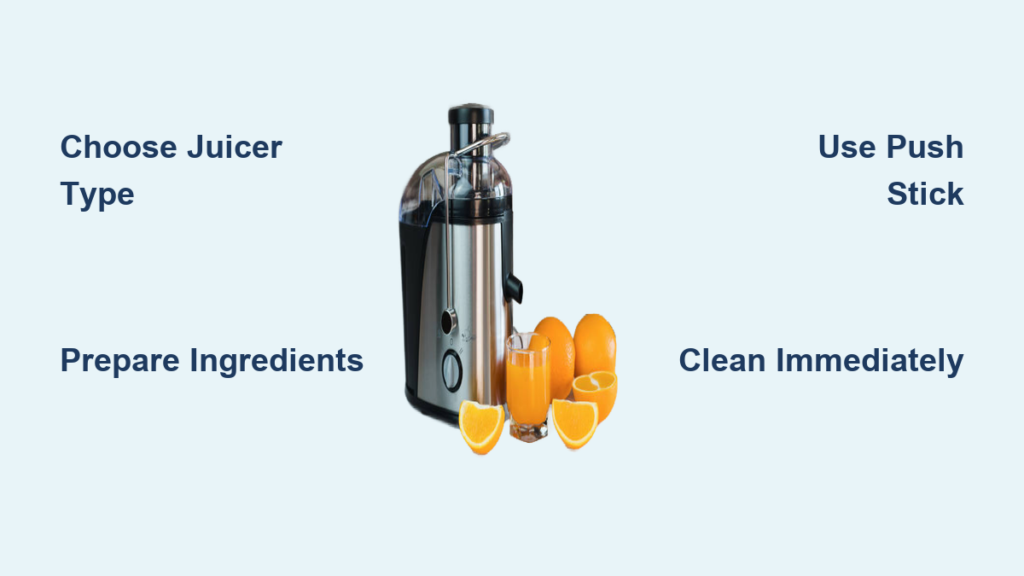
Choose the Right Juicer Type for Your Needs

Selecting the appropriate juicer model sets the foundation for successful juicing sessions. Each type operates differently and excels with specific ingredients, so matching your needs prevents frustration and wasted produce.
Why Centrifugal Juicers Work Best for Quick Morning Juices
Centrifugal juicers use high-speed spinning blades to extract juice rapidly, making them ideal when you need breakfast juice in minutes. These affordable models work exceptionally well with apples, carrots, and beets but generate some heat during operation that slightly affects nutrient retention. If speed matters most and you primarily juice harder produce, this type delivers efficient performance without breaking the bank.
When to Choose a Masticating Juicer for Leafy Greens
Masticating juicers slowly crush produce at lower speeds, preserving more heat-sensitive nutrients and producing higher juice yields from leafy greens like spinach and kale. Though they cost more and take longer, these “slow juicers” create less foam and oxidation, resulting in juice that stays fresher longer. The extra investment pays off if you regularly juice wheatgrass or delicate herbs that centrifugal models struggle with.
Cold-Press vs. Citrus-Specific Juicers: Making the Right Choice
Cold-press juicers maximize nutrient density by pressing produce without heat generation, creating exceptionally clear juice with superior nutritional value. However, they come with higher price tags and slower processing speeds. For dedicated citrus lovers, specialized citrus juicers offer simplicity and efficiency with oranges, lemons, and grapefruits, eliminating the need for cutting and peeling before juicing.
Prepare Ingredients Like a Juicing Pro
Proper ingredient preparation directly impacts juicer performance and final juice quality. Taking time to wash and cut produce correctly prevents motor strain and ensures optimal extraction efficiency.
Wash and Peel: Essential Pre-Juicing Steps
Thoroughly wash all produce under running water to remove dirt and surface contaminants. Remove skins from citrus fruits, kiwi, melons, and waxed produce, while keeping skins on apples, carrots, and beets where eating the peel is normal. This simple step prevents unwanted bitterness and ensures your juice tastes as fresh as possible.
Cut for Optimal Feeding Chute Compatibility
Slice produce into pieces small enough to fit comfortably through the feeding chute—typically no larger than a coin slot. Large whole fruits strain the motor and create blockages that interrupt extraction. For long items like celery, cut across the grain to help the juicer process fibrous strands more effectively and prevent tangling.
Seed Removal Guidelines for Maximum Safety
Remove hard seeds from peaches, cherries, and papayas before juicing, as they can damage blades or accumulate in the pulp container. Smaller seeds from berries and citrus fruits generally pass through without issue. Proper seed management protects your appliance while ensuring smooth operation during every juicing session.
Assemble Your Juicer Correctly on First Use
Proper assembly ensures safe operation and maximum extraction efficiency. Before first use, familiarize yourself with all components by reviewing the manufacturer’s instruction manual.
Positioning Your Juicer for Maximum Stability
Place the juicer on a stable, level surface away from water sources where it won’t tip during operation. Ensure adequate space around the appliance for feeding ingredients and accessing collection containers. Proper positioning prevents accidents and makes the juicing process more comfortable and efficient.
Locking Safety Mechanisms That Prevent Accidents
Engage all safety locking mechanisms as specified in your manual before plugging in the appliance. Most juicers feature interlocking lids that prevent operation if not properly secured. These critical safety features protect users from moving parts and should never be bypassed, no matter how experienced you become at operating a juicer.
Juice Collection Setup for Mess-Free Operation
Position the juice collection container directly beneath the spout with enough capacity for your expected yield. For larger batches, have a backup container ready. Proper collection setup prevents spills and ensures you capture every drop of precious juice without wasting your carefully prepared ingredients.
Master Speed Settings for Different Produce Types

Understanding how to use variable speed controls effectively distinguishes novice juicers from experienced practitioners. Most modern juicers offer multiple speed settings optimized for different ingredients.
Low Speed for Berries and Soft Fruits: Preserving Nutrients
Start with low speeds for delicate items like berries, peaches, and ripe tomatoes to prevent heat buildup that degrades heat-sensitive nutrients. The gentle extraction preserves delicate flavors while maximizing juice yield from softer produce. Always begin your juicing session with these items before transitioning to harder ingredients.
High Speed for Carrots and Beets: Maximizing Extraction
Switch to higher speeds for denser fruits and vegetables such as apples, carrots, beets, and celery. The increased power breaks down tough cell walls more effectively, extracting maximum juice from fibrous produce. After processing softer ingredients, this speed adjustment ensures thorough extraction without bogging down the motor.
Transitioning Between Speeds for Mixed Ingredient Juices
For recipes combining different produce types, process softer items first at low speed before gradually increasing to handle denser ingredients. This technique maintains consistent extraction rates while protecting your motor from sudden resistance changes. Smart speed management extends your appliance’s lifespan while improving overall juice quality.
Feed Ingredients Safely Without Damaging Your Juicer
The technique used to feed ingredients into the juicer affects both extraction efficiency and safety. Proper feeding ensures consistent results while protecting moving parts.
Proper Push Stick Technique for Consistent Results
Always use the provided push stick to guide ingredients down the feeding chute with steady, controlled pressure. Never insert fingers or utensils into the chute while operating—this simple rule prevents serious injuries. The push stick keeps your hands safe while applying even pressure that guides produce directly onto the extraction mechanism.
Avoiding Common Overloading Mistakes That Strain Motors
Feed ingredients slowly and consistently rather than forcing large amounts through at once. Overloading the chute strains the motor and causes blockages that interrupt extraction. For dense items like carrots, use the push stick to guide them straight down rather than at angles that might cause binding and motor strain.
Layering Soft and Dense Produce for Optimal Juice Yield
Alternate between soft and dense ingredients when possible, as this helps maintain consistent extraction rates. Soft items lubricate the system and prepare it for denser produce. If juicing large batches, pause occasionally to check pulp levels and ensure the juice flow remains unobstructed for maximum efficiency.
Clean Your Juicer Right Away to Prevent Permanent Buildup
Immediate cleaning after each use prevents residue buildup that becomes increasingly difficult to remove. Proper cleaning maintains hygiene standards and ensures consistent appliance performance.
Disassembly Steps That Make Cleaning Effortless
Unplug the juicer before disassembling all removable components, including the pulp container, filter basket, and feeding chute parts. Empty any remaining pulp completely, as dried residue damages mesh components and harbors bacteria. Following the manufacturer’s disassembly sequence makes cleaning faster and more thorough.
Soaking Solutions for Stubborn Pulp and Residue
Soak all detachable parts in warm, soapy water immediately after use. Water softens dried pulp and makes cleaning significantly easier. For mesh screens and hard-to-reach corners, use a soft-bristled brush rather than abrasive tools that can damage fine mesh components essential for proper juicer operation.
Drying Techniques That Prevent Mold and Bacterial Growth
Ensure all components dry completely before reassembly, as trapped moisture promotes mold growth. Air-dry parts on a clean towel rather than using cloths that might leave lint on mesh surfaces. Complete drying prevents bacterial contamination and extends the life of your juicer’s critical components.
Essential Safety Practices That Protect You and Your Appliance
Safety practices protect both users and appliances during juicing operations. Following these guidelines prevents accidents and extends equipment lifespan.
Never Bypass These Critical Safety Locking Mechanisms
Always engage all safety features as specified in your manual before operating. These mechanisms exist to prevent access to dangerous components and should never be disabled, regardless of experience level. Bypassing safety features voids warranties and creates serious injury risks when learning how to operate a juicer properly.
Proper Hand Positioning That Prevents Accidents
Keep hands, hair, and loose clothing away from moving parts at all times during operation. Use only the provided push stick to guide ingredients through the feed chute. Never lean over the juicer while it’s running, as splatter or unexpected movement could cause injury during routine juicing sessions.
Emergency Shutdown Procedures for Malfunctioning Juicers
If the juicer makes unusual sounds, vibrates excessively, or shows signs of malfunction, stop use immediately by using the power switch—not by pulling the plug. Turn off the appliance first, then unplug it once the motor has stopped completely. This protocol prevents electrical damage while keeping you safe during unexpected issues.