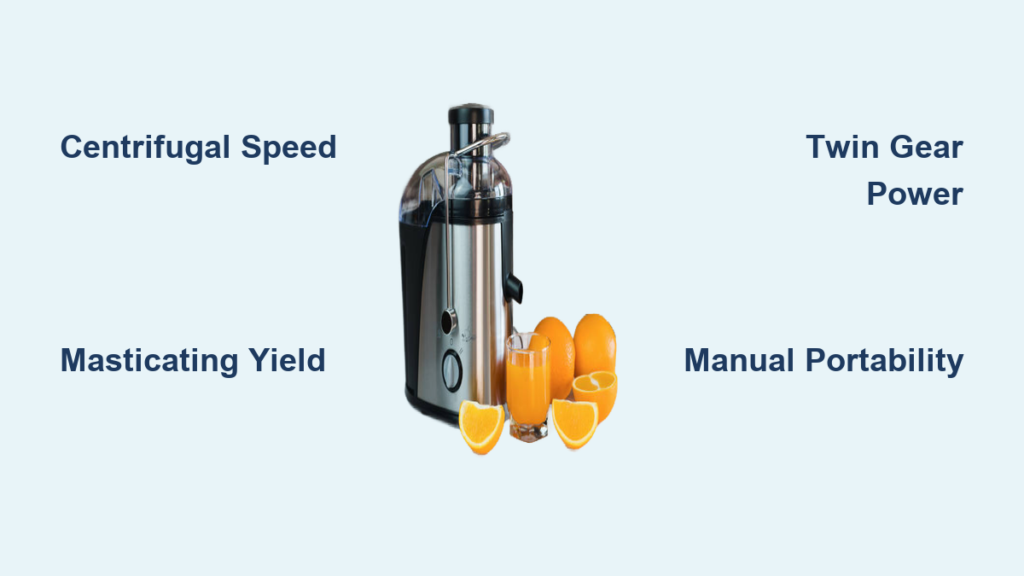
Finding the perfect juicer can feel like navigating a maze of confusing options. With so many different juicer types flooding the market, how do you know which one will deliver the fresh, nutrient-packed juice you’re after without breaking the bank? Whether you’re a health-conscious individual looking to boost your daily vitamin intake or a restaurant owner wanting to add fresh-squeezed beverages to your menu, understanding the fundamental differences between juicer styles is essential. This guide cuts through the marketing hype to show you exactly how each type works, what it’s best for, and which one will actually match your real-world needs.
Many beginners make the costly mistake of buying a juicer that doesn’t align with their lifestyle, only to find it collecting dust on the counter within weeks. The truth is, some juicers excel at processing hard fruits and vegetables quickly but fail miserably with leafy greens, while others produce nutrient-dense juice at a glacial pace. By the end of this guide, you’ll know precisely which of the different juicer types will serve your specific requirements, saving you time, money, and kitchen space.
Centrifugal Juicers: Fast and Affordable

Centrifugal juicers dominate kitchen counters for good reason—they’re the speed demons of the juicing world. These machines use a high-speed blade that shreds produce at 6,000-14,000 RPM, then throws the pulp against a screen where centrifugal force separates juice from solids. The resulting juice pours directly into your glass while pulp ejects into a separate container, making cleanup relatively straightforward.
Why Your Morning Routine Needs a Centrifugal Juicer
If you’re racing out the door before work, centrifugal juicers deliver fresh juice in seconds—literally. Drop in whole apples or carrots without extensive prep, flip the switch, and you’ll have a glass of juice before your coffee finishes brewing. Budget-friendly models start around $100, making them the most accessible entry point for juicing newbies.
Key advantages you’ll experience immediately:
– Minimal prep time (no need to chop hard produce into tiny pieces)
– Compact footprint that fits small kitchens
– Simple assembly and disassembly for quick cleaning
– Lower price point with readily available replacement parts ($30-$60)
Critical Limitations That Could Ruin Your Juicing Experience
That speed comes at a cost—literally and nutritionally. The high-speed blade creates significant oxidation, causing juice to separate rapidly and lose nutrients within minutes. You’ll need to drink your juice immediately or watch valuable nutrients degrade before your eyes. The noise level rivals a food processor, making early morning juicing a household disturbance.
Centrifugal models also waste 20-30% more produce than other juicer types, especially with leafy greens like spinach and wheatgrass. If you primarily juice kale, celery, or herbs, you’ll need nearly twice as much produce to fill the same glass compared to a masticating juicer.
Masticating Juicers: Quality and Nutrition
Masticating juicers (often called cold press or slow juicers) operate at a leisurely 80-100 RPM, using a single auger to crush produce against a screen. This slow mastication mimics how your teeth break down food, extracting maximum juice while preserving nutrients. The resulting liquid has a thicker texture with minimal foam and separation.
How Cold Press Juicers Transform Your Juice Quality
The slow extraction process minimizes oxidation, giving your juice a shelf life of 72 hours in the refrigerator—perfect for meal preppers. When processing leafy greens, masticating juicers yield up to 60% more juice than centrifugal models, meaning you’ll save money on produce over time. These machines also handle everything from hard carrots to delicate herbs without changing attachments.
You’ll notice these benefits immediately:
– Juice that stays vibrant and nutrient-rich for days
– Higher yield from the same amount of produce
– Quieter operation (ideal for early mornings)
– Ability to make nut milks, sorbets, and baby food
Real-World Considerations Before You Buy
Masticating juicers typically cost 2-3 times more than centrifugal models, with quality units starting around $300. The slow speed means you’ll spend more time feeding properly sized pieces into the chute—no dropping in whole apples here. Horizontal models also require significant counter space, which could be problematic in compact kitchens.
Cleaning takes slightly longer due to more components, though most modern models feature self-cleaning functions. If you prioritize convenience over juice quality or only juice occasionally, the higher investment might not pay off for your usage pattern.
Twin Gear and Triturating Juicers: Maximum Nutrient Extraction

Twin gear juicers represent the pinnacle of home juicing technology, using two interlocking gears that rotate in opposite directions to crush produce with surgical precision. This dual-auger system first cracks ingredients open, then slowly extracts every possible drop of juice with minimal heat and oxidation.
Why Serious Juice Enthusiasts Choose Twin Gear Models
These machines produce the most nutrient-dense juice available to home users, with oxidation levels so low that juice maintains quality for up to five days. You’ll extract 30-50% more juice from the same produce compared to centrifugal models, especially valuable when using expensive superfoods like wheatgrass. The dual gears also handle frozen fruits for making healthy sorbets and can even grind nuts for homemade butter.
The juice clarity is exceptional—less than 1% solids means smooth, professional-quality results without pulp settling at the bottom. If you run a small juice business or juice daily for your family, the superior yield quickly justifies the higher price tag.
Practical Limitations for Home Users
Twin gear juicers command premium prices, often exceeding $500, putting them out of reach for casual users. The intricate gear system requires careful cleaning after each use to prevent clogs, and the slow processing speed means making enough juice for a family can take 15-20 minutes. Their bulky design also demands significant counter space, making storage challenging in smaller kitchens.
Manual Juicer Options: Budget-Friendly and Portable
Manual juicers—ranging from simple citrus reamers to lever-operated wheatgrass presses—require physical effort but eliminate electricity costs and noise. Hand-crank models use rotational force, while hydraulic presses employ lever systems to squeeze juice from pulp with thousands of pounds of pressure.
When Manual Juicing Makes Perfect Sense
If you’re camping, traveling, or living in a small apartment without reliable electricity, manual juicers provide unbeatable portability. They’re also ideal for making small batches of specialty juices like wheatgrass shots or fresh lemonade. The slow extraction process preserves nutrients better than centrifugal models, and you’ll enjoy the tangible connection to your food preparation.
Top scenarios where manual juicers shine:
– Making single-serve wheatgrass shots
– Fresh-squeezed citrus for cocktails
– Outdoor events where electricity isn’t available
– Budget-conscious beginners testing the juicing waters
Physical Demands That Could Derail Your Routine
Processing more than 2-3 servings becomes physically taxing, especially with fibrous greens or hard vegetables. Manual juicers struggle with leafy produce that requires powerful extraction mechanisms, limiting your recipe options. The time investment per glass is significantly higher than electric models—expect 5-7 minutes per serving versus 30-60 seconds for centrifugal juicers.
Hydraulic Juice Presses: Commercial-Grade Quality
True hydraulic presses—often mistaken for all “cold-press” juicers—operate in two distinct stages: first shredding produce into pulp, then applying thousands of pounds of pressure through a hydraulic system to extract every possible drop of juice. This is the only method that technically qualifies as true cold-press juicing.
What Sets Hydraulic Presses Apart From Imitators
These machines produce the clearest, most nutrient-rich juice available, with virtually no oxidation and shelf life extending to 5-7 days. The intense pressure extracts up to 30% more juice from the same produce compared to masticating models, making them economically viable for juice bars and serious home users. The resulting liquid contains less than 1% solids—meaning no settling or separation.
Commercial juice companies choose hydraulic presses precisely because they maintain flavor and nutritional integrity longer than any other method. If you’re serious about preserving maximum enzymes and vitamins, this is the gold standard.
Why Most Home Kitchens Can’t Accommodate Hydraulic Presses
True hydraulic systems require significant space—many models stand over 2 feet tall and need dedicated counter or floor space. Prices typically start around $1,000, placing them in the premium investment category. The two-stage process also demands more time and attention, with manual bag preparation required between shredding and pressing stages.
Citrus Juicer Varieties: Specialized for Oranges and Lemons
Citrus juicers come in electric reamer styles or manual lever/squeeze designs, each engineered specifically for extracting juice from lemons, limes, oranges, and grapefruit while minimizing bitter pith transfer.
Electric vs. Manual Citrus Extraction
Electric citrus juicers feature motorized reamers that spin when fruit is pressed against them—simply halve your fruit, place it cut-side down, and apply gentle pressure. These models process multiple fruits quickly but can over-extract bitter compounds if pressed too hard.
Manual citrus juicers—like lever presses or handheld reamers—give you complete control over extraction pressure. Restaurant owners often prefer manual models because customers perceive the visible hand-squeezing process as higher quality, even though electric models produce identical juice.
Making Your Final Decision: Which Juicer Type Fits Your Life?
Don’t let marketing terms like “cold-pressed” confuse you—understanding the actual mechanics of different juicer types reveals which will serve your needs. Ask yourself these critical questions before purchasing:
- How often will you juice? (Daily users benefit from higher-end models)
- What produce dominates your recipes? (Leafy greens need masticating or twin gear)
- How much counter space can you dedicate? (Horizontal masticating models are bulky)
- What’s your realistic budget including long-term produce savings?
- Do you prioritize speed or nutrient retention?
For most home users starting their juicing journey, a centrifugal model offers the gentlest learning curve. If you’re serious about nutrition and juice daily, invest in a masticating or twin gear juicer—the higher yield quickly offsets the initial cost. Commercial operations should consider hydraulic presses for maximum shelf life and quality, while specialty juice bars might need dedicated wheatgrass or sugarcane equipment.
The perfect juicer for your friend might be completely wrong for you. By matching the specific capabilities of different juicer types to your actual usage patterns, you’ll avoid the common pitfall of buying equipment that ends up gathering dust. Take time to assess your real needs—not just your aspirations—and you’ll enjoy fresh, nutrient-packed juice for years to come.