Your angle grinder won’t last long if you casually toss it in a corner after use. Improper storage leads to premature wear, dangerous malfunctions, and costly replacements. With discs spinning over 10,000 RPM, a poorly stored angle grinder becomes a hidden hazard in your workshop. Whether you’re a metal fabricator, construction professional, or weekend DIYer, learning how to store angle grinder properly protects your investment and everyone around you. This guide delivers actionable storage protocols that extend tool life while maintaining critical safety standards.
Ideal Temperature and Humidity Conditions for Storage
Storing your angle grinder in unstable environments directly impacts its internal components and safety performance. Extreme temperatures and moisture create conditions that lead to electrical failures and mechanical deterioration over time.
Avoid Temperature Extremes That Damage Components
Store your angle grinder in spaces maintaining 50°F to 85°F consistently—this temperature range preserves lubricants and prevents thermal stress on plastics. Leaving your tool in an unheated garage during winter causes grease to thicken, creating excessive strain on motor bearings during startup. Summer heat above 90°F degrades rubber grips and insulation, creating electrical shock risks. If you must retrieve your grinder from cold storage, allow it to acclimate for two hours before use—condensation forming inside the tool during rapid temperature changes causes dangerous short circuits.
Control Moisture to Prevent Electrical Hazards
Humidity levels above 70% during storage promote corrosion on electrical contacts and internal metal parts. Always wipe down your angle grinder with a dry microfiber cloth after use, paying special attention to ventilation slots where moisture hides. Place silica gel packets inside your storage container—these absorb excess moisture and prevent rust formation on critical components. Never store a damp angle grinder, even if it’s only slightly humid in your workshop. That morning dew on your tool today could mean electrical failure six months from now when you need it most.
Eliminate Dust Contamination in Storage Areas
Metal and concrete dust infiltrates bearings and electrical components during storage, accelerating wear and creating fire hazards. Before putting your angle grinder away, use compressed air to blow debris from ventilation grilles, around the guard assembly, and from the spindle area. Store your tool in a sealed container or dedicated tool bag—never leave it exposed on a workbench where fine particles settle overnight. A five-minute cleaning routine after each use prevents the abrasive buildup that leads to expensive motor repairs down the line.
Critical Safety Steps Before Putting Your Grinder Away
Skipping these safety preparations transforms your stored angle grinder from a useful tool into a potential accident waiting to happen. Establishing a consistent pre-storage routine takes minimal time but prevents serious injuries months later.
Remove All Accessories and Disconnect Power Immediately
Unplug your corded angle grinder or remove the battery pack from cordless models before any storage handling—this prevents accidental startup during storage. Detach all grinding wheels, cutting discs, or wire brushes and store them separately according to manufacturer specifications. Leaving accessories mounted creates unnecessary stress on the spindle and guard assembly. More importantly, a cracked disc that appears intact while stored can fail catastrophically when you next use the tool, sending dangerous fragments flying. Store discs vertically in racks or flat with minimal stacking to prevent micro-fractures from pressure.
Verify Safety Mechanisms Are Engaged Properly
Engage the spindle lock before storage to prevent accidental rotation during handling. For models with lock-off switches, ensure these are positioned correctly to prevent unintended activation. Never wrap the power cord tightly around your angle grinder—this damages internal wiring over time. Instead, coil it loosely and secure with a Velcro strap. During this process, inspect the entire cord length for nicks, cuts, or exposed wires. A damaged cord requires immediate replacement before safe storage or future use—don’t risk electrical shock by storing a compromised tool.
Space-Smart Short-Term Storage Solutions
When you’ll use your angle grinder again within days or weeks, these storage methods balance accessibility with protection, keeping your tool ready while maintaining safety standards.
Organize with Wall-Mounted Systems
Vertical storage on pegboards or slatwall systems keeps your angle grinder visible and secure while maximizing workshop space. Install dedicated hooks that support the tool by its handle, keeping it upright with the guard facing outward for quick safety verification. Add labeled compartments nearby for frequently used accessories, creating a complete workstation that streamlines your workflow. Position these mounts at shoulder height—too low invites accidental bumps, while too high creates retrieval hazards. This system prevents your grinder from rolling off benches or getting buried under other tools.
Protect in Dedicated Tool Bags for Job Site Transport
Soft-sided tool bags with padded compartments protect against impacts and dust while providing portability between locations. Choose bags specifically sized for angle grinders—generic compartments allow dangerous movement during transport. Look for models with separate accessory pockets that keep discs organized and protected from damage. For contractors moving between sites daily, a dedicated grinder bag that stays packed eliminates setup time at each location. Ensure the bag completely encloses the tool with secure closures—never transport your angle grinder loose in a general-purpose bag where accidental activation could occur.
Essential Long-Term Storage Protocols
:max_bytes(150000):strip_icc()/GrinderStorageRack-1-78965be7d97041969535e74639f451a6.jpg)
When your angle grinder will sit unused for months, these specialized storage techniques ensure it emerges ready for safe operation without costly restoration work.
Deep Clean Before Extended Storage Periods
Long-term storage demands thorough cleaning beyond routine wipe-downs. Disconnect power and remove all accessories, then use compressed air to blast dust from every vent and crevice. Clean the guard assembly completely, as accumulated debris affects disc clearance and causes dangerous binding. Wipe all surfaces with a mild detergent solution followed by a dry cloth. Apply a light coat of machine oil to bare metal surfaces including the spindle, then allow 24 hours of air drying before sealing in storage containers. This protective layer prevents oxidation during storage.
Maintain Cordless Batteries at Optimal Charge Levels
Store lithium-ion batteries at approximately 50% charge—neither fully charged nor depleted. Full charge stresses cells during extended storage, while complete discharge can permanently damage them. Remove the battery pack from the tool and store it separately in a cool, dry location away from metal objects. Check charge levels every two to three months and recharge to 50% if needed. Never store batteries in extreme temperatures, which permanently reduces capacity. A simple maintenance schedule preserves battery health for years of reliable service.
Organize Accessories to Prevent Damage and Save Time
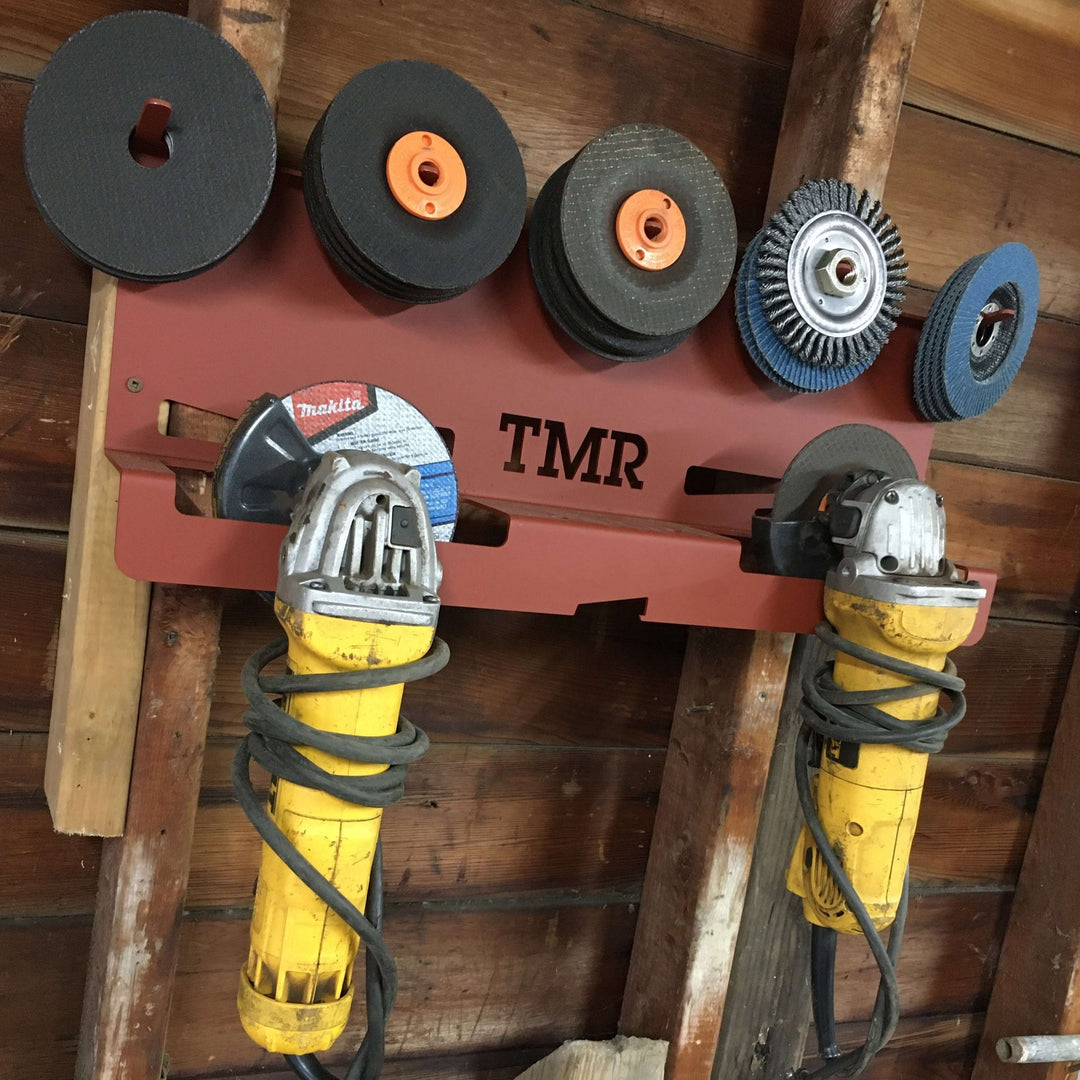
Your angle grinder’s effectiveness depends on having the right accessories readily available in safe, undamaged condition.
Categorize Discs by Application and Size
Separate grinding wheels, cutting discs, flap discs, and wire brushes into distinct storage areas. Within each category, organize further by size—4.5-inch discs shouldn’t mix with 9-inch discs. Metal-cutting discs differ significantly from masonry-cutting discs, and mixing them leads to dangerous cross-application. Create a labeling system indicating disc type, size, maximum RPM rating, and appropriate materials. This organization prevents grabbing the wrong disc in a hurry, which can damage workpieces or cause disc failure.
Store Discs in Proper Orientation to Maintain Integrity
Store thin cutting discs flat but never stack more than 10 high—pressure causes stress fractures in lower discs. Better yet, store them vertically in dedicated racks that support the entire circumference. Flap discs can be stored flat or hung on hooks by their center holes. Wire brushes need storage that prevents bristle deformation—avoid crushing them under other tools. Keep all discs away from oil, coolant, and solvents that weaken bonding agents. Proper disc storage prevents the most common cause of disc failure: hidden damage from improper storage.
Monthly Maintenance During Storage Periods
Tools in storage still require periodic attention to remain in optimal condition. These simple checks prevent unpleasant surprises when you eventually need your angle grinder.
Perform Essential Inspection Checklist
Monthly, check for visible rust on metal surfaces, particularly around the spindle and guard mounting points. Test the power cord along its entire length for soft spots or exposed wires. Verify switch mechanisms move freely without sticking. For cordless models, check battery terminals for corrosion. Rotate the spindle by hand to feel for roughness indicating bearing problems. Addressing small issues during storage prevents dangerous failures during use.
Apply Strategic Lubrication to Critical Components
Before long-term storage and again before returning to active use, apply a few drops of light machine oil to spindle bearings through accessible points. Work the oil in by rotating the spindle by hand, then wipe away excess. Avoid overlubrication, which attracts dust. General-purpose spray lubricants work well for external pivot points but keep them away from rubber components and electrical contacts. Proper lubrication prevents the most common storage-related failure: seized bearings from dried lubricants.
Costly Storage Mistakes That Damage Your Angle Grinder
Learning from others’ errors helps you establish better habits immediately. These common oversights lead to preventable tool damage and safety hazards.
Never Store Your Grinder Plugged In or With Battery Inserted
Leaving your angle grinder plugged in creates accidental activation risks, especially in households with children. For cordless models, always remove the battery pack before storage—leaving it installed creates fire risks and allows damaging gradual discharge. Make unplugging or battery removal the final step of your storage routine, after positioning the tool in its storage location. This simple habit prevents the most common storage-related accidents.
Always Clean Before Storage to Prevent Long-Term Damage
Skipping cleaning before storage allows abrasive dust mixed with cutting oils to form a stubborn paste that corrodes metal and clogs mechanisms. Blocked ventilation slots cause dangerous overheating during next use. The few minutes required for proper cleaning after each use prevents hours of difficult restoration work later. Keep cleaning supplies near your storage area as a visual reminder and convenience.
Quick Reference Storage Checklist
Follow this consistent pattern regardless of storage duration: clean thoroughly, disconnect power, remove accessories, protect against environmental damage, and store in a secure location. Monthly inspections catch developing problems early. Cordless batteries require specific care including 50% charge maintenance. Organizing accessories with your tool creates a complete station that streamlines your workflow.
Taking storage practices seriously extends your angle grinder’s lifespan significantly—often doubling or tripling its useful years compared to neglected tools. More importantly, proper storage maintains the safety integrity that prevents serious injuries. Your angle grinder represents a meaningful investment; treating it with proper storage respect protects that investment and protects yourself.