That stubborn tree stump left behind after cutting down a tree isn’t just an eyesore—it’s a tripping hazard, a breeding ground for pests, and a barrier to landscaping plans. While stump removal might seem straightforward, operating a tree stump grinder requires specific knowledge and technique to avoid serious injury or equipment damage. These powerful machines chew through wood fibers with a rapidly spinning cutter wheel, but improper use can lead to dangerous kickback, hidden hazards, and costly mistakes. By following this operational guide, you’ll learn exactly how to position your grinder, sequence your cuts for maximum efficiency, and navigate the critical safety protocols that separate professional results from disaster.
Whether you’re tackling a single backyard stump or clearing multiple sites for a landscaping project, understanding how to use a tree stump grinder properly saves time, money, and potentially prevents life-threatening accidents. This guide cuts through the guesswork, delivering step-by-step instructions that cover everything from initial setup to troubleshooting common issues—so you can transform that unsightly stump into smooth, usable ground with confidence.
Avoid Critical Safety Hazards Before Starting
Stump grinders generate tremendous force through their spinning cutter wheels, creating serious risks that demand your full attention before even attempting to start the machine. The most immediate danger comes from flying debris—wood chips can travel at high speeds up to 75 feet from the work area, making bystander management non-negotiable. Before ignition, establish a 75-foot safety perimeter and secure the area with visible markers or barriers to prevent unauthorized access. If working near structures, vehicles, or windows, install protective shields to catch ricocheting wood fragments.
Emergency Shutdown Protocols You Must Know
Never operate a stump grinder without first memorizing your specific model’s emergency shutdown procedure. Unlike ordinary machinery, you cannot simply step away when the cutter wheel spins—leaving controls unattended risks catastrophic accidents. Before starting work, practice stopping the machine through three critical steps: 1) Release the cutter wheel engagement lever, 2) Reduce engine throttle to idle, and 3) Activate the emergency stop mechanism per your operator’s manual. In immediate danger situations, gently lower the cutter wheel into loose soil to create resistance that stops rotation faster. This technique buys crucial seconds when every moment counts, but only works if you’ve positioned your machine with sufficient clearance behind the stump.
Position Your Grinder for Maximum Control and Efficiency

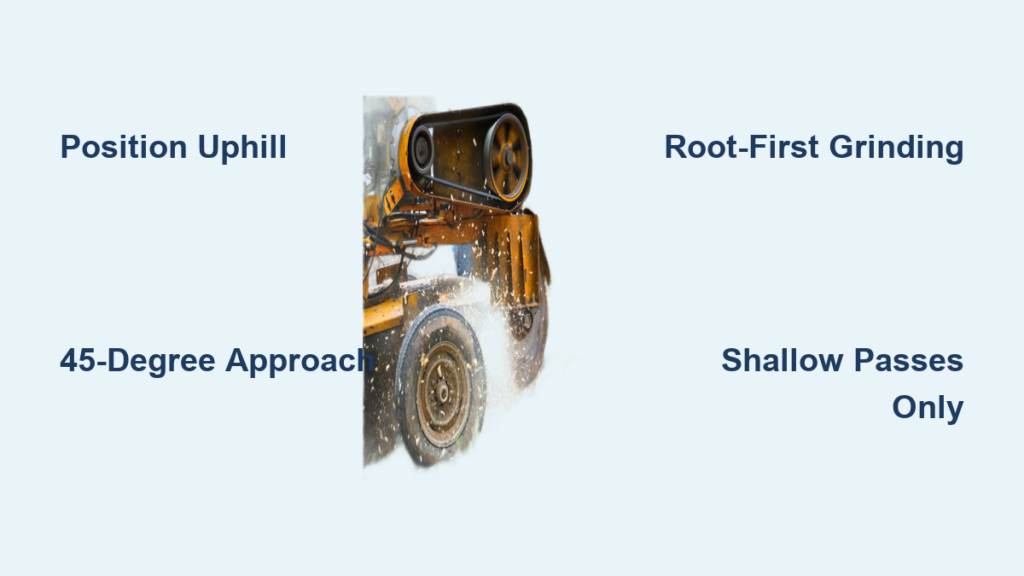
Contrary to intuition, how you approach the stump dramatically impacts both safety and effectiveness. Always position your machine on the most level ground available while facing uphill—this orientation prevents the grinder from rolling toward the stump during operation and gives you better control over the cutting head’s movements. Before engaging the cutter wheel, perform a “dry run” by swinging the boom through its full arc with the wheel disengaged. This critical step reveals potential obstacles like low-hanging branches, hidden rocks, or terrain limitations that could cause dangerous kickback during actual cutting.
Optimal Stump Approach Angle for Clean Cuts
For maximum cutting efficiency, approach the stump at a 45-degree angle rather than head-on. This diagonal positioning allows the cutter wheel to engage the wood fibers more gradually, reducing the chance of sudden machine lurching. Start with the machine positioned so the cutter wheel clears the stump by at least 6 inches, giving you room to lower the wheel smoothly into the initial cut. Check for hidden hazards like irrigation lines, electrical cables, or buried construction debris by probing the area around the stump with a long metal rod—striking these objects with the cutter wheel can cause catastrophic equipment failure or serious injury.
Execute the First Cut with Precision to Prevent Kickback
The moment of initial contact between cutter wheel and wood determines your entire operation’s safety trajectory. With the cutter wheel suspended safely above the stump, engage the clutch and allow RPMs to reach full operating speed before advancing toward the wood. Never make contact at partial throttle—this creates inefficient cutting that strains the engine and increases kickback potential. As you lower the cutter wheel, anticipate the machine’s natural tendency to lurch backward upon first contact; brace yourself with feet shoulder-width apart and maintain a firm grip on both control levers.
Root-First Grinding Sequence for Complete Removal
Begin your grinding process at the stump’s outer edge, approximately 1¼ inches from the perimeter, targeting visible roots before tackling the main stump mass. This root-first approach prevents wasting hours later excavating roots buried under wood chips. Make shallow horizontal passes—no deeper than 1 inch per pass—sweeping the cutter wheel across the root’s width before advancing the machine slightly for the next pass. For roots wider than your boom’s swing capacity, reposition the machine to cover the remaining section rather than forcing incomplete cuts. When encountering long surface roots extending across your yard, make multiple shallow passes to prevent large chunks from breaking off and becoming dangerous projectiles.
Master Stump Wood Grinding with Professional Technique
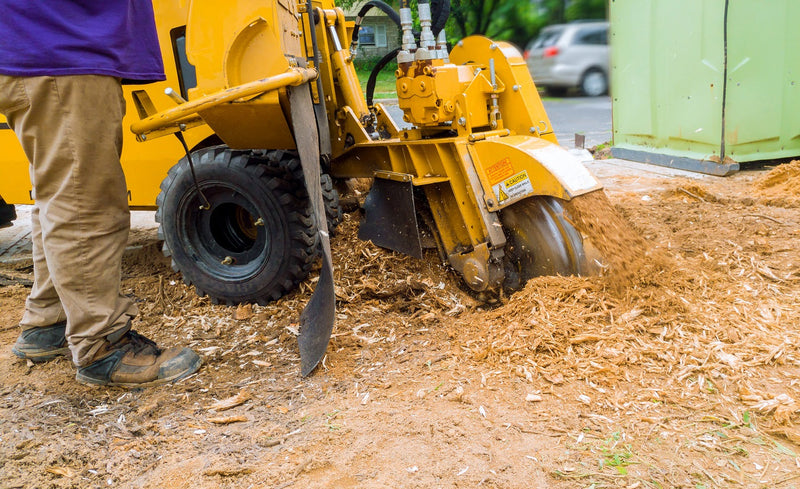
Once roots are cleared, shift your focus to reducing the main stump mass below ground level. Position the cutter wheel near the top edge of the stump and begin shallow cutting passes approximately 1¼ inches from the outer edge. Keep all cuts remarkably shallow—typically no more than ½ inch deep per pass—as deeper cuts stall engines and accelerate tooth wear. The sharpness of your cutter teeth directly determines achievable depth; accept that dulling teeth require more frequent passes rather than forcing deeper cuts that damage equipment.
Critical Cutting Wheel Zones for Safe Operation
Use only the lower front quadrant of the cutter wheel for material removal—the area between 3:00 and 5:00 on an imaginary clock face. This specific section provides optimal cutting efficiency while maintaining machine stability. Never use the upper portion of the wheel or attempt to undercut the stump, as these improper techniques create dangerous leverage points that can cause sudden loss of control. When advancing the cutter head, complete depth adjustments before making horizontal sweeping motions—combining these movements simultaneously damages both engine and cutting teeth. Continuously scan the stump surface for hidden hazards like embedded nails, rebar, or concrete fragments; keep a shovel nearby to expose and remove these dangers before they reach the cutter wheel.
Troubleshoot Common Operational Issues Immediately
Unusual machine behavior demands immediate attention rather than hopeful continuation. If your grinder’s tires lift off the ground during operation—a common occurrence on hard wood or stubborn stumps—lower the machine smoothly back to earth without jerking the hydraulic controls. Sudden movements stress critical components and increase instability. More concerning are unusual noises or vibrations, which always indicate mechanical problems requiring immediate shutdown. When these occur, disengage the cutter wheel, reduce throttle to idle, and fully shut down the engine. Wait five minutes for all moving parts to stop, then inspect for damaged or missing teeth, debris wrapped around the wheel assembly, and loose components before resuming work.
Emergency Response to Hidden Obstacles
Striking unexpected objects like underground pipes or cables requires specific emergency protocols. If the cutter wheel suddenly stops or jerks violently, release the engagement lever immediately while maintaining control of the machine. Do not attempt to force through the obstruction—this risks catastrophic equipment failure. After safely shutting down, carefully excavate around the impact area to identify the obstacle. For utility lines, contact the appropriate service provider before proceeding; for natural obstructions like large rocks, reposition your machine to work around the obstacle rather than through it.
Follow Non-Negotiable Operational Restrictions
Certain actions must never occur during stump grinding regardless of time pressures or perceived efficiency gains. Never force deeper cuts than your machine’s design capacity—this overloads mechanical systems and increases injury risk. Never operate the grinder while distracted by phone calls, conversations, or other tasks; maintaining full situational awareness prevents accidents. Never leave the operator controls while the cutter wheel rotates, even for “just a moment” to adjust your position or retrieve a tool. Always remove the ignition key and pocket it when stepping away, preventing unauthorized operation that could prove fatal.
Pro Tip: When working near irrigation systems or structural foundations, use the grinder only to sever roots, then complete removal with hand tools. This targeted approach prevents expensive damage to buried infrastructure while still achieving complete root elimination.
Implement Professional Maintenance for Long-Term Results
The difference between a one-time success and sustainable stump grinding capability comes down to post-operation care. After completing your job, thoroughly clean wood chips and debris from the cutter wheel assembly, undercarriage, and cooling systems—accumulated material causes overheating and premature wear. Inspect cutter teeth for excessive wear; while some dulling is normal, uneven wear patterns indicate improper technique that should be corrected. Store the machine with the cutter wheel elevated to prevent flat spots on tires and tension release on hydraulic components.
By consistently applying these techniques for how to use a tree stump grinder safely and effectively, you’ll transform what seems like a daunting task into a manageable process that delivers professional results. Remember that patience and proper sequencing—roots first, shallow cuts, constant hazard assessment—outperform brute force every time. When in doubt about any aspect of operation, consult your specific model’s manual rather than risking unsafe improvisation. With these guidelines, you’re equipped to eliminate that stubborn stump safely and efficiently, reclaiming your landscape for whatever comes next.