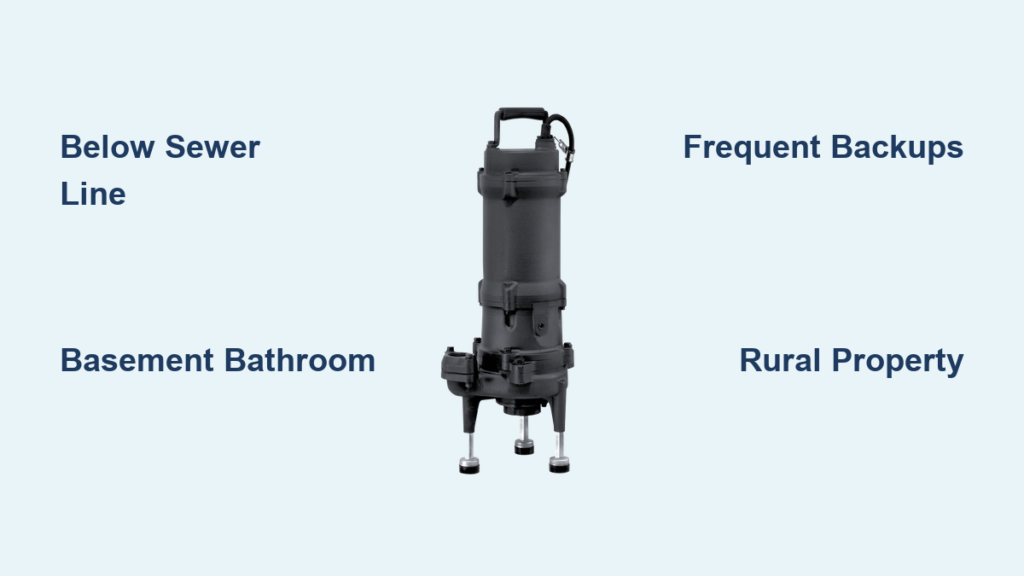
Picture this: you’re finishing your morning routine when suddenly sewage starts backing up into your basement shower. Or you’ve just fallen in love with your dream home only to discover it sits below the municipal sewer line. These scenarios highlight why understanding when a grinder pump is necessary could save you from thousands in property damage and endless headaches. A grinder pump is a specialized wastewater system that pulverizes sewage and other materials before pumping them through small-diameter pipes to a centralized sewer system or septic tank. Unlike standard pumps, grinder pumps contain cutting mechanisms that break down solids including food scraps, sanitary products, and debris into smaller particles.
Knowing precisely when a grinder pump becomes necessary depends on several specific factors related to your property’s elevation, local sewer infrastructure, and wastewater demands. If your property faces elevation challenges that prevent gravity-based wastewater transport, you’re already in a situation where a grinder pump may be essential. This guide cuts through the confusion to show you exactly when you need this critical component for reliable wastewater management—before sewage problems strike.
Critical Elevation Challenges Requiring Grinder Pumps
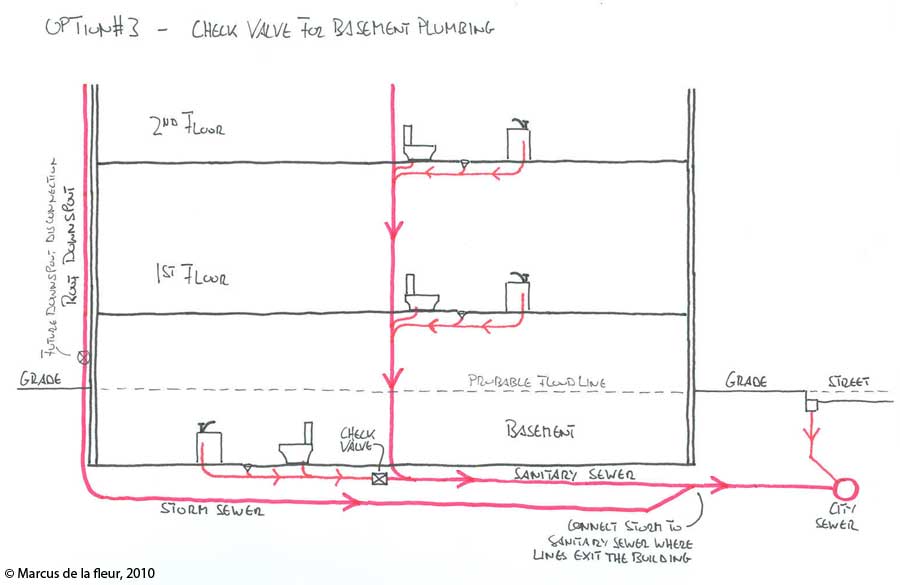
When your basement bathroom sits lower than the municipal sewer line outside your property, gravity becomes your enemy rather than an ally. Municipal sewer mains typically run at depths determined by local building codes and land topography, often placing them above basement floor levels. This elevation mismatch creates a fundamental problem: wastewater from basement fixtures must travel upward to reach the sewer connection.
Without a grinder pump, sewage simply cannot overcome this gravitational challenge. Every time you flush that basement toilet, you’re fighting physics. The water would either remain trapped in the pipes or, worse, back up into your living space. Properties built on slopes where the sewer connection point sits higher than the home’s lowest drainage points face identical challenges—regardless of whether they have formal basements. If your wastewater source sits below the exit point, mechanical assistance isn’t optional; it’s essential for basic sanitation.
Low-Pressure Sewer Systems That Demand Grinder Pumps
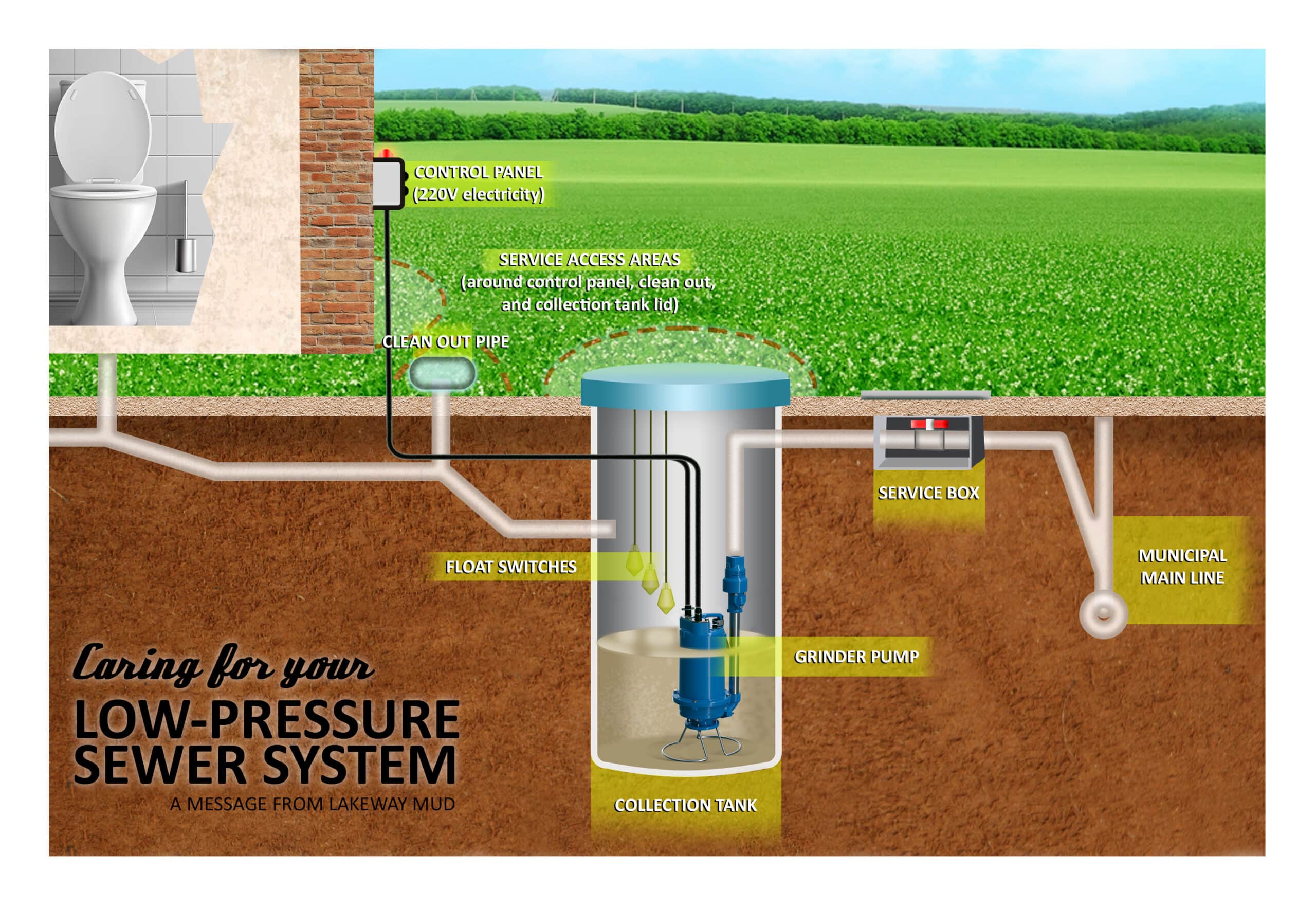
Low-pressure sewer systems represent one of the most common scenarios requiring grinder pump installation. In conventional gravity-based systems, wastewater flows downward naturally through pipes without mechanical assistance. This setup works perfectly when your property elevation aligns with the sewer line. However, challenging terrain frequently disrupts this ideal scenario.
When your home sits in a valley or depression where wastewater must travel upward to reach the sewer line, gravity-based systems become impossible. Municipalities in hilly regions, waterfront properties, and neighborhoods built on uneven ground frequently mandate grinder pumps for new construction. These systems transform sewage into a slurry that can be pushed through small-diameter pipes (as narrow as two inches), eliminating the need for extensive excavation and deep trenching that would be required for traditional gravity sewers.
Rural Properties Needing Alternative Wastewater Solutions
Remote locations without access to centralized municipal sewer systems often rely on grinder pumps as a critical sanitation link. When no sewer main exists in your area, you need an effective way to move wastewater to your septic tank or community treatment facility. Grinder pumps make modern sanitation possible in these challenging environments by enabling the use of smaller-diameter pipes that reduce installation costs significantly.
The maceration capability allows these systems to transport sewage efficiently through narrow pipes that would quickly clog with conventional pumps. Many rural communities implement shared low-pressure collection systems where multiple properties connect to a central grinder pump station. If you’re building or purchasing property in a remote area, understanding when a grinder pump is necessary could determine whether you have reliable wastewater management or face constant backups and health hazards.
Warning Signs Your Home Needs a Grinder Pump System
Your plumbing system sends clear signals when it’s struggling with elevation challenges that require a grinder pump:
- Frequent unexplained clogs that resist standard plunging or drain cleaning
- Persistent sewage odors emanating from drains unrelated to recent use
- Slow drainage in multiple fixtures simultaneously, especially lower-level bathrooms
- Water backing up into lower fixtures when using upper-level plumbing
These symptoms indicate your current system lacks the pumping capacity needed to overcome elevation challenges. Don’t mistake these warning signs for simple clogs—they often reveal a fundamental mismatch between your property’s topography and your wastewater management system. Addressing these issues early with the appropriate pump installation prevents costly emergency repairs and potential health hazards from sewage backups.
Home Renovations That Require Grinder Pump Installation

Adding a new bathroom, kitchen, or laundry room to your home can create wastewater management challenges that didn’t exist before. A basement renovation introducing a full bathroom where none existed previously creates exactly the elevation problem that demands a grinder pump. Similarly, expanding your living space to the opposite side of your home from the existing sewer connection may require pumping wastewater across your property and potentially uphill.
Before undertaking major home renovations, consult with a plumbing professional who can assess whether your existing system can handle the additional demand. Properties adding plumbing fixtures below or at the same level as the sewer connection point almost always require mechanical assistance. The upfront cost of installing a grinder pump during your renovation pales in comparison to the expense of emergency repairs after sewage backups occur.
How to Determine If You Need a Grinder Pump vs. Lift Pump
Understanding the critical difference between grinder pumps and sewage lift pumps prevents costly equipment mistakes. Sewage lift pumps move wastewater uphill but lack cutting mechanisms, making them unsuitable for raw sewage containing solids. Attempt to pump toilet paper, food scraps, or other debris through a standard lift pump, and you’ll face immediate clogs and system failures.
Grinder pumps incorporate cutting mechanisms that shred solids into small particles before pumping. This capability makes them essential for primary sewage handling applications. While lift pumps cost less ($300-$800), their limitations make them inappropriate for most residential wastewater scenarios. For properties with elevation challenges processing raw sewage, the grinder pump’s enhanced capability justifies its higher cost and ensures reliable long-term operation.
Making Your Final Decision
Determining when a grinder pump is necessary comes down to evaluating your property’s specific elevation challenges, existing plumbing configuration, and wastewater production patterns. If your lowest plumbing fixtures sit below the municipal sewer line, you’re in a classic grinder pump scenario. Properties in rural areas without sewer access, homes with challenging topography, and renovations adding lower-level plumbing all frequently require these specialized systems.
When in doubt, consult with a licensed plumber who can assess your property’s elevation relative to the sewer main and evaluate your current system’s limitations. The investment in a properly sized grinder pump—typically $2,000-$4,000 for complete installation—pays for itself through reliable operation and prevention of costly sewage backups. Most grinder pumps last approximately 25 years with proper maintenance, providing decades of worry-free wastewater management for properties where gravity alone simply won’t work. Don’t wait for a sewage emergency to determine when a grinder pump is necessary—address the problem proactively to protect your home and health.