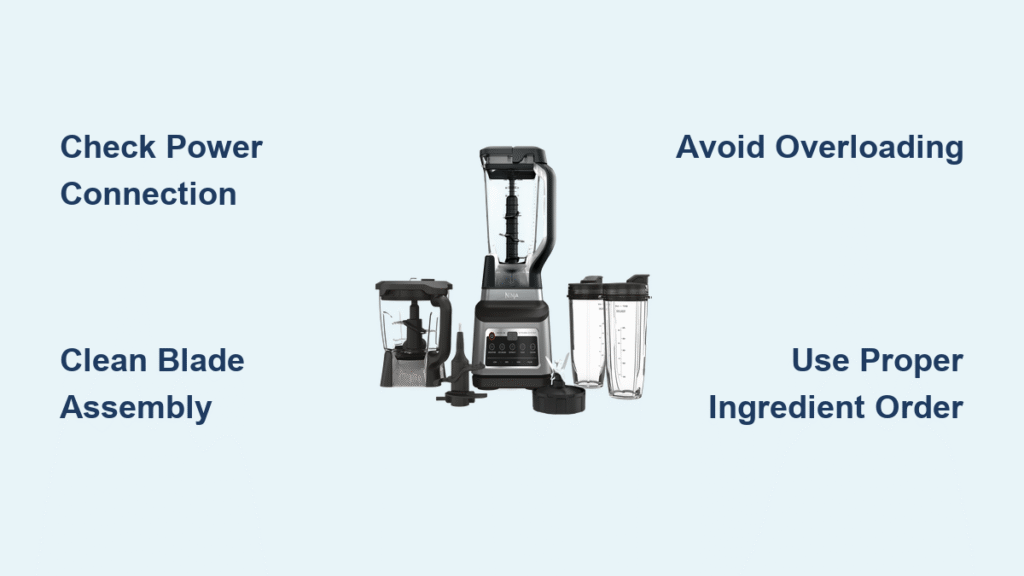
Your smoothie comes out chunky no matter how long you blend. That frozen margarita has ice crystals instead of the silky texture you expected. These frustrating moments happen when your Ninja blender falls short of its smooth blending promise—but most issues have surprisingly simple solutions you can implement today.
This guide walks through every possible cause and fix for rough, uneven blending results. You’ll learn to diagnose problems quickly, implement immediate solutions, and prevent future smoothness issues. Whether your Ninja struggles with ice, frozen fruit, or everyday smoothies, these proven techniques will restore professional-level blending performance.
Power Supply Problems Affecting Smoothness
Verify Electrical Connection First
Start with the basics before assuming major mechanical failure. Check that your power cord sits firmly in both the wall outlet and blender base—loose connections deliver insufficient power for proper blending. Test a different outlet to eliminate house electrical issues, especially if other kitchen appliances work fine elsewhere.
Look for a hidden power switch on the base—some Ninja models position this on the back or side rather than the top. If using an extension cord, ensure it’s rated for kitchen appliances (minimum 14-gauge) and shows no wear or fraying. A weak electrical supply means your motor can’t reach full speed, leaving ingredients partially blended and creating that frustrating chunky texture.
Safety Lock Impact on Performance
Ninja blenders won’t operate at full capacity without proper safety engagement. The cup must click securely into the base, and the lid needs its locking tabs fully aligned with the container. Listen for the distinct click when securing these components—without it, your blender operates at reduced power.
Even slight misalignment reduces motor efficiency by up to 30%. Food debris on connection points prevents full engagement, limiting blade speed. Clean these contact points weekly with a damp cloth to maintain peak performance. Never force the lid or cup into place—if it doesn’t click easily, disassemble and check for obstructions.
Motor Overheating Reduces Blending Power

Thermal Protection Shutdown Signs
Your Ninja contains built-in thermal protection that automatically cuts power when the motor overheats—often mid-blend. This leaves ingredients half-processed and chunky, creating the illusion that your blender isn’t blending smooth. Overheating typically occurs after 2-3 minutes of continuous high-speed blending, especially with dense ingredients.
Allow 15-20 minutes for complete cooling before restarting. Blend in shorter bursts (45-60 seconds), giving 30-second breaks between cycles. During summer months, operate in air-conditioned spaces when possible—ambient temperature significantly affects motor cooling.
Reduce Load to Prevent Motor Strain
An overloaded motor creates weak blending action that fails to achieve smooth results. Check your manual for maximum capacity guidelines—usually 64 ounces for full-size pitchers. Overfilling strains the motor, reducing blade speed and smoothness. Pro tip: When making smoothies, fill only to the 32-ounce line for optimal results.
Cut fibrous vegetables into 1-inch pieces before blending to reduce motor strain. Add ingredients gradually rather than filling the container completely. This approach maintains consistent blade speed throughout the blend cycle, preventing the motor from bogging down and leaving chunks.
Blade Performance Issues Ruin Texture
Clear Blade Jams Safely
Turn off and unplug your blender before investigating blade issues. Remove the cup from the base and use a spatula to dislodge stuck food—never insert fingers near blade edges, even when unplugged. Common jam culprits include frozen fruit chunks, large ice pieces, or fibrous vegetables like celery.
After clearing jams, clean blades thoroughly with warm soapy water. Dried food residue creates friction, slowing rotation and producing uneven results. Soak blade assemblies for stubborn buildup, but never submerge the entire base unit.
Replace Worn Drive Components

The gray rubber drive gear transfers motor power to blades. Over time, these threads wear down—affecting smoothness dramatically. Symptoms include motor running but blades barely turning under normal blending loads. This is the most common cause of “ninja blender not blending smooth” complaints.
Quick fix: Apply JD Weld steel epoxy to rebuild worn gear threads. This $5 repair restores smooth blending performance by filling in the stripped areas. For a permanent solution, contact Ninja—the company often replaces the entire lower unit under warranty for $19.95 shipping, even without proof of purchase.
Ingredient Preparation for Perfect Smoothness
Cut and Layer Ingredients Correctly
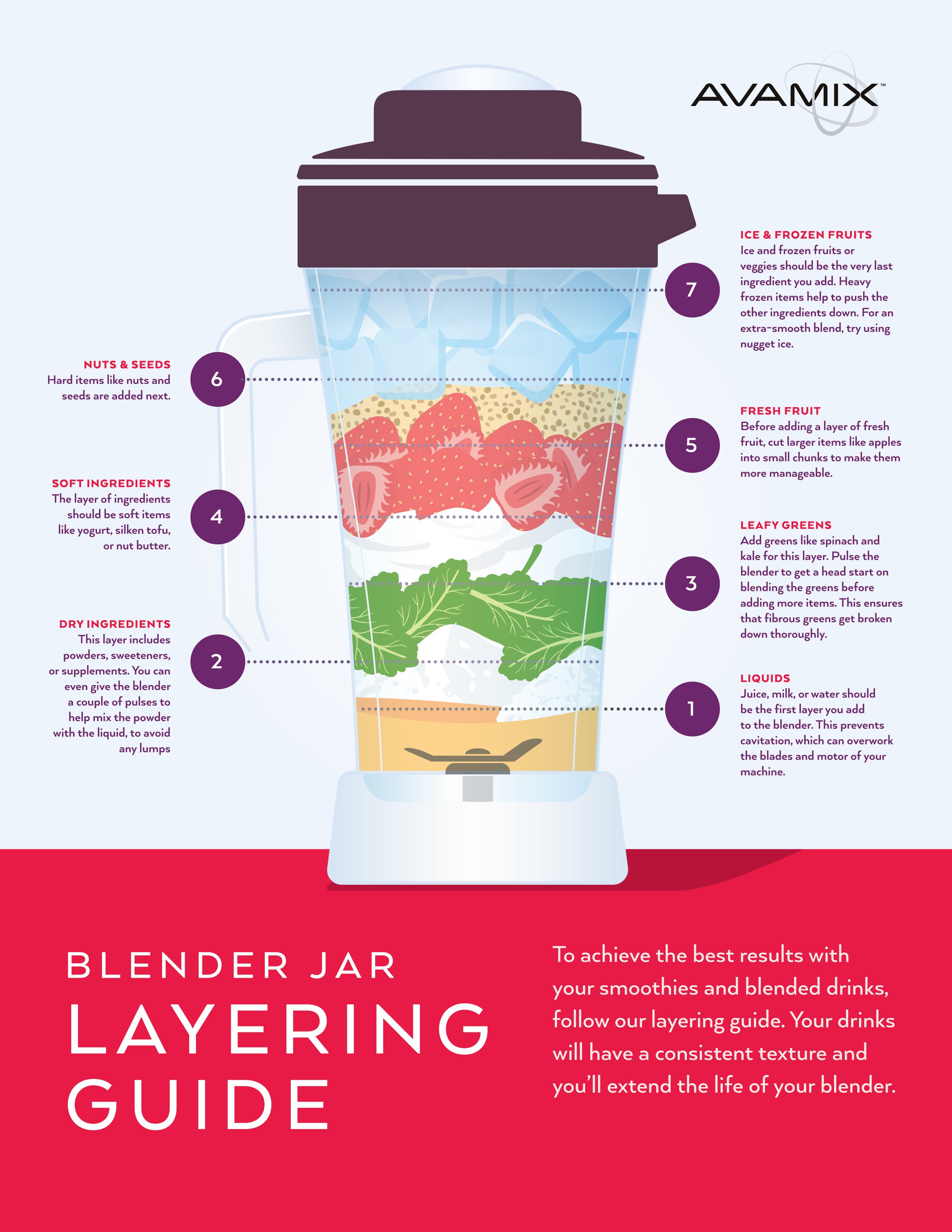
Proper ingredient prep transforms blending results. Always add liquids first—this creates immediate vortex action that pulls ingredients toward the blades. Follow with soft ingredients like yogurt or bananas, then add hard items last. This sequence prevents air pockets and ensures even blending from bottom to top.
Cut large fruits into uniform 1-inch pieces. Layer frozen items on top of fresh ingredients for optimal blade contact. For tough ingredients like kale or spinach, blend greens with liquid first for 30 seconds before adding other components.
Manage Capacity Limits
Never exceed the maximum fill line printed on your container. Overfilling prevents proper circulation, leaving ingredients unblended at the top. Leave 2-3 inches of space for ingredient expansion during blending—especially important with frozen items that expand as they thaw.
For large batches, blend in smaller portions. This approach yields smoother results than overloading the pitcher once. Time-saving tip: Keep a measuring cup near your blender to quickly verify you’re within capacity limits.
Control Texture Variables
Start blending on low speed for 10 seconds, then gradually increase to high. This technique prevents air pockets and ensures all ingredients reach the blades. Use the pulse function 5-6 times for tough items like ice or frozen fruit before switching to continuous blending.
Add liquid if mixtures become too thick—¼ cup at a time until proper vortex forms. Stop blending periodically to scrape down sides with a spatula. These simple steps eliminate most chunky texture issues without requiring mechanical repairs.
Advanced Smooth Blending Techniques
Master the Blending Sequence
Perfect smoothie texture requires specific timing:
- Liquids first (milk, juice, water)
- Soft ingredients (yogurt, fresh fruit)
- Powders (protein, supplements)
- Frozen items (ice, frozen fruit)
- Start low, finish high speed progression
This sequence creates immediate vortex action and prevents blade stalling. For frozen cocktails, use crushed ice instead of cubes and add ¼ cup extra liquid per cup of ice for professional bar-quality results.
Troubleshoot Specific Texture Problems
Ice crystals in frozen drinks: Use crushed ice instead of cubes. Add ¼ cup liquid per cup of ice. Blend for an additional 30 seconds beyond when mixture appears smooth.
Grainy nut butters: Roast nuts first for oil release. Add 1-2 tablespoons neutral oil if mixture seems dry. Blend in 2-minute intervals with cooling breaks.
Fibrous bits in green smoothies: Blend leafy greens with liquid first for 30 seconds. Add remaining ingredients and blend again.
Preventive Maintenance Schedule
Daily Cleaning Routine
Clean your Ninja immediately after each use. Rinse blade assemblies under warm water to prevent food hardening. Check cup bases for trapped debris that could affect tomorrow’s performance—especially around the drive gear area where small food particles accumulate.
Dry all components completely before storage. Moisture left in blade assemblies promotes bacterial growth and affects tomorrow’s smoothness. Never put Ninja cups or blades in the dishwasher unless specifically labeled dishwasher-safe.
Monthly Performance Check
Run a simple test blend with water and ice cubes monthly. Smooth, quiet operation indicates healthy components. Excessive vibration or noise suggests developing issues. Check blade rotation by hand (with blender unplugged)—should spin freely without wobbling.
Any resistance or grinding indicates bearing wear requiring attention. Replace blade assemblies every 6-12 months depending on usage frequency. If smoothies contain visible fruit chunks after full blending cycles, dull blades likely cause the problem.
Warranty and Replacement Solutions
Ninja Customer Service Process
Contact Ninja directly for persistent smoothness issues. The company frequently replaces entire lower units under warranty, even without proof of purchase. Recent customers report receiving newer model replacements for just $19.95 shipping.
When calling, describe symptoms clearly: “blades rotate but produce chunky results” or “motor runs but won’t blend ice smooth.” This specific language helps customer service representatives identify the issue faster and get you the appropriate replacement part.
Final Note: Most Ninja smoothness issues stem from dull blades, worn drive components, or improper ingredient preparation. Start with blade inspection and ingredient technique improvements. For persistent problems, Ninja’s warranty service provides cost-effective solutions that restore professional-level blending results. Regular maintenance prevents 90% of smoothness issues—keep your Ninja performing like new with these simple practices.