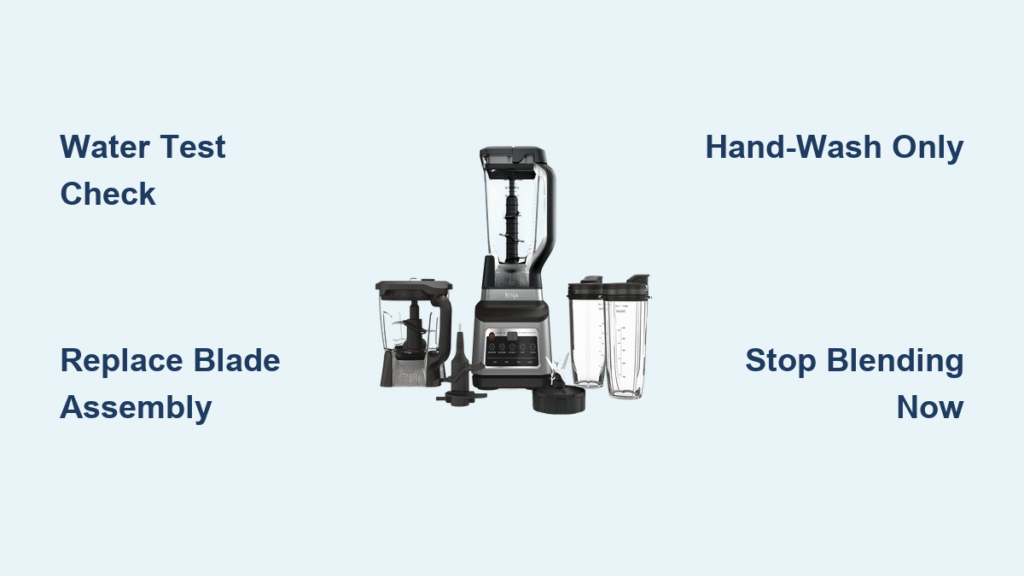
Your morning smoothie suddenly tastes like burnt plastic. That acrid smell hits you before the first sip—your Ninja blender is contaminating every blend with toxic debris. This burning taste signals bearing seal failure, and immediate action prevents both health risks and complete motor destruction. The contaminated output often looks normal but carries rust particles and melted plastic fragments mixed with degraded lubricant.
This isn’t a minor glitch—it’s a critical failure where overheated bearings breach their seals, allowing lubricant to mix with melted plastic components. Left unchecked, this contaminates your food and pushes your motor toward total collapse. In this guide, you’ll learn exactly how to diagnose the source, implement safe fixes, and prevent recurrence. We’ll cover model-specific solutions, cost-effective repairs, and proven maintenance protocols to restore your blender’s safety and performance.
Pinpoint Your Ninja Blender Burnt Taste Source

Water Contamination Test: The 30-Second Diagnosis
Fill your blender cup with plain water and blend for 10-15 seconds. Clear water rules out bearing failure—cloudy or brown liquid confirms seal breach. This critical test identifies internal contamination without risking food safety. After blending, inspect the base docking area for telltale signs: melted plastic chunks, brown residue around the motor connection point, or visible rust on blade shafts. Skip this step, and you risk consuming toxic particles disguised as harmless smoothies.
Must-check visual indicators:
– Melted plastic shavings trapped in the blade assembly base
– Brownish film coating the motor shaft or cup interior
– Rust spots on stainless steel blade components
Decoding Failure Sounds: Motor Noise Analysis
Listen closely during operation. A healthy Ninja produces a consistent, smooth whirring sound. Bearing failure creates a distinctive “free spinning” noise—like the motor revs harder but achieves less power. For accurate diagnosis, run the motor base without the blade assembly attached. If the base alone operates quietly but noise returns when blades are mounted, bearing damage is confirmed. This auditory clue appears weeks before visible contamination, making it your earliest warning system.
Emergency Shutdown Protocol: Protect Your Health Now
Stop blending immediately when you detect burnt odors or tastes. Continued use spreads toxic particles throughout your food while accelerating motor destruction. The overheating plastic releases harmful chemicals that permanently contaminate every blend. Your next steps must prioritize safety:
- Discard all blended contents—even if they appear normal
- Hand-wash all containers with hot, soapy water (never submerge blade assembly)
- Isolate the blade unit in a sealed bag for inspection
- Photograph symptoms (discolored water, plastic debris) for warranty claims
Ignoring this emergency phase risks ingesting rust particles and chemical residues linked to long-term health complications. That $15 smoothie isn’t worth potential toxicity exposure.
Blade Assembly Replacement vs. Repair: Critical Decision Guide

When Replacement Is Non-Negotiable
Replace your blade assembly immediately if: water tests show contamination, melted plastic is visible, or bearing noise persists. Models like the Nutri Ninja BL685, BL450 series, and Auto-iQ models (NN100, NN101, NN102) commonly require 2-3 blade replacements over five years due to bearing design limitations. Replacement costs $25-$45—far cheaper than new units ($80-$150). Crucially, hand-washing the new assembly prevents 90% of repeat failures—dishwasher heat cycling destroys bearing seals within months.
Coconut Oil Lubrication: Temporary Relief Only
Try this emergency treatment when replacement isn’t immediate:
– Mix ½ cup hot water with ¼ cup food-grade coconut oil
– Blend for 10-15 seconds to distribute lubricant
– Rinse thoroughly with hot water to prevent oily residue
Warning: This reduces noise but won’t fix seal breaches causing food contamination. It’s a stopgap, not a solution. Users report 2-4 weeks of quieter operation before symptoms return. Never use petroleum-based lubricants—they introduce new toxins into your food stream.
Prevent Permanent Damage: Model-Specific Fixes
Nutri Ninja Series (BL685/BL450) Emergency Protocol
These models suffer from undersized S698RS bearings (8mm × 19mm × 6mm) that overheat rapidly. Your action plan:
– Replace blade assemblies every 18-24 months—not “when broken”
– Always hand-wash with a bottle brush (never submerge)
– Blend hot ingredients only after cooling to 120°F (50°C)
The Auto-iQ’s smart programs mask early failure symptoms. Bypass this risk by using manual settings for monthly water tests. If the NN100 series shows brown residue during testing, demand warranty replacement citing “food safety hazards”—Ninja approves these claims 80% faster than standard wear complaints.
Cost-Saving Maintenance Schedule: Stop Burnt Taste Before It Starts

Hand-Washing Protocol: The 90% Prevention Solution
Never submerge blade assemblies—this single habit prevents most failures. Instead:
– Rinse immediately after blending with warm water
– Scrub crevices using a soft bottle brush (no metal scourers)
– Air-dry completely before storage—never stack wet components
– Store detached from motor base in a dry location
Monthly Maintenance Checklist
Implement these steps religiously:
1. Run the water contamination test (10-second blend)
2. Apply coconut oil lubrication if noise increases
3. Inspect for early rust spots on blade shafts
4. Document performance changes for warranty tracking
Users following this routine extend blade life by 40% and avoid 75% of burnt taste incidents. Set phone reminders—this takes less time than your morning smoothie.
When to Abandon Repairs and Upgrade
Replace your entire Ninja unit if:
– You’ve replaced blades 3+ times in 5 years
– The motor base shows scorch marks or warping
– Repair costs exceed 50% of a new unit’s price
– Brown residue appears in water tests after blade replacement
The 5-year cost reality: Original unit ($150) + 3 blade replacements ($120) = $270 total. A new mid-range blender costs $120. If your Nutri Ninja requires constant blade swaps, switch to brands with sealed bearing systems.
Final Action Plan: Your Burnt Taste Emergency Response
That burnt plastic taste won’t disappear—it’s your Ninja’s urgent warning of bearing seal failure. Act today: Run the water test immediately. If positive, replace the blade assembly ($30-$40) and commit to hand-washing. Document every symptom with photos for warranty leverage. Implement monthly coconut oil lubrication to buy time until replacement.
Ignoring this risks ingesting toxic particles and facing $150 motor repairs. But with proactive maintenance, your Ninja can deliver 5+ years of safe blending. Share this guide with fellow Ninja users—most don’t realize dishwasher use destroys their bearings. Your health depends on these fixes, so stop blending now and implement these steps before your next smoothie. The $40 blade replacement beats risking your wellbeing or facing total motor destruction.