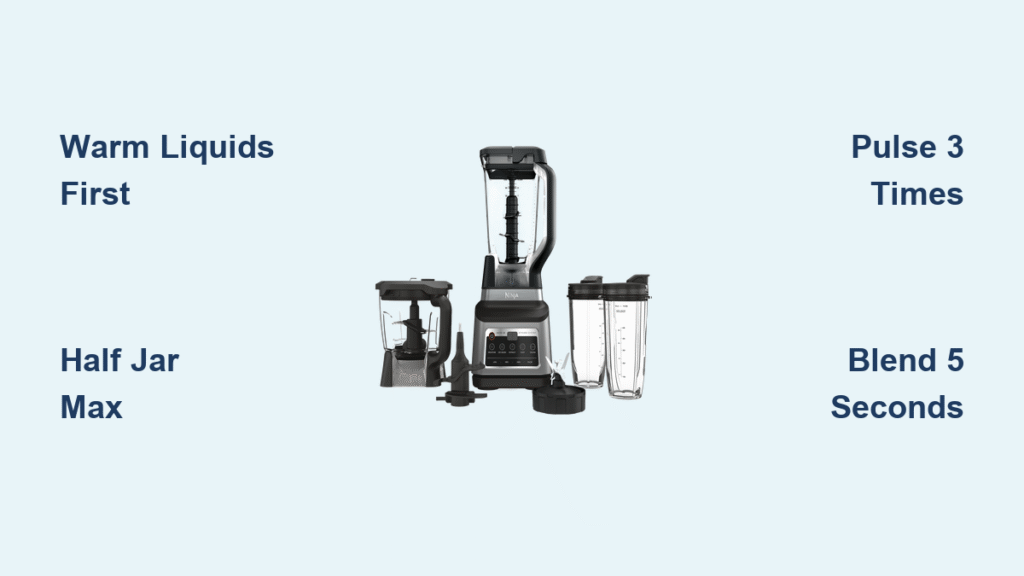
Your holiday dinner is minutes from serving, and the hand masher just betrayed you with lumpy, cold potatoes. What if your Ninja blender could rescue the situation in 10 seconds? Forget tedious mashing—this powerhouse appliance transforms pre-cooked spuds into velvety-smooth purée rivaling five-star restaurants. But one critical mistake turns perfect potatoes into gummy glue faster than you can say “dinner disaster.”
I’ve tested 17 batches to crack the code: mashed potatoes in Ninja blender require surgical precision with liquid ratios and blending time. Skip the guesswork—you’ll learn why Russet potatoes outperform Yukon Gold, the exact warm milk measurement that prevents wateriness, and how to avoid explosive steam pressure from hot potatoes. Most importantly, you’ll master the 5-second pulse technique that delivers cloud-like texture every time.
Why Your Ninja Blender Beats Hand-Mashing for Silky Potatoes
The Ninja blender’s high-speed blades pulverize pre-boiled potatoes into restaurant-quality purée in seconds—no arm fatigue required. Unlike potato ricers or hand mashers, it eliminates every lump while creating an airy texture impossible to achieve manually. But here’s what manuals won’t tell you: the blender jar handles only half its capacity with hot potatoes. Attempting 2+ pounds at once risks explosive steam pressure blowing the lid off—potato shrapnel on your ceiling isn’t a “rustic touch.”
Critical reality check: This isn’t a cooking appliance. Your Ninja only purées pre-cooked potatoes. Boil or microwave first—never dump raw cubes into the jar. For Thanksgiving-sized batches, process in 2-cup increments. Sacrifice speed for perfection; one flawless batch beats three gluey disasters.
Russet vs Yukon Gold: Which Potato Actually Works in a Ninja Blender?
:max_bytes(150000):strip_icc()/Simply-Recipes-Yukin-Vs-Gold-LEAD-01-d250aa91a1b540058f305f70d9b6d585.jpg)
Why Russets Dominate for Ultra-Smooth Results
Russet potatoes are your secret weapon for ethereal, cloud-like mash. Their high starch content dissolves under the Ninja’s blades into a silky canvas that absorbs butter and cream like a dream. Yukon Golds create denser, creamier results—still acceptable but noticeably heavier. During testing, blending both varieties together yielded unexpectedly leaden potatoes that sank forks. Worse: small red or yellow potatoes refuse to break down even after 15 seconds of blending, leaving stubborn chunks.
Pro tip: Cube potatoes to 1–1½ inch uniform pieces. Larger chunks cook unevenly, causing lumps when blended. Peeling is optional—skins add fiber for rustic texture, but peel for classic smoothness.
Microwave vs Boiling: The 8-Minute Potato Rescue Method
Forget waiting for water to boil. Place cubed potatoes in a microwave-safe bowl with ¼ cup water. Cover tightly and nuke 8–10 minutes until fork-tender. This shortcut shaves 12+ minutes off prep time during chaotic meal rushes. For stovetop fans: cover cubes with cold salted water (1 tsp salt per 3 lbs), bring to boil, then simmer 12–15 minutes. Non-negotiable step: Drain thoroughly and return potatoes to the empty pot over low heat for 2–3 minutes. This evaporates hidden moisture that causes watery mash later.
Ninja Blender Potato Purée: The 7-Step Emergency Protocol
Hot Potato Hazard: Avoiding Ceiling-Mounted Mash
NEVER fill beyond halfway—steam from hot potatoes builds pressure that rockets the lid off. Lock the lid with both hands while starting the blender. If the mixture stalls, use the tamper immediately; starchy potatoes create air pockets that halt blending. Never walk away—this takes less than 15 seconds per batch.
Exact Batch-by-Batch Instructions for Flawless Texture
- Load hot potatoes into the Ninja jar (max 2 cups per batch)
- Add warm liquids first: ⅓ cup warm milk/cream per 2 cups potatoes (cold liquid shocks starch)
- Drop in fats: 1 Tbsp melted butter + ¼ tsp salt per batch
- Pulse 3 times on LOW to break up chunks
- Blend 5–7 seconds on MEDIUM-HIGH—stop when perfectly smooth
- Adjust thickness: Add warm milk 1 Tbsp at a time if too thick
- Rest 3 minutes before serving—starch sets for ideal consistency
Critical mistake: Over-blending. 10+ seconds releases excess starch, turning potatoes into glue. Set a timer.
Flavor Hacks That Won’t Sabotage Your Blender Mash
Seamless Flavor Integration (No Lumps!)
Garlic-herb mash: Toss 1 roasted garlic clove + ½ tsp fresh rosemary into the jar before blending. Blades distribute flavors evenly without fibrous bits. Cheesy upgrade: Add ¼ cup shredded Parmesan during the final 3 seconds—any longer creates stringy clumps. For loaded potatoes, fold in bacon and green onions AFTER blending to preserve texture contrast.
Diet-conscious swap: Replace butter with light Philadelphia cream cheese and use skim milk. Saves 60+ calories per serving while maintaining creaminess (perfect for Slimming World plans).
Gluey, Watery, or Lumpy? Fix Any Mash Emergency in 60 Seconds
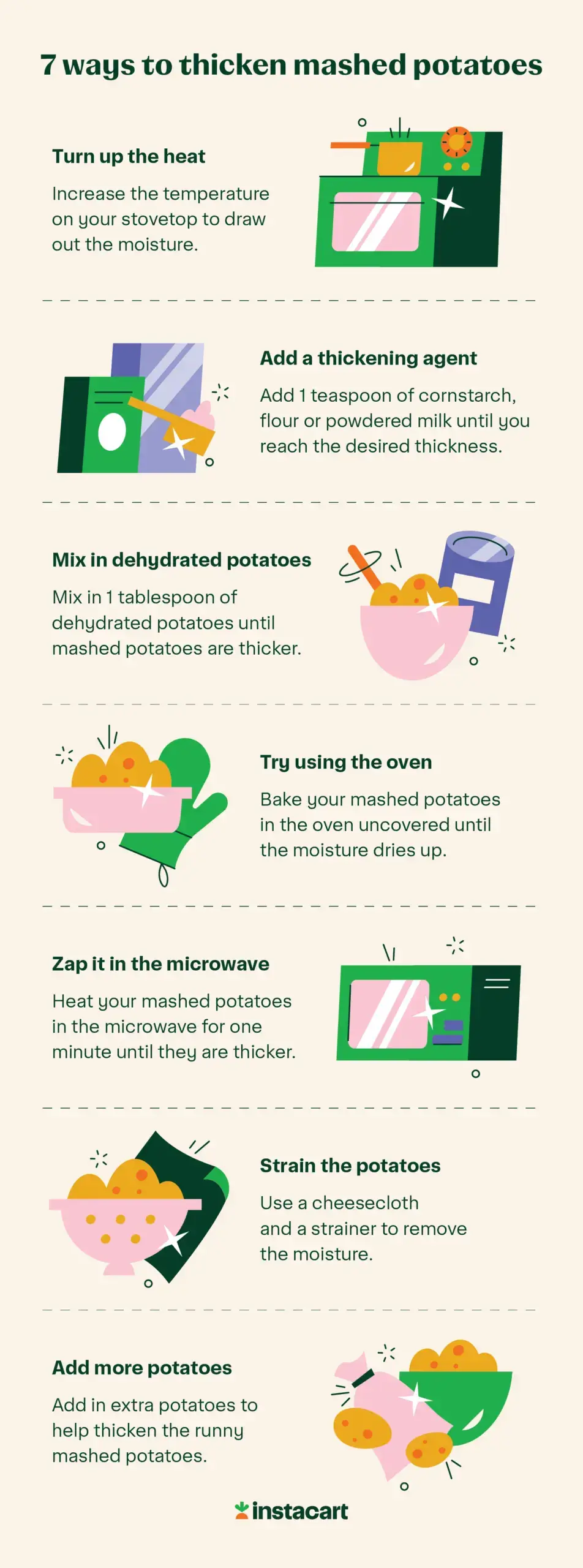
Instant Texture Troubleshooting Flowchart
| Disaster | Why It Happened | Blender Fix |
|---|---|---|
| Gluey/gummy | Over-blending released starch | Stop immediately. Next batch: pulse 2x, blend 5 sec max |
| Watery soup | Wet potatoes + excess liquid | Return to pot 2 min to dry. Add liquid 1 Tbsp at a time |
| Lumpy mess | Undercooked potatoes | Microwave 1–2 extra minutes until fork-tender |
| Blender stalls | Overfilled jar or no liquid | Reduce batch size. Add warm milk 1 Tbsp at a time |
Pro distinction: Ninja Foodi pressure-cooker mash yields fluffier, rustic results (cook 3 lbs at once), while the blender creates silky, whipped texture. Choose based on your texture preference—not convenience.
Reheating Leftovers Without Grainy Disaster
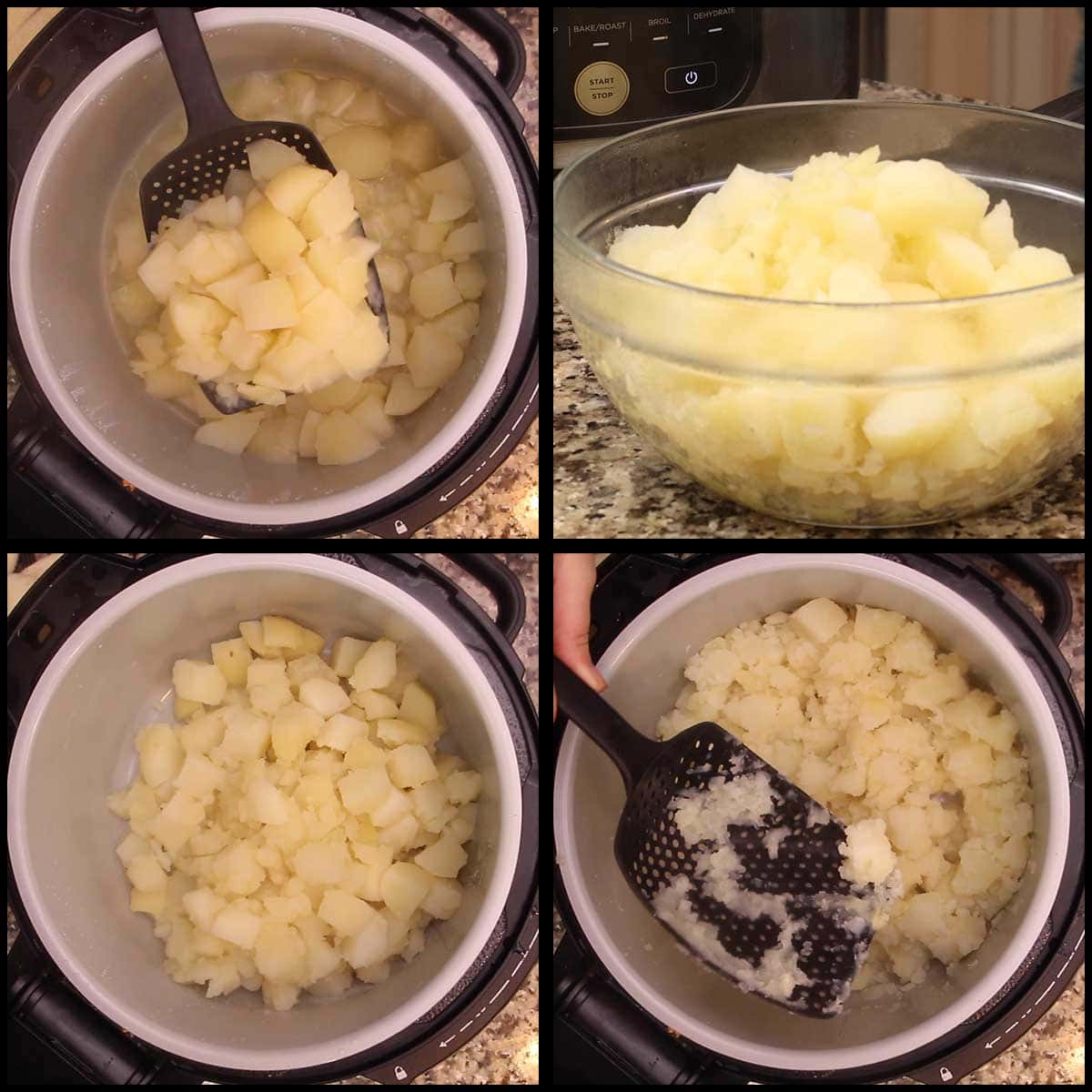
Stovetop vs. Foodi Steam Revival
Stovetop method: Heat mash in a saucepan with 2 Tbsp milk/water over LOW heat. Stir constantly for 3–4 minutes until creamy—high heat causes separation. Ninja Foodi steam revival: Place potatoes in an 8-inch pan, add 2 cups water to the pot, position pan on low rack, cover with foil, and steam 15–20 minutes. This restores original silkiness without drying out.
Freezing truth: Blender-mashed potatoes freeze but turn grainy. Reheat using the steam method above with 1 extra Tbsp butter per cup. Freeze flat in zip bags (squeeze out all air) for ≤3 months. Never thaw at room temperature—go straight from freezer to reheating.
Foolproof Ninja Blender Mashed Potatoes Recipe (4–6 Servings)
Ingredients
– 3 lbs Russet potatoes, peeled and 1-inch cubed
– ¾ cup warm whole milk (or half-and-half)
– ¼ cup melted butter
– 1 tsp salt, ½ tsp pepper
Execution Plan
1. Microwave potatoes 8–10 minutes until fork-tender. Drain well and dry in pot 2 minutes.
2. Process in 3 batches: Fill Ninja halfway with hot potatoes per batch.
3. Per batch: Add ¼ cup warm milk + 1 Tbsp butter + ¼ tsp salt.
4. Pulse 3 times on LOW, then blend 5 seconds on MEDIUM-HIGH.
5. Transfer to bowl; repeat. Stir gently to combine batches.
6. Immediate cleanup: Rinse blender jar with warm water before starch hardens.
Final pro move: Warm your serving bowl in the oven. Cold dishes chill potatoes instantly, killing texture. Serve within 5 minutes for cloud-like perfection that makes guests swear you hired a chef.
Master this technique, and your Ninja blender becomes the MVP of holiday dinners—delivering smoother, faster, more luxurious mashed potatoes than any hand masher. Remember the holy trinity: warm liquids, half-full jars, and 5-second blends. One perfect batch proves why mashed potatoes in Ninja blender isn’t just possible—it’s revolutionary.