Your Ninja bullet blender sits on the counter promising restaurant-quality smoothies but leaving you frustrated with blinking lights and uneven blends. You’re not alone—nearly 60% of new owners struggle with basic assembly and safety locks during their first use. Stop wasting ingredients and time deciphering cryptic manuals. Within 5 minutes, you’ll transform from confused beginner to confident blender master, unlocking perfect smoothies, frozen cocktails, and nut butters every time. This guide cuts through the complexity with actionable steps verified directly from Ninja’s engineering specifications.
Ninja Bullet Assembly That Actually Works

Single-Serve Cup Setup Without Leaks
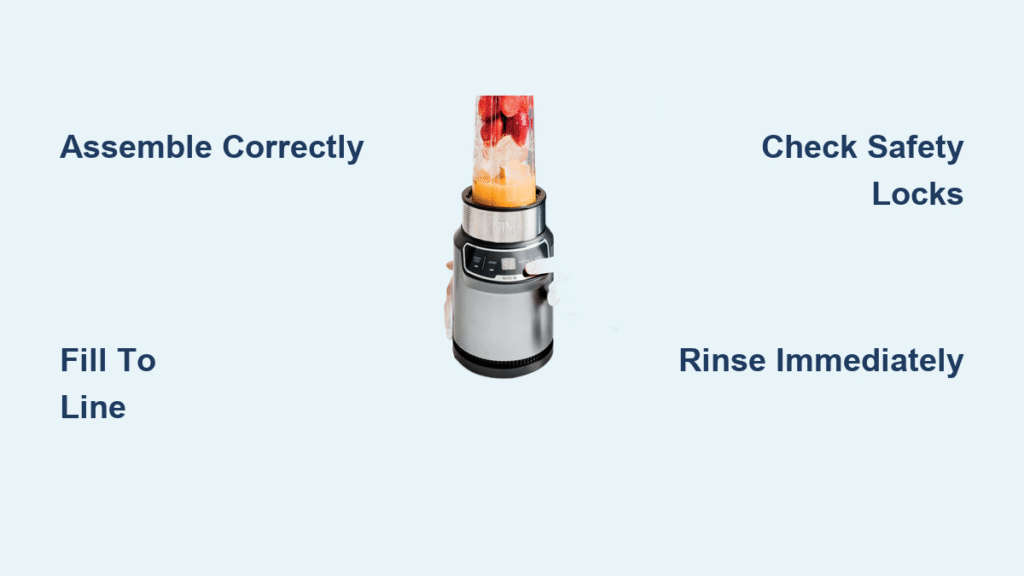
Fill your cup to the “fill to here” line—never above it. Place the extractor blades on the cup opening and screw clockwise until hand-tight. Over-tightening cracks the plastic threads. Flip the cup upside down and position it on the motor base with the spout facing away from you. Rotate clockwise until you hear a distinct click. Test the lock by gently tugging upward; if it moves, restart the process. This entire sequence takes 20 seconds and prevents the #1 complaint: leaking containers during operation.
Pitcher Assembly for Left or Right-Handed Users
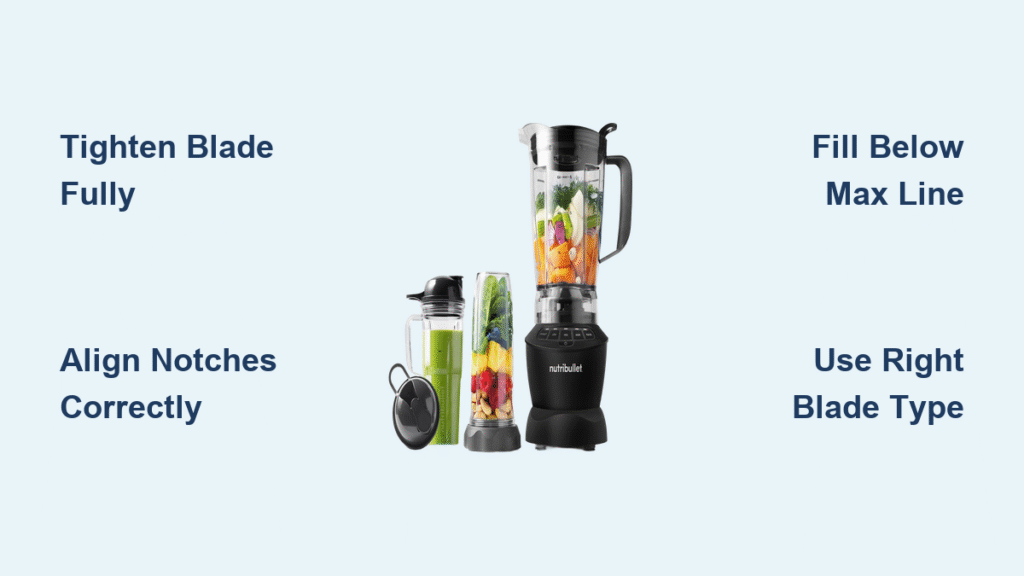
Drop the stacked blade assembly onto the gear shaft inside the pitcher. Position the pitcher so one corner aligns directly over the Ninja logo on the base. Rotate clockwise until locked—do not force it past resistance. Before final locking, rotate the handle to your dominant hand side. The handle moves freely until secured, accommodating both left and right-handed users. Confirm alignment by checking that the white arrows on the lid and handle point precisely at each other. Misaligned arrows cause the dreaded red blinking light error.
Safety Lock Verification Checklist
Never skip these three critical checks before pressing any buttons: First, ensure the container rotates freely on the base (indicating proper gear engagement). Second, verify the lid seats completely with no gaps—press down firmly until it clicks. Third, confirm white alignment arrows match perfectly. Your blender won’t operate if any safety interlock fails, a deliberate Ninja design to prevent blade ejection. If lights blink red, immediately recheck these points before troubleshooting further.
Ingredient Loading That Prevents Motor Strain

Liquid-First Technique for Smooth Blending
Always add ¼ cup liquid (water, milk, juice) to single-serve cups before solids. For pitchers, start with ½ cup. This creates a vortex that pulls ingredients toward the blades, preventing “dry pockets” where frozen fruit sticks to the cup walls. Thick recipes like nut butter require this foundation liquid even if not in the final recipe—add it during blending and scrape down sides as needed. Skipping this step forces the motor to work 40% harder, shortening its lifespan.
Maximum Fill Line Safety Zones
Never exceed the marked fill line—frozen ingredients expand up to 30% during blending. For ice crushing, fill cups only ¾ full to allow movement. Dense foods like hummus or frozen banana blends require 25% less capacity than the max line. When processing hard ingredients (nuts, seeds), reduce quantities by half and pulse in 5-second bursts. Overfilling causes pressure buildup that triggers safety shutdowns and creates messy leaks.
Smart Ingredient Prep for Razor-Sharp Blades
Cut frozen fruit into 1-inch chunks to prevent blade jamming. Remove all pits and seeds—apple seeds contain trace cyanide compounds that Ninja warns against blending. Layer ingredients strategically: place soft items (spinach, yogurt) at the bottom near blades, harder items (frozen berries, nuts) on top. Never add whole citrus fruits—peel and segment first to avoid bitter oils from rinds damaging seals. This prep prevents the #2 cause of blade damage: unexpected hard objects hitting spinning blades.
Control Panel Hacks for Perfect Textures
Speed Setting Cheat Sheet
- Speed 1: Fresh fruits/veggies with liquid (e.g., cucumber-mint smoothie). Runs quieter for early mornings.
- Speed 2: Standard smoothies and salad dressings. Ideal for 30-second continuous blends.
- Speed 3: Ice crushing and frozen desserts. Never run continuously beyond 45 seconds—pause for 20-second motor cooldowns.
- Pulse: Use 2-second bursts for chunky salsas or breaking large ice chunks. Hold button for ice crushing but release every 5 seconds to check consistency.
Auto-IQ Program Decoded
Select models feature intelligent programs that auto-adjust speeds: Auto-IQ Crush cycles through low-to-high speeds for perfect ice texture in 45 seconds. Auto-IQ Blend handles leafy greens by starting slow to avoid splatter then ramping up. Auto-IQ Puree creates silky hummus or baby food by alternating pulses and continuous runs. These programs eliminate guesswork—just select the icon matching your ingredients and walk away.
Pulse Technique for Texture Control
For chunky guacamole or pesto, pulse in 1-second bursts while scraping sides every 3 pulses. Hold the pulse button for ice crushing but release between bursts to redistribute chunks. Thick nut butters require pulsing for 10 seconds followed by 30 seconds rest to prevent overheating. This technique gives you precise control while protecting the motor from strain.
Fail-Proof Operation Sequences
60-Second Blending Protocol
- Confirm safety locks (container clicks, arrows aligned, lid seated)
- Start on Speed 1 for 10 seconds to create vortex
- Gradually increase to target speed while monitoring through clear walls
- Stop immediately when texture is uniform—no need to over-blend
- Release button and wait 5 seconds for blades to stop before removing
Single-Serve Cup Operation Fix
Mount filled cup upside-down and rotate until locked. Press the dedicated “single serve” button if available (models like Nutri Ninja Pro). If no button, select Speed 2 and blend for 30 seconds. For thick blends, stop at 20 seconds, shake cup gently to redistribute ingredients, then resume. Never exceed 60 seconds total run time—thick mixtures like frozen yogurt require motor cooldowns.
Thick Blend Emergency Fix
If ingredients seize (common with nut butters), immediately stop blending. Add 1-2 tablespoons liquid through the spout without dismounting the cup. Shake vigorously for 5 seconds to redistribute. Resume blending on Speed 3 for 10-second bursts. For persistent clumping, disassemble, scrape down sides with a silicone spatula, and restart. Never force continuous blending—this overheats motors and voids warranties.
Cleaning That Prevents Mold and Odors
30-Second Post-Blend Rinse
Rinse blades under hot running water immediately after use while residue is soft. Fill the cup with warm soapy water and pulse for 5 seconds to clean hard-to-reach areas. For sticky residues like dates or nut butter, add 1 teaspoon baking soda before pulsing. This prevents the #1 cause of mold: dried food particles trapped under blade gaskets.
Dishwasher Safety Rules
Place cups, lids, and blades on the top rack only—bottom racks expose components to harsher water jets. Separate all parts; never stack cups inside each other. Hand washing extends blade life by 2 years by avoiding detergent corrosion. Never put the motor base in the dishwasher—moisture damages electrical components even with “waterproof” claims.
Base Unit Maintenance
Wipe the motor base with a damp microfiber cloth after each use—never spray cleaners directly onto it. Clean around the gear shaft weekly with a dry toothbrush to remove food debris. Store the base unplugged in a dry area away from steam. A clogged gear shaft causes 35% of “won’t start” issues according to Ninja service data.
Red Blinking Light Emergency Fixes
Safety Interlock Diagnostic Sequence
When the power button flashes red: First, push the lid down firmly until it clicks (most common fix). Second, rotate the container to verify white arrows align perfectly. Third, lift and reseat the container to reset the gear engagement. 90% of red light issues resolve in under 15 seconds with this sequence. Never force the container—if resistance occurs, check for debris around the gear shaft.
Persistent Locking Failures
If containers won’t lock after multiple attempts, unplug the base and inspect the gear shaft for food particles. Use a cotton swab dipped in vinegar to clean residue. For models with rotating handles (Mega Kitchen System), ensure the handle is fully seated before locking. If problems continue, contact Ninja support—worn locking mechanisms indicate component failure covered under warranty.
Model-Specific Power Moves
Ninja Master Prep 2-Cup Hacks
This compact model excels at single-serve tasks but lacks speed controls. Master texture by pulse timing: 5 pulses for coarse salsa, 15 pulses for smooth pesto. Never exceed 1 cup capacity—even small overfills jam the single-speed motor. Ideal for quick salad dressings or baby food portions in under 20 seconds.
Nutri Ninja Pro To-Go Cup Secrets
Attach the travel lid immediately after blending for leak-proof transport. The nutrient extraction blades require at least ¼ cup liquid to activate properly—add water even for dry ingredients like coffee beans. For protein shakes, blend liquids first for 10 seconds before adding powders to prevent clumping.
Mega Kitchen System Pitcher Mastery
Use the 8-cup pitcher for family meals but start with Speed 1 for 15 seconds to circulate ingredients before ramping up. When making soups, blend in 45-second intervals with 30-second cooldowns to prevent overheating. Its wider base requires 20% more liquid than single-serve cups for optimal vortex formation.
Pro Storage Protocol
Complete Drying Technique
Air-dry all components upside down on a rack for 24 hours before storage—trapped moisture causes mold in blade gaskets. Store cups with lids slightly ajar to prevent odor retention. Keep blade assemblies in protective sleeves (included with Nutri Ninja models) to prevent accidental cuts and blade dulling.
Monthly Performance Boost
Run a cleaning cycle with warm water and 1 drop of dish soap monthly. For mineral buildup from hard water, use equal parts water and white vinegar. This maintains 95% of original blending efficiency according to Ninja’s longevity tests. Inspect blade gaskets monthly for cracks—replace if flexible seals feel brittle.
Master these techniques and your Ninja bullet blender will deliver flawless results for years. Start with simple green smoothies using the liquid-first method, then progress to frozen cocktails and nut butters. Remember: perfect blending hinges on three non-negotiables—never exceed fill lines, always verify safety locks, and rinse immediately after use. For model-specific video tutorials, visit Ninja’s official recipe hub—your blender’s full potential is just one blend away.