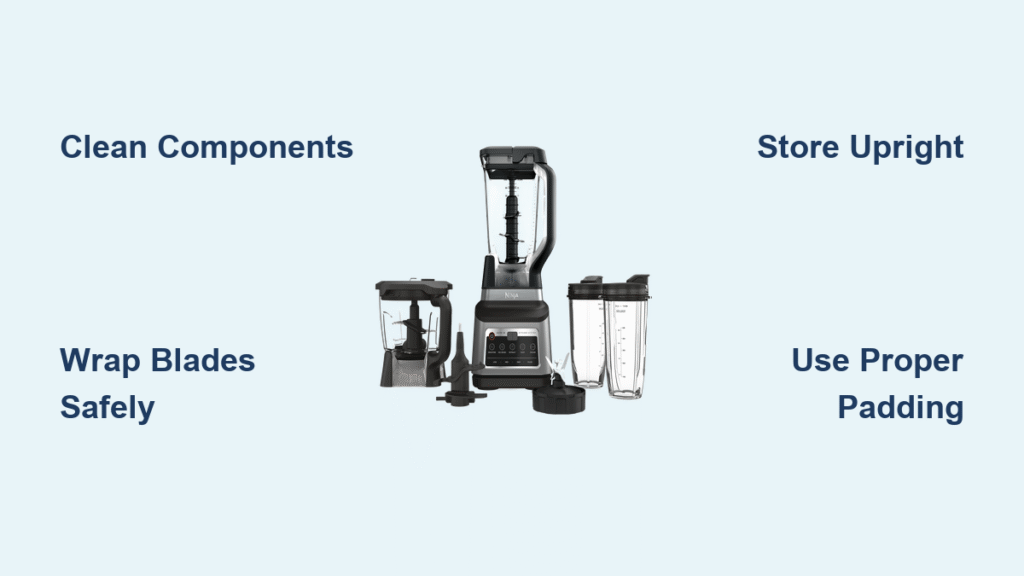
Your Ninja blender has whipped up countless smoothies and crushed frozen fruit with ease. Now that you’re moving apartments or clearing counter space for seasonal storage, properly repacking your Ninja blender becomes essential. Skipping careful repacking risks cracked pitchers, damaged motors, and lost accessories—turning your reliable kitchen partner into a $100 replacement project. This guide delivers exact steps to protect every component from the motor base to those razor-sharp blades, whether you have original packaging or need smart alternatives.
Most users toss components into a box without preparation, only to discover shattered glass or corroded blades months later. But with 15 minutes of strategic packing, you’ll ensure your Ninja emerges ready for action when unpacked. You’ll learn motor base positioning tricks, blade storage safety protocols, and long-term climate controls that prevent 90% of storage disasters.
Clean and Dry Every Component Before Packing
Remove Hidden Food Residue from Blade Assemblies
Start by disassembling your entire Ninja system—remove blades from pitchers, detach all lids, and empty accessory compartments. Wash each piece in warm soapy water, using a soft brush to scrub blade crevices where spinach fibers and nut butter hide. Never skip this step: residual moisture breeds mold between blades during storage, creating toxic black spots that ruin future smoothies.
Air-dry components upright for 2-3 hours minimum. Speed drying with a microfiber cloth, but never store damp parts—trapped moisture causes gasket warping and metal corrosion. Check pitcher spouts and blade screw threads with a flashlight; any lingering dampness here leads to sticky buildup when you restart after storage.
Photograph Your Component Layout
Snap clear photos of how accessories nest in the original box before disassembly. These visual references prevent the “where does this gasket go?” panic months later. If you’ve lost the original packaging, create a digital inventory list noting:
– Pitcher model numbers (BL660 vs. BL620)
– Blade types (stacked vs. single-serve)
– Accessory counts (lids, tamper tools)
This takes 60 seconds but saves 20 minutes during unpacking later.
Position Motor Base to Prevent Internal Damage

Wrap Ventilation Openings Without Blocking Airflow
Your motor base contains delicate electronics that overheat if stored improperly. Wrap the entire unit in 3/4-inch bubble wrap, but never cover ventilation slots—these require airflow even in storage. Cut foam pieces to fit around intake vents while protecting the housing. Secure wraps with paper tape (plastic tape leaves residue on rubber feet).
Critical mistake alert: Never lay the motor base horizontally. Always store it upright as designed—sideways positioning causes lubricants to pool in windings, leading to electrical shorts when restarted. Test stability by gently shaking the wrapped unit; if you hear internal movement, add more cushioning.
Choose Boxes That Eliminate Component Shifting
Use the original box if available—it has molded foam cutouts engineered for your exact model. Without it, select a double-wall cardboard box allowing 3 inches of padding on all sides. Insert your wrapped motor base and shake the empty box; if you hear movement, the box is too large. Fill excess space with crumpled kraft paper before adding components.
Store Blades Without Causing Injury or Damage
Wrap Each Blade Assembly Separately Using Protective Sleeves
Treat blades like surgical instruments—they demand individual attention. Slide each blade unit into a paper towel sleeve first, then wrap in bubble wrap with edges folded inward to cover sharp tips. Secure with rubber bands (never tape directly on blades). Label every package: “SHARP BLADES – NINJA BL660” prevents painful unpacking accidents.
Store wrapped blades in rigid containers like plastic food storage boxes—not loose in the main box. Glass pitchers stored against blades develop hairline cracks that shatter during first post-storage use. Keep blades in side compartments away from fragile components.
Organize Multiple Blade Types Systematically
For systems with stacked and single-serve blades (like Auto-iQ models), use a tiered storage approach:
1. Place each blade type in separate labeled zip bags
2. Store bags inside a hard-shell container
3. Position the container against the box wall
This prevents cross-contamination where blade teeth scratch pitcher interiors during transit.
Protect Pitchers and Cups From Stress Fractures

Apply Strategic Padding at Vulnerability Points
Glass pitchers require triple-layer protection at handle bases and spouts—their weakest points. Wrap handles in foam pipe insulation before bubble wrap. For plastic cups, focus on lip reinforcement: place cardboard rings inside cup openings to prevent crushing. Never stack pitchers without cushioning—even if they nested originally, storage pressure causes microscopic cracks.
Store large pitchers upright with 2 inches of padding beneath the base. If horizontal storage is unavoidable, position the pitcher sideways with heaviest section against cushioned walls. Fill void spaces with packing peanuts to eliminate shifting during moves.
Secure Small Parts Against Loss and Tangling
Group Accessories Using the Three-Bag System
Small components vanish without organization. Implement this foolproof method:
– Lid bag: All pitcher and cup lids with rubber seals attached
– Tool bag: Blade remover tools and tamper accessories
– Cord bag: Power cord vacuum-sealed to prevent kinks
Place silica gel packets in each bag—especially tool bags containing metal parts—to combat humidity corrosion.
Double-Label Every Storage Container
Write model numbers directly on storage bags with permanent marker. Then tape duplicate labels to the outside of the main box. Include:
– “BL660 MOTOR BASE”
– “SINGLE-SERVE CUPS – 4”
– “STACKED BLADE ASSEMBLY”
This redundancy prevents mix-ups if you own multiple Ninja products.
Pack Components in Damage-Preventing Sequence

Follow the Bottom-Up Placement Protocol
Pack in this exact order to distribute weight safely:
1. Foundation: 2-inch foam layer at box bottom
2. Motor base: Centered and upright
3. Blades: In corner compartments
4. Pitchers: Around motor base like puzzle pieces
5. Small parts: In remaining gaps
6. Top layer: Final foam shield
Weight distribution rule: Never place pitchers atop the motor base. Heavy components must always rest at the bottom—reversing this sequence cracks pitcher bases under pressure.
Fill All Void Spaces With Cushioning Material
Gaps cause catastrophic shifting during moves. Crumple acid-free paper into irregular shapes to fill odd spaces between components. Test by shaking the sealed box—you should hear complete silence. For long-term storage, add foam corner braces to protect pitcher edges.
Implement Climate Controls for Long-Term Storage
Maintain Humidity Below 60% in Storage Areas
Store boxes in climate-controlled spaces between 60-75°F. Place hygrometers inside storage rooms to monitor humidity—exceeding 60% causes rubber gasket deterioration and metal corrosion. Elevate boxes 6 inches off concrete floors using pallets to prevent moisture wicking.
Replace silica gel packets every 6 months in humid climates. These desiccants lose effectiveness after absorbing maximum moisture, leaving blades vulnerable to rust.
Schedule Quarterly Storage Inspections
Set phone reminders every 90 days to check stored blenders. Look for:
– Box discoloration (indicates moisture intrusion)
– Pest evidence like droppings or gnaw marks
– Condensation inside sealed bags
Address issues immediately—delaying leads to irreversible damage.
Unpack Using Damage-Reversal Techniques
Inspect Packaging Before Opening
Check boxes for water stains, dents, or pest holes before unpacking. Critical warning: If you spot moisture damage, unpack immediately—mold spreads rapidly in sealed environments. For undamaged boxes, follow the reverse packing sequence: remove small parts first, then pitchers, then blades, and finally the motor base.
Test Components Before First Post-Storage Use
After unpacking, run these safety checks:
– Rotate blades manually to confirm smooth movement
– Inspect power cord for brittleness or cracks
– Check pitcher seals for mold residue
– Test motor on lowest speed without ingredients
Never skip this step—storage can cause hidden electrical issues.
Avoid These 4 Costly Repacking Errors
Forcing Components Into Overstuffed Boxes
Squeezing parts into tight spaces creates pressure cracks in pitchers. If the box lid won’t close easily, you need a larger container—not more force. Glass components develop invisible stress fractures that shatter during first use.
Using Newspaper as Primary Cushioning
Newspaper compresses 80% during transit, offering zero protection. Invest in proper 3/4-inch bubble wrap—it costs less than replacing a $40 pitcher. Cardboard dividers prevent component contact better than paper wads.
Storing Blades Against Glass Surfaces
Even wrapped blades can scratch pitcher interiors through packaging. Always maintain 2 inches of separation between blades and glass components. Use rigid containers as physical barriers.
Ignoring Storage Orientation Arrows
Boxes marked “THIS SIDE UP” must be stored vertically. Horizontal positioning during long-term storage causes lubricant migration in motors. Tape orientation arrows on all sides of storage containers for foolproof placement.
Final tip: After successful repacking, photograph your sealed box configuration. This visual reference turns future storage into a 10-minute task instead of a confusing puzzle. Keep this photo with your kitchen manuals—you’ll thank yourself when moving day arrives again. Proper repacking ensures your Ninja blender delivers another decade of smoothie perfection, not a trip to the replacement aisle.