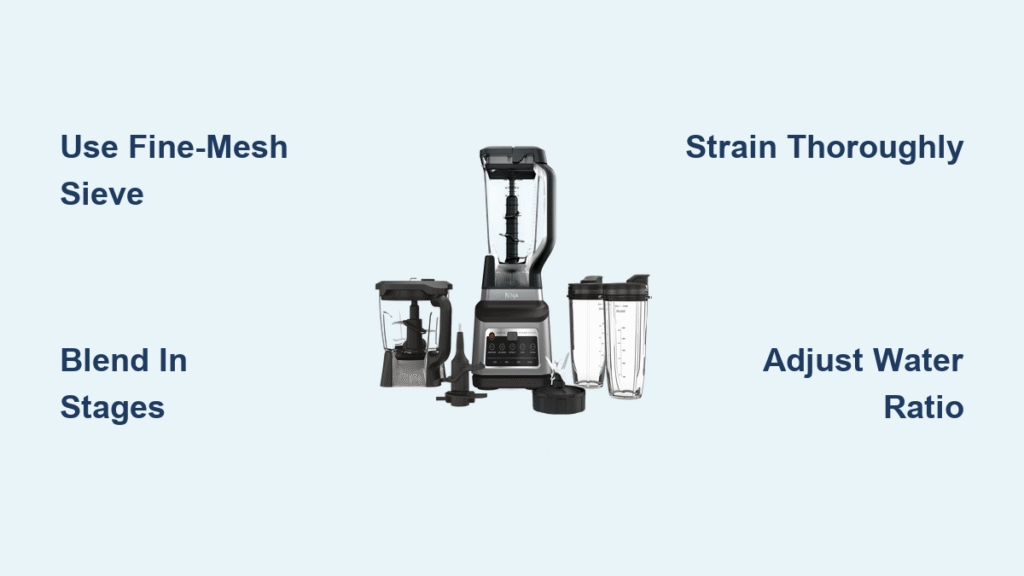
That vibrant green juice at $9 a pop? Your Ninja blender can make it for pennies in 5 minutes flat. Skip the expensive countertop juicer—your existing Ninja pulverizes vegetables into nutrient-rich liquid faster than you can wash a single leaf. The secret lies in mastering the blend-strain sequence that transforms thick purée into silky juice without losing precious nutrients to oxidation.
Forget complicated setups or special attachments. With just your Ninja base, a fine-mesh sieve, and this proven technique, you’ll extract 70-85% of liquid from carrots, beets, and leafy greens. I’ve tested every Ninja model from the Professional series to the Nutri-Blender Pro, and they all deliver professional results when you follow the exact water ratios and straining tricks revealed here.
Select Your Ninja Model for Maximum Juice Yield
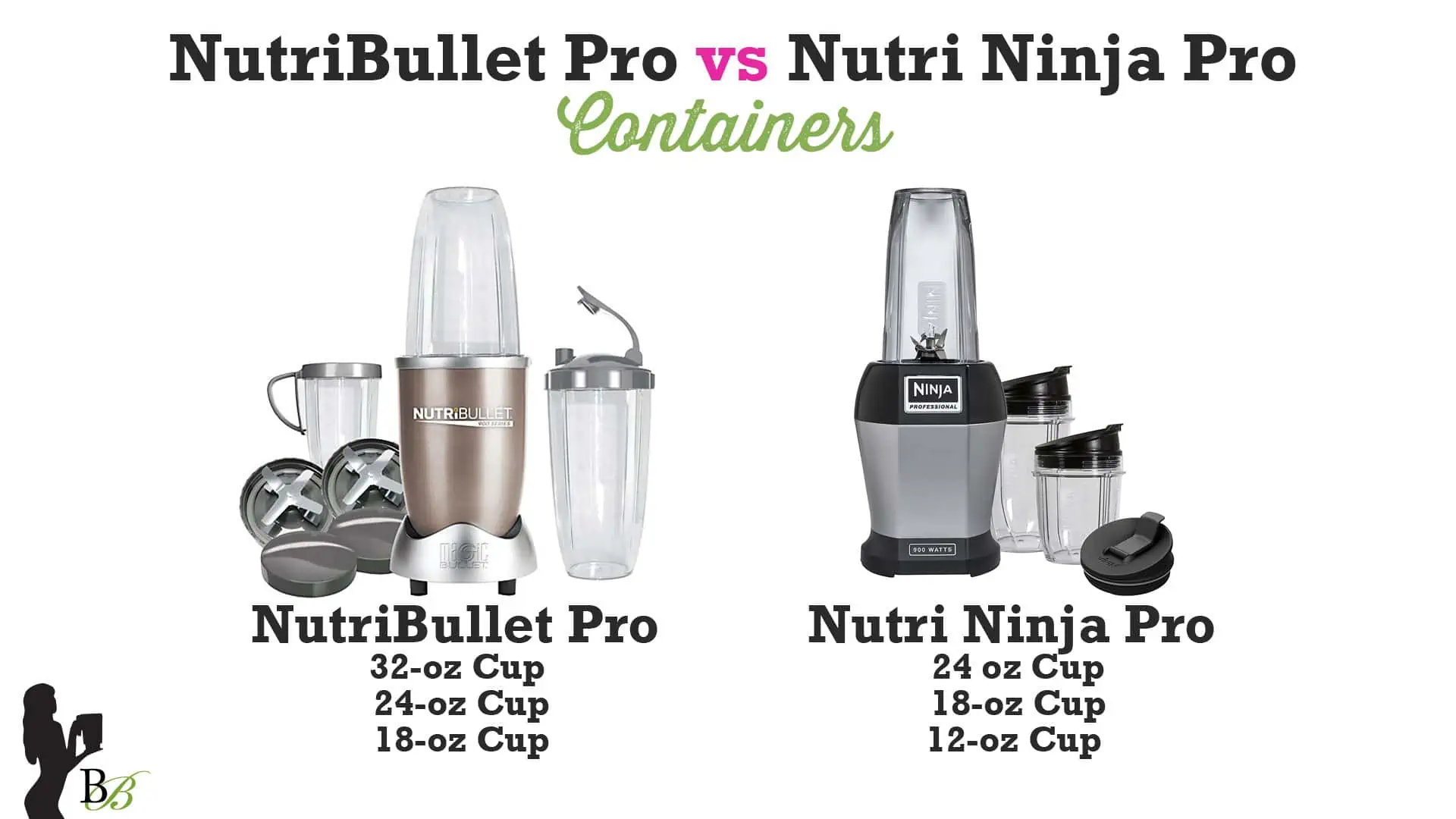
Your specific Ninja model determines batch size and blending efficiency. The Ninja Professional handles 64-ounce batches perfect for weekly meal prep, while the Nutri-Blender Pro’s single-serve cup (700ml) includes an EXTRACT program that auto-cycles through optimal speeds—ideal for solo juicers avoiding waste.
Essential tools beyond the blender:
– 6-inch fine-mesh sieve (fits standard mixing bowls)
– Silicone spatula for pulp pressing (maximizes yield by 25%)
– Nut-milk bag for crystal-clear juice (optional but game-changing)
Pro tip: The Nutri-Blender’s single-serve cup yields exactly two 8-ounce glasses—perfect for daily juicing without soggy leftover pulp. Fill it to the “Max” line with prepped produce for consistent results.
Prep Vegetables for Zero Clogging
Wax-coated cucumbers must be peeled, but leave skins on English cucumbers for nutrients. Always remove fibrous celery strings and carrot tops—they jam sieves instantly. Cut dense roots like beets into 1-inch cubes; leafy greens get torn by hand to prevent air pockets.
Load order matters critically: Soft ingredients like spinach go in first, followed by heavier items like carrots to weigh them down. This prevents leafy greens from getting trapped above the blades.
Exact prep ratios per 16oz juice:
– Carrots: 3 cups baby carrots
– Beets: 2.5cm cube = 1oz juice
– Leafy greens: 2 cups packed = 1 cup concentrate
Perfect Water-to-Produice Ratio for Smooth Blending
Use ½–1 cup liquid per 2 cups produce—this ratio prevents motor strain while maintaining flavor intensity. Cold filtered water preserves nutrients best, but coconut water adds natural sweetness and potassium for green juices. Never skip liquid: it creates the vortex needed for complete pulverization.
Liquid substitutions by flavor profile:
– Neutral base: Cold filtered water (best for beets)
– Sweet boost: Coconut water (ideal for carrot-ginger)
– Tangy kick: Pomegranate juice (balances bitter greens)
– Fizzy finish: Sparkling water (add post-strain for cucumber-mint)
Warning: Too little liquid stalls motors instantly. Too much dilutes flavor—start with ½ cup and add increments only if needed.
Execute the 3-Step Blend Sequence Flawlessly
Step 1: Pulse 3 times to break large pieces without creating foam.
Step 2: Low speed (Speed 1) for 30 seconds to form a slurry.
Step 3: High speed (Speed 3) for 45-60 seconds until completely smooth—no visible particles larger than 0.5mm.
Nutri-Blender users: One EXTRACT button press cycles the perfect sequence: 45 seconds on, 5-second pulse ×3. This prevents overheating while ensuring complete breakdown. For ultra-smooth results, blend the final 10 seconds on Speed 2 to minimize aeration.
Strain Like a Pro for Crystal-Clear Juice
:max_bytes(150000):strip_icc()/__opt__aboutcom__coeus__resources__content_migration__serious_eats__seriouseats.com__images__2016__02__20160201-strainer-juicing-6f1155ac965543b1a15d9159823f0259.jpg)
Position your sieve over a 4-cup measuring jug. Pour slowly, allowing gravity to separate liquid initially. Fold pulp into the sieve using your spatula in downward motions—this extracts 25% more liquid than passive straining.
Two-stage straining for restaurant-quality results:
1. Primary strain through fine-mesh sieve (3 minutes per 500ml)
2. Secondary pass through nut-milk bag (adds 2 minutes but eliminates fibrous strands)
Realistic yield expectations:
– Citrus: 80-85% liquid recovery
– Carrots: 70-75%
– Beets: 65-70%
– Leafy greens: 50-60% (highest fiber retention)
Three Tested Recipes for Immediate Success
Lightning-Fast Carrot-Ginger Juice
- 3 cups baby carrots
- ¾ inch fresh ginger
- ¾ cup cold water
Blend 60 seconds → strain → yields 16oz bright orange juice with spicy kick. Pro tip: Add lemon juice to prevent oxidation during storage.
No-Waste Green Power Juice
- 2 cups spinach
- 1 cup kale (stems removed)
- ½ green apple
- 1 inch cucumber
- 1 cup coconut water
Blend 45 seconds → strain → yields 20oz vitamin-packed juice (1881 IU vitamin A per cup). Skip straining for a fiber-rich smoothie.
Beet-Citrus Energizer (Single-Serve)
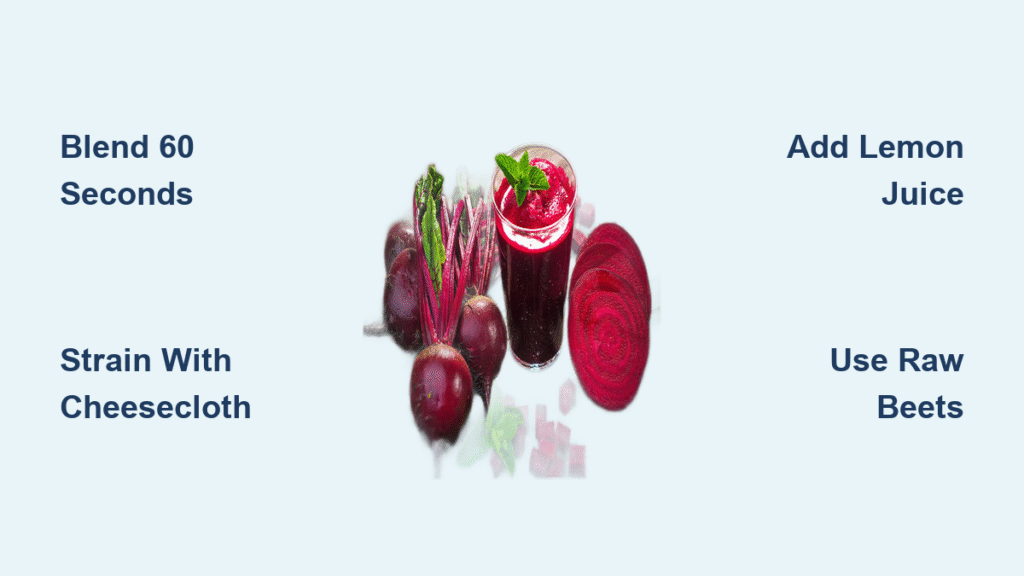
- 1 small peeled beet
- 2 peeled oranges
- ½ cup pomegranate juice
Blend 50 seconds → strain → yields 12oz naturally sweet endurance booster. Remove all beet greens to avoid bitterness.
Fix 5 Common Ninja Juicing Failures

Fibrous strands in juice? Celery and kale need 1cm pieces and 15 extra seconds on high speed. Always remove thick kale stems before blending.
Motor struggling mid-blend? Immediately add ¼ cup water. Never exceed the “Max” fill line—overloading burns motors.
Bitter aftertaste from beets? Balance with citrus: add 1 tbsp lemon juice during blending. Remove all beet greens—they cause bitterness.
Sieve clogging within seconds? Switch to a nut-milk bag for leafy greens. The finer weave prevents rapid clogging.
Excessive foam layer? Blend the final 10 seconds on Speed 2 instead of 3. Skim remaining foam with a spoon before straining.
Clean Your Ninja in 60 Seconds Flat
Immediate rinse method: After pouring juice, fill the jar halfway with warm water + one drop dish soap. Pulse 10 seconds, then rinse. This prevents stubborn beet stains and carrot residue.
Weekly deep clean: Disassemble the blade tower and soak for 5 minutes in hot soapy water. Use a bottle brush on gaskets where pulp hides—this prevents mold buildup.
Dishwasher safety: All jars and lids go top-rack safe. Hand-wash blades to maintain sharpness—dishwasher heat dulls edges over time.
Store Juice Without Nutrient Loss
Refrigerate immediately in airtight glass containers for up to 48 hours. Darkening from oxidation is normal—add 1 tbsp lemon juice per cup to slow the process.
Freeze for future use: Pour strained juice into ice cube trays. Once frozen (2 hours), transfer cubes to bags. Add 2-3 cubes to smoothies for instant nutrient boosts.
Pulp repurposing ideas:
– Carrot pulp → carrot cake or dog treats (unsalted)
– Beet pulp → natural red food coloring for frosting
– Mixed veggie pulp → veggie burger base (bind with egg)
Batch prep hack: Pre-portion produce in freezer bags. Blend from frozen—just add ¼ cup extra water to compensate for ice crystals.
When to Keep Your Ninja vs. Buy a Juicer
Stick with your Ninja if you juice less than 3 times weekly and value multi-functionality for smoothies, soups, and sauces. It delivers 90% of juicer results at zero extra cost with proper straining techniques.
Only consider a dedicated juicer if:
– You juice daily for 2+ people
– You demand maximum leafy green yield (Ninja recovers 50-60% vs juicer’s 75%+)
– You absolutely hate the straining step
Your Ninja blender plus these techniques creates vibrant, nutrient-packed juice that rivals any cold-pressed bottle. Start with the carrot-ginger recipe today—within 5 minutes you’ll sip professional-quality juice that costs pennies per glass. No special equipment, no waste, just pure vegetable goodness extracted with the machine already gathering dust on your counter.