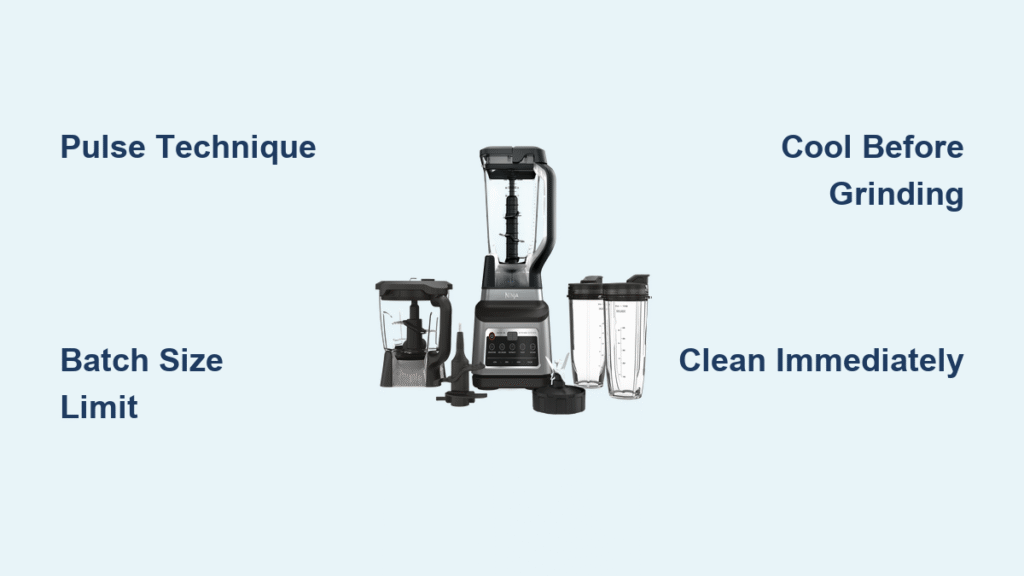
Your Ninja blender can grind coffee beans in a pinch, but mastering the technique makes the difference between drinkable coffee and a gritty disappointment. While dedicated grinders excel at consistency, your Ninja’s powerful blades can produce grounds ranging from French press coarse to near-espresso fine—with the right approach. If you’ve ever stared at whole beans with no grinder in sight, this guide delivers the exact steps to transform your Ninja into a reliable coffee solution. You’ll learn which models crush beans best, how to avoid bitter heat-damaged coffee, and why pulse technique matters more than raw power.
Ninja Models That Crush Coffee Beans Effectively

Single-Serve Cups for Fine Grind Control
Ninja Pulse blenders and 14-oz smoothie bowl attachments dominate small-batch grinding. These compact containers force beans into the blades repeatedly, creating finer grounds ideal for drip coffee. The confined space prevents beans from escaping the blade path, yielding more uniform results than larger pitchers. For French press or pour-over, fill your single-serve cup no more than ¾ full—overloading creates dead zones where beans avoid blade contact entirely.
Full-Size Pitchers for Coarse Grinding Success
The 72-oz Power Blender handles larger batches but produces coarser textures perfect for cold brew. Ninja Foodi Power Blender with Auto IQ leverages 1400 watts of smart torque to tackle dense beans without stalling. When using standard pitchers, never exceed 1 cup of beans. You’ll achieve drinkable drip coffee grounds, but expect noticeable particle variation—some fine powder mixed with larger chunks.
Blade Upgrades That Make a Real Difference
Swap your standard blade for hybrid edge or milling blades designed specifically for dry ingredients. These specialized attachments create vortex patterns that pull beans downward, reducing the powdery residue common with smoothie blades. If you grind coffee weekly, this $15 upgrade prevents the frustrating mix of coarse chunks and bitter fines that ruin extraction.
Achieve Actual Brew-Ready Grind Sizes

French Press Perfection in 10 Pulses
Coarse, uniform particles emerge after 8-10 pulses in a single-serve cup. The chunky texture prevents over-extraction during the 4-minute steep, delivering clean, bright flavors without sediment sneaking through the press screen. Critical tip: After 8 pulses, scoop a tablespoon onto white paper. If you see more than 3 visible chunks, pulse twice more—never exceed 12 pulses to avoid heat buildup.
Drip Coffee Grounds Without Bitterness
Medium grind consistency requires 12-15 pulses with periodic shaking. Expect some variation—your Ninja produces a mix of fine powder and larger pieces. This actually works well for automatic drip machines, as the water extracts flavor at different rates from varying particle sizes. Pro technique: Shake the container vigorously after every 3 pulses to redistribute beans stuck on the sides.
Why Espresso Grinds Fail Without Sifting
Ultra-fine grinding demands patience and technique. Process beans in ¼-cup batches, pulsing 20-25 times with sifting between rounds. Even then, expect 70% usable espresso-fine particles mixed with 30% slightly coarser grounds. Hard truth: If you pull daily espresso shots, invest in a burr grinder. Your Ninja can’t match the precision needed for proper crema formation.
Step-by-Step Grinding Protocol
Container Selection Strategy
Choose single-serve cups for finer grinds and standard pitchers for coarser textures. Never exceed ¾ cup beans in single-serve containers or 1 cup in 72-oz pitchers. Overloading creates dead zones where beans escape blade contact entirely. For travel, pack pre-measured beans in snack bags—hotel room blenders work identically to your home Ninja.
Pulse Technique That Prevents Bitterness
Hold the pulse button for exactly 2-3 seconds, then release. Count your pulses—8-12 for single-serve cups, 20-30 seconds total pulsing time for pitchers. After every 3-4 pulses, remove and shake the container to redistribute beans. This prevents overheating and ensures even grinding. Warning: Continuous blending for 30+ seconds creates noticeable heat buildup that degrades coffee oils.
Consistency Checks That Save Your Brew
Stop after the minimum recommended pulses and examine your grounds. Scoop a tablespoon and spread it on white paper—look for obvious chunks or powdery areas. Continue pulsing in 2-second increments only if needed. Remember: you can always grind more, but you can’t un-grind over-processed beans. If grounds feel warm, let everything cool 3 minutes before continuing.
Prevent Heat Damage That Ruins Flavor
Temperature Control Methods
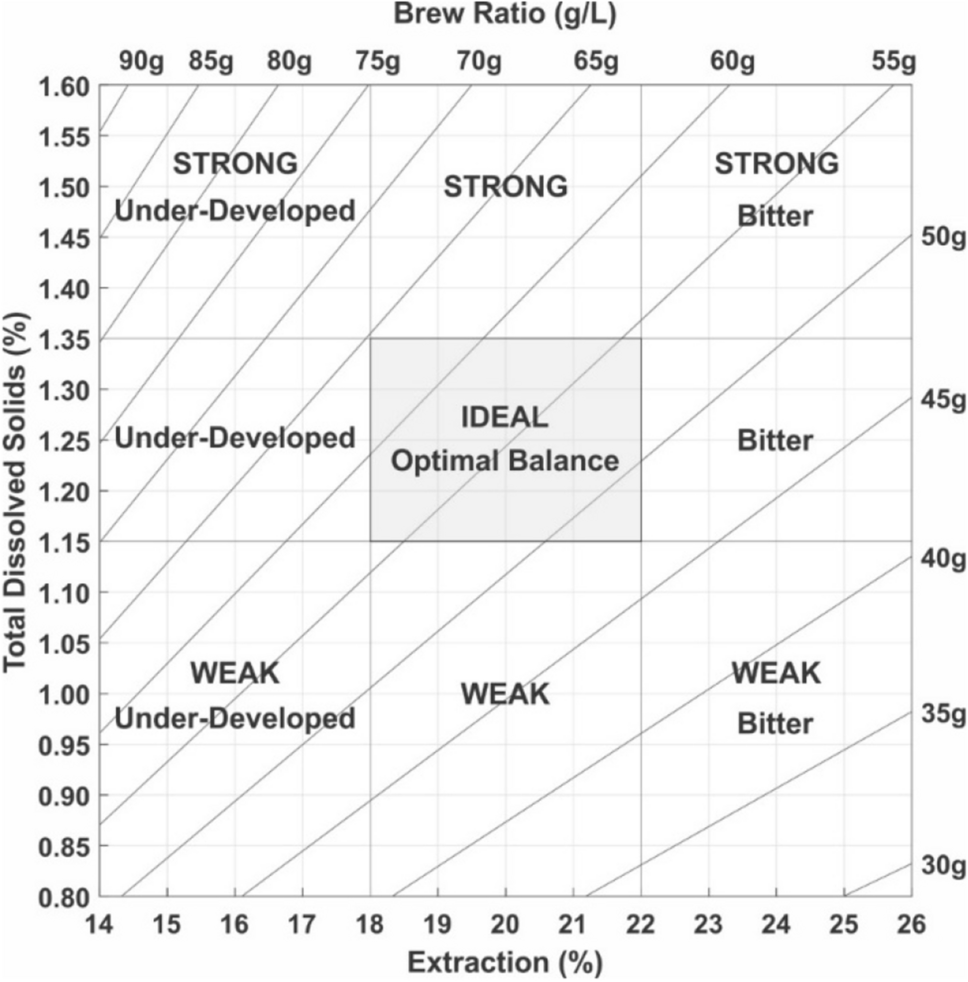
Coffee oils begin degrading above 120°F, developing bitter, burnt flavors. Pulse technique prevents this entirely—continuous blending for 30+ seconds creates noticeable heat buildup. Cool beans in your freezer for 10 minutes before grinding to provide temperature buffer. This simple step preserves delicate floral notes in light roasts.
Warning Signs You Must Stop Immediately
If you smell coffee aroma intensifying dramatically or notice steam escaping the container, stop immediately. Let everything cool for 2-3 minutes before resuming. Your grounds should feel room temperature to the touch, never warm. Ignoring these signs creates harsh, astringent coffee that no amount of sugar can fix.
Clean Between Flavors in 90 Seconds
Immediate Cleaning Protocol
Disassemble immediately after grinding—coffee oils turn rancid quickly. Rinse blade and container with warm water first, then wash with soapy water. All components except the motor base are dishwasher safe on the top rack. Air-dry completely to prevent mold growth in hidden crevices. Skipping this step makes your next smoothie taste like stale coffee.
Flavor Transfer Prevention Tactics
Coffee residue affects smoothies and sauces. Designate one single-serve cup exclusively for coffee grinding, or perform a baking soda paste cleaning monthly. Mix 2 tablespoons baking soda with water, scrub all surfaces, then rinse thoroughly. This eliminates stubborn oil buildup and lingering odors that ruin delicate recipes.
Troubleshoot Common Grinding Failures
Fixing Uneven Particle Mix
Reduce batch size by 50% and increase pulse frequency. Coarse chunks indicate overloading or dull blades. Shake vigorously between pulses to force beans back into blade contact. Consider replacing blades if problems persist after proper technique implementation. Dull blades create excessive fines that clog French press filters.
Stop Beans Sticking to Sides
This occurs when beans are too oily (common with dark roasts) or the container is too large. Switch to lighter roasts or smaller containers. Add 1-2 beans at a time through the lid opening while pulsing to maintain blade contact without overloading. Dry roasts like Ethiopian Yirgacheffe grind more evenly than oily Sumatrans.
Motor Struggles or Stalls
Your Ninja might overheat from excessive continuous blending. Allow 5-minute cooling periods between grinding sessions. Check maximum fill lines—exceeding capacity stresses the motor. Persistent stalling indicates blade dulling or motor issues requiring professional service. Never force grinding—your Ninja isn’t designed for daily coffee use.
Storage Solutions That Preserve Freshness
Immediate Transfer Protocol
Move grounds to an airtight glass container within 60 seconds of grinding. Metal containers react with coffee acids, creating metallic flavors. Fill containers completely to minimize oxygen exposure, or use vacuum-sealed storage for maximum freshness. Oxygen exposure degrades flavor compounds faster than light or heat.
Freshness Timeline Reality Check
Grind only what you’ll brew within 24 hours when possible. Properly stored Ninja-ground coffee maintains acceptable flavor for 3-5 days refrigerated, but quality degrades noticeably each day. Never freeze small batches repeatedly—temperature fluctuations damage flavor compounds. For camping trips, grind fresh each morning using your portable Ninja.
When Your Ninja Beats Dedicated Grinders
Travel and Emergency Use
Your Ninja eliminates the need for additional appliances during camping trips or vacation rentals. Pack beans in sealed bags, grind fresh each morning using hotel room blenders. The versatility justifies suitcase space better than a single-purpose grinder. You’ll outperform the stale pre-ground coffee most rentals provide.
Budget-Conscious Coffee Strategy
Skip the $50-200 coffee grinder investment entirely if you’re satisfied with drip or French press coffee. Your existing Ninja handles occasional grinding needs effectively, especially when you master pulse technique and accept slight consistency variations. Serious espresso drinkers should still invest in a burr grinder.
Minimalist Kitchen Advantage
Multi-purpose kitchens benefit from equipment maximizing functionality. Your Ninja already crushes ice, processes nuts, and makes smoothies—adding coffee grinding completes its versatility without counter space sacrifice. Just dedicate one container to coffee to avoid flavor transfer.
Final Note: Your Ninja blender won’t replace a quality burr grinder, but it absolutely delivers fresh-ground coffee when you need it. Master the pulse technique, respect batch size limits, and clean thoroughly—then enjoy surprisingly good coffee from your multi-purpose kitchen workhorse. For daily French press or drip coffee, this method produces flavorful results with zero extra appliances. Just remember: for true espresso or pour-over precision, a dedicated grinder remains essential.